

• Home
  • About
    • Members
    • Associate Members
    • Former members
  • Thematic Areas
    • Containers
    • Cruise
    • European Port Policy
    • Ports & COVID-19
  • PortStudies
  • Presentations
  • Noticeboard
  • Viewpoints
  • PortLibrary
  • PortReport
PortEconomics
  • September 23rd, 2026
PortEconomics
  • Home
  • About
    • Members
    • Associate Members
    • Former members
  • Thematic Areas
    • Containers
    • Cruise
    • European Port Policy
    • Ports & COVID-19
  • PortStudies
    Geopolitical leverage through the international activities of State-Owned Enterprises (SOEs) in ports and maritime logistics

    Geopolitical leverage through the international activities of State-Owned Enterprises (SOEs) in ports and maritime logistics

    Risk-driven supply chain designs – a re-assessment with geopolitical and geoeconomic considerations

    Risk-driven supply chain designs – a re-assessment with geopolitical and geoeconomic considerations

    Rhine-Scheldt delta port system

    Rhine-Scheldt delta port system

    A metric of global maritime supply chain disruptions: The global supply chain stress index - maritime (GSCSI-M)

    A metric of global maritime supply chain disruptions: The global supply chain stress index - maritime (GSCSI-M)

    ESG disclosure as a proxy of port corporate communication and sustainable management strategy: An LDA approach

    ESG disclosure as a proxy of port corporate communication and sustainable management strategy: An LDA approach

  • Presentations
    Top-15 EU container ports in H1 2026

    Top-15 EU container ports in H1 2026

    European ports: The need to avoid the great divide

    European ports: The need to avoid the great divide

    Florence maritime regulation conference: PortEconomics members shape maritime regulation

    Florence maritime regulation conference: PortEconomics members shape maritime regulation

    New edition: Developing ports as business ecosystems

    New edition: Developing ports as business ecosystems

    European Ports: Reflection on policies and strategies for the energy transition

    European Ports: Reflection on policies and strategies for the energy transition

  • Noticeboard
    Call for papers: Contemporary Maritime Economics: Transformations and Emerging Perspectives

    Call for papers: Contemporary Maritime Economics: Transformations and Emerging Perspectives

    ECONSHIP2026: Call for papers

    ECONSHIP2026: Call for papers

    Call for papers: 1st Florence Maritime Regulation Conference

    Call for papers: 1st Florence Maritime Regulation Conference

    PortEconomics co-director appointed Senior Scientific Advisor to the Florence School of Regulation

    PortEconomics co-director appointed Senior Scientific Advisor to the Florence School of Regulation

    Jean Monnet Chair in European Port Policy

    Jean Monnet Chair in European Port Policy

  • Viewpoints
    Top-15 EU container ports in H1 2026

    Top-15 EU container ports in H1 2026

    European ports: The need to avoid the great divide

    European ports: The need to avoid the great divide

    New edition: Developing ports as business ecosystems

    New edition: Developing ports as business ecosystems

    Maritime and port strategies as state policies: an introductory approach

    Maritime and port strategies as state policies: an introductory approach

    European Ports: Reflection on policies and strategies for the energy transition

    European Ports: Reflection on policies and strategies for the energy transition

  • PortLibrary
  • PortReport
The Analyst: port cooperation and mega-shipsCategory

The Analyst: port cooperation and mega-ships

October 24th, 2015 Category, Containers, Featured, Viewpoints

READ ALSO

Geopolitical leverage through the international activities of State-Owned Enterprises (SOEs) in ports and maritime logistics
Investments and financing challenges of the EU’s port managing bodies; findings from a comprehensive survey
Port reform: World Bank publishes the third edition of its port reform toolkit
Top-15 EU container ports in H1 2026

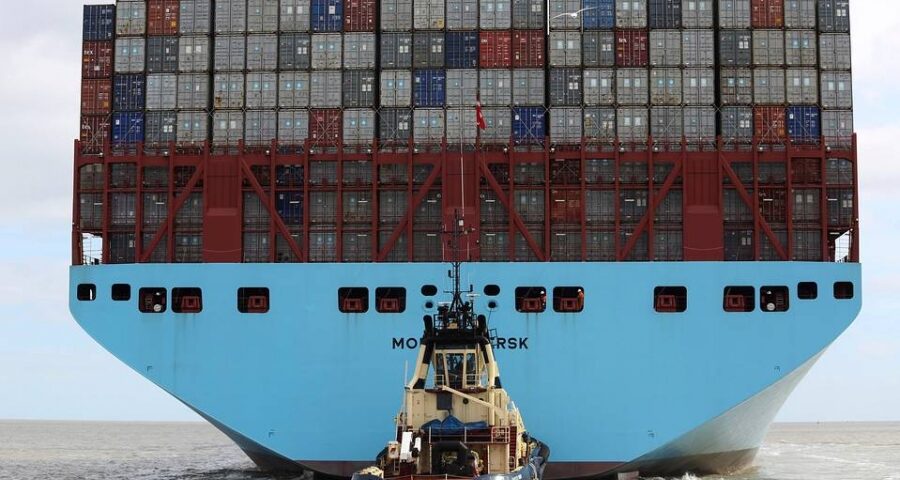
De LangenIn the, often heated, discussions on the effects of mega-ships on shoreside infrastructure, let’s include the question of co-operation between nearby ports. PortEconomics co-director Peter de Langen comments that the issue of co-operation is clearly relevant for the two large upstream ports in Europe that have called for such a discussion, Hamburg and Antwerp.

At his latest Port Strategy viewpoint column, as The Analyst (more @PortStrategy) Peter comments:

“Hamburg was initially involved in, but later stepped out of, the development of JadeWeserPort, a deep draft port in North Germany, less than 150 km away from Hamburg; in Antwerp, the theme of co-operation has been under discussion for at least a decade. However, while seemingly sensible co-operation between the coastal port of Zeebrugge and the upstream port of Antwerp eyes has been discussed at length, no concrete moves have been made.

Perhaps co-operation has not emerged because there is no tangible benefit: even though there is an intuitive logic, the numbers may not work. Another potential explanation may be that the centuries old and deeply rooted Hanseatic port development approach of ports in this part of the world prevents such co-operation. Through this approach, ports create wealth for their cities and regions, hence losing container volumes is equal to a wealth reduction for the regional and urban economy. Because winning is defined in volumes, co-operation is not necessarily a win-win game. 

Without having done the sums, I lean towards this second explanation. If we promote a shift in mindset to define ‘winning’ as ‘value for society’ instead of ‘throughput volumes’, co-operation becomes win-win. Hamburg and Antwerp can then continue to create value for port users through better connectivity and competitive supply chain costs and for society through environmentally-friendly transport and jobs creation. The added bonus is that these ports can concentrate on developing propositions to handle mega-ships in nearby deepwater satellite ports when the costs of accommodating such ships upstream are prohibitive. 

All three deepsea services – all Maersk’s – that call at JadeWeserPort also call at either Bremerhaven or Hamburg. This suggests that these ports may be complementary even without draft limitations. North German ports are an interesting ‘living lab’ in that respect: Bremen embraced the satellite port approach – the city state Bremen is a shareholder in the JadeWeserPort landlord port company and Eurogate, the container terminal operator in Bremen, operates JadeWeserPort container terminal. Hamburg, on the other hand, decided to go-it-alone.”

Next article Economic assessment of management reform in european seaports
Previous article What's your port business models?

Peter de Langen

Dr. Peter de Langen is the owner and principal consultant of Ports & Logistics Advisory, based in Malaga, Spain and established in 2013. Peter de Langen is part-time professor at Copenhagen Business School and held a part-time position as professor Cargo Transport & Logistics, at Eindhoven University of Technology, from 2009 to 2016, From 2007 to 2013, Peter worked at Port of Rotterdam Authority (PoR), department Corporate Strategy as senior advisor. From 1997 to 2007, he worked at Erasmus University Rotterdam (EUR). Peter is co-director of the knowledge dissemination platform www.porteconomics.eu, co-organiser of conferences and training events and regular speaker at industry conferences on ports and shipping.

Related Posts

Top-15 EU container ports in H1 2026 Containers

Top-15 EU container ports in H1 2026

Geopolitical leverage through the international activities of State-Owned Enterprises (SOEs) in ports and maritime logistics Category

Geopolitical leverage through the international activities of State-Owned Enterprises (SOEs) in ports and maritime logistics

European ports: The need to avoid the great divide European Port Policy

European ports: The need to avoid the great divide

Weekly Timeline
Sep 22nd 10:21 AM
Thematic Area

Top-15 EU container ports in H1 2026

Sep 17th 12:11 PM
Category

Geopolitical leverage through the international activities of State-Owned Enterprises (SOEs) in ports and maritime logistics

Jul 22nd 3:50 PM
Thematic Area

European ports: The need to avoid the great divide

Jul 21st 1:41 PM
Thematic Area

Florence maritime regulation conference: PortEconomics members shape maritime regulation

Jul 2nd 2:45 PM
Presentations

New edition: Developing ports as business ecosystems

Tweets by @PortEconomics
  • Containers
  • Cruise
  • EPP
  • Ports & COVID-19
  • Back to top
About PortEconomics

PortEconomics is a web-based initiative aiming to advance knowledge exchange on seaport studies. Established by maritime economists affiliated to academic institutions in Belgium, Greece and the Netherlands. It provides freely accessible research, education, information, and network-building material on critical issues of port economics, management and policies.

Additional Information
  • About
  • Login
  • Register
  • Edit Profile
  • Contact us
  • PortProfessionals
  • PortReport Series
  • Terms and Conditions
  • Cookie Policy
© PortEconomics 2025. All rights reserved.
Produced by PortEconomics
Manage Consent
To provide the best experiences, we use technologies like cookies to store and/or access device information. Consenting to these technologies will allow us to process data such as browsing behavior or unique IDs on this site. Not consenting or withdrawing consent, may adversely affect certain features and functions.
Functional Always active
The technical storage or access is strictly necessary for the legitimate purpose of enabling the use of a specific service explicitly requested by the subscriber or user, or for the sole purpose of carrying out the transmission of a communication over an electronic communications network.
Preferences
The technical storage or access is necessary for the legitimate purpose of storing preferences that are not requested by the subscriber or user.
Statistics
The technical storage or access that is used exclusively for statistical purposes. The technical storage or access that is used exclusively for anonymous statistical purposes. Without a subpoena, voluntary compliance on the part of your Internet Service Provider, or additional records from a third party, information stored or retrieved for this purpose alone cannot usually be used to identify you.
Marketing
The technical storage or access is required to create user profiles to send advertising, or to track the user on a website or across several websites for similar marketing purposes.
  • Manage options
  • Manage services
  • Manage {vendor_count} vendors
  • Read more about these purposes
View preferences
  • {title}
  • {title}
  • {title}