
Global supply chains regularly face widespread disruptions, with events such as the COVID-19 pandemic (2021−22), geopolitical incidents in the Red Sea, and water shortages at the Panama Canal (2023–24) impacting global maritime trade flows and shipping routes. Regardless of the cause, delays or rerouting in critical maritime supply lines have had a global impact.
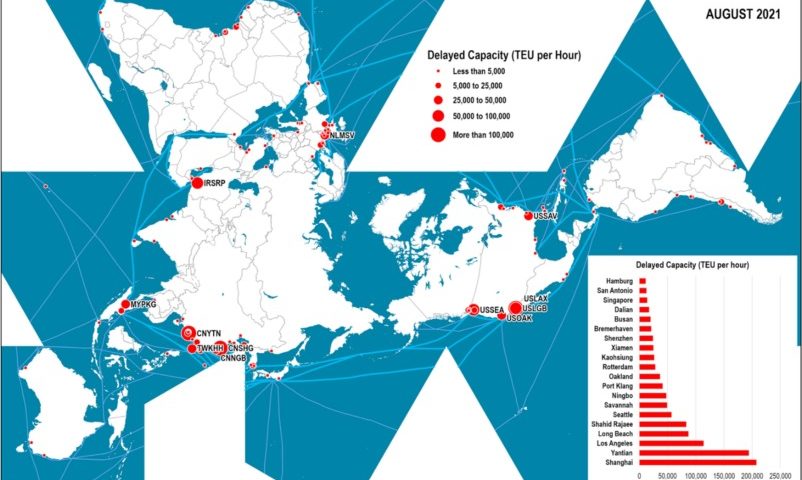
To quantify and assess the magnitude and location of such maritime disruptions, a proposed metric, the Global Supply Chain Stress Index – Maritime (GSCSI-M), has been developed by the World Bank since 2021. The stress metric is derived from AIS (Automatic Identification System) tracking data and calculates the equivalent delayed capacity measured in TEUs (Twenty-foot Equivalent Units), providing insights at the port, country, regional, and global levels. Moreover, the model offers a quantitative perspective on the observed surges in shipping rates during disruptions, based on the assumption that shippers are willing to pay for scarce capacity. The disaggregated data, including port-level details, highlights local bottlenecks and complements the array of tools available to policymakers to address supply chain disruptions. In addition to estimating capacity loss and related costs, this granular information can inform targeted interventions and contingency planning for future events impacting global maritime trade flows.
Read the latest portstudy of PortEconomics member Jean-Paul Rodrigue, co-authored with Jean-François Arvis, Daria Ulybina and Cordula Rastogi (The World Bank, USA), published in the Journal of Transport Geography, Volume 131, February 2026, 104575.
Download here.