


• Home
  • About
    • Members
    • Associate Members
    • Former members
  • Thematic Areas
    • Containers
    • Cruise
    • European Port Policy
    • Ports & COVID-19
  • PortStudies
  • Presentations
  • Noticeboard
  • Viewpoints
  • PortLibrary
  • PortReport
PortEconomics
  • February 19th, 2026
PortEconomics
  • Home
  • About
    • Members
    • Associate Members
    • Former members
  • Thematic Areas
    • Containers
    • Cruise
    • European Port Policy
    • Ports & COVID-19
  • PortStudies
    A metric of global maritime supply chain disruptions: The global supply chain stress index - maritime (GSCSI-M)

    A metric of global maritime supply chain disruptions: The global supply chain stress index - maritime (GSCSI-M)

    ESG disclosure as a proxy of port corporate communication and sustainable management strategy: An LDA approach

    ESG disclosure as a proxy of port corporate communication and sustainable management strategy: An LDA approach

    From coal exports to green steel production? The role of circular economy precincts for sustainable port diversification

    From coal exports to green steel production? The role of circular economy precincts for sustainable port diversification

    Maritime transport in net zero

    Maritime transport in net zero

    Onboard carbon capture, utilisation and storage (CCUS) supply chain optimisation: an application to vessels active in the offshore wind industry

    Onboard carbon capture, utilisation and storage (CCUS) supply chain optimisation: an application to vessels active in the offshore wind industry

  • Presentations
    PortGraphic: Container port dynamics near Gibraltar

    PortGraphic: Container port dynamics near Gibraltar

    Top-10 PortReads in 2025

    Top-10 PortReads in 2025

    Port reform: World Bank publishes the third edition of its port reform toolkit

    Port reform: World Bank publishes the third edition of its port reform toolkit

    When will we admit that maritime transport will not be decarbonised by 2050?

    When will we admit that maritime transport will not be decarbonised by 2050?

    Digital technologies for efficient and resilient sea-land logistics

    Digital technologies for efficient and resilient sea-land logistics

  • Noticeboard
    Call for papers: Contemporary Maritime Economics: Transformations and Emerging Perspectives

    Call for papers: Contemporary Maritime Economics: Transformations and Emerging Perspectives

    ECONSHIP2026: Call for papers

    ECONSHIP2026: Call for papers

    Call for papers: 1st Florence Maritime Regulation Conference

    Call for papers: 1st Florence Maritime Regulation Conference

    PortEconomics co-director appointed Senior Scientific Advisor to the Florence School of Regulation

    PortEconomics co-director appointed Senior Scientific Advisor to the Florence School of Regulation

    Jean Monnet Chair in European Port Policy

    Jean Monnet Chair in European Port Policy

  • Viewpoints
    PortGraphic: Top-15 EU container ports in Q3 2025

    PortGraphic: Top-15 EU container ports in Q3 2025

    Maritime transport in net zero

    Maritime transport in net zero

    Portgraphic: Top-15 EU container ports in H1 2025

    Portgraphic: Top-15 EU container ports in H1 2025

    Portgraphic: fleet capacity (owned/chartered) of container shipping lines

    Portgraphic: fleet capacity (owned/chartered) of container shipping lines

    In a tight spot: American ports in global supply chains

    In a tight spot: American ports in global supply chains

  • PortLibrary
  • PortReport

READ ALSO

PortGraphic: Container port dynamics near Gibraltar
Call for papers: Contemporary Maritime Economics: Transformations and Emerging Perspectives
PortGraphic: Top-15 EU container ports in Q3 2025
Call for papers: Contemporary Maritime Economics: Transformations and Emerging Perspectives

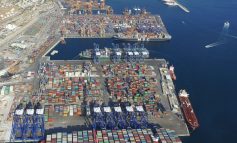
Call for Papers RTBMPortEconomics members Τheo Notteboom, Geraldine Knatz and Francesco Parola are the guest editors of a special issue of the prestigious scholarly Research in Transport Business and Management (RTBM) examining “Port cooperation”

The Theme of the Special Issue

Co-operation, integration and co-ordination are much researched themes in mainstream economic and management literature. The port industry has witnessed a multiplication of port co-operation/integration schemes in recent years partly driven by governance reforms, public policy, political forces and market pressures. The cooperation among ports comes in various forms: port authority mergers (Ningbo-Zhoushan, Copenhagen-Malmo, Port Metro Vancouver, Genoa-Savona), port alliances (Seattle/Tacoma), far-reaching coordination (Haropa, Kobe-Osaka), etc.

While port co-operation is a hot topic in public and business circles, bibliometric studies on port-related academic research show that port co-operation/ integration is an emerging theme, but that the number of published papers is still quite limited. This volume is aimed at complementing earlier edited volumes on port competition and port governance, so to enrich academic insights on the theme. The edited volume will contain contributions specifically focusing on port co-operation schemes, strategies and policies. Papers ideally combine novel methodological approaches to port (authority) co-operation with extensive empirical (regional) insights.

The guest editors seek contributions that will increase our understanding of the following issues (non-exhaustive):

  • The types/forms of port co-operation/integration and the related choice problem;
  • The triggers/drivers of port co-operation/integration schemes: e.g. political (compulsory versus voluntary nature), inter-firm ties (global terminal networks, vertically integrated carriers), financial, etc.;
  • The institutional, political and market/commercial dynamics behind successful and failed port co-operation schemes;
  • The ‘regionalism’ of port co-operation schemes (i.e. the role of the regional setting in the choice, success and failure of port co-operation schemes);
  • Port co-operation/integration with an adjacent port vs. a distant port (cf. internationalisation of port authorities);
  • Stakeholder perspective on port co-operation/integration;
  • (Expectations on) benefits/costs for port authority, users, government agencies, etc.;
  • The distribution of benefits/costs of port co-operation schemes;
  • The problems of implementation and the potential conflicts (power, prestige, social, economic, environmental, etc.) with internal and external stakeholders;
  • Port performance and port co-operation (including impact on supply chain performance and commercial and financial outcomes);
  • Strategic port planning and port co-operation (including the demand for specialisation vs. differentiation).

The editors are looking for original contributions that constitute much more than a simple description of a specific case. We are interested in receiving original and innovative submissions, which are well grounded in theory and/or containing novel analysis that will provide new perspectives on port co-operation and their impacts.

Potential contributors are asked to submit an abstract indicating their paper idea to the journal editors before April 15, 2017.

Upon acceptance of the abstract, contributors are asked to develop a full paper by September 15, 2017. You are invited to concisely follow the author guidelines of RTBM which can be found online.

Publication schedule:

The full publication schedule is as follows:

  • April 15, 2017 – Deadline for author commitments to Volume Editors
  • September 15, 2017 – Deadline for original paper submissions to EVISE
  • January 15, 2018 – Deadline for revised paper submissions to EVISE
  • March 15, 2018 – Deadline for final, formatted paper submissions to EVISE
  • April 30, 2018 – Editorial and order of papers from volume editors to journal manager
  • June 15, 2018 – final versions of all author-approved proofs submitted to production
  • September, 2018 – hard-copy volume published and papers available online

The formal call on the RTBM website can be found link
 

Next article PortEconomics co-director Peter de Langen appointed at CBS maritime
Previous article Revisiting port governance and port reform: a multi-country examination

Related Posts

Noticeboard

Call for papers: Contemporary Maritime Economics: Transformations and Emerging Perspectives

Guest Editors Assoc. Prof. Kum Fai Yuen, Nanyang Technological University, SingaporeProf. Theo Notteboom,...
ECONSHIP2026: Call for papers European Port Policy

ECONSHIP2026: Call for papers

European Port Policy

Call for papers: 1st Florence Maritime Regulation Conference

The 1st Florence Maritime Regulation Conference aims to discuss regulatory advancements that accelerate the...
Weekly Timeline
Feb 18th 1:46 PM
Thematic Area

PortGraphic: Container port dynamics near Gibraltar

Feb 12th 12:25 PM
Featured

A metric of global maritime supply chain disruptions: The global supply chain stress index – maritime (GSCSI-M)

Jan 14th 12:56 PM
Noticeboard

Call for papers: Contemporary Maritime Economics: Transformations and Emerging Perspectives

Jan 4th 12:46 PM
Thematic Area

PortGraphic: Top-15 EU container ports in Q3 2025

Dec 16th 1:12 PM
Featured

Top-10 PortReads in 2025

Tweets by @PortEconomics
  • Containers
  • Cruise
  • EPP
  • Ports & COVID-19
  • Back to top
About PortEconomics

PortEconomics is a web-based initiative aiming to advance knowledge exchange on seaport studies. Established by maritime economists affiliated to academic institutions in Belgium, Greece and the Netherlands. It provides freely accessible research, education, information, and network-building material on critical issues of port economics, management and policies.

Additional Information
  • About
  • Login
  • Register
  • Edit Profile
  • Contact us
  • PortProfessionals
  • PortReport Series
  • Terms and Conditions
  • Cookie Policy
© PortEconomics 2025. All rights reserved.
Produced by PortEconomics
Manage Consent
To provide the best experiences, we use technologies like cookies to store and/or access device information. Consenting to these technologies will allow us to process data such as browsing behavior or unique IDs on this site. Not consenting or withdrawing consent, may adversely affect certain features and functions.
Functional Always active
The technical storage or access is strictly necessary for the legitimate purpose of enabling the use of a specific service explicitly requested by the subscriber or user, or for the sole purpose of carrying out the transmission of a communication over an electronic communications network.
Preferences
The technical storage or access is necessary for the legitimate purpose of storing preferences that are not requested by the subscriber or user.
Statistics
The technical storage or access that is used exclusively for statistical purposes. The technical storage or access that is used exclusively for anonymous statistical purposes. Without a subpoena, voluntary compliance on the part of your Internet Service Provider, or additional records from a third party, information stored or retrieved for this purpose alone cannot usually be used to identify you.
Marketing
The technical storage or access is required to create user profiles to send advertising, or to track the user on a website or across several websites for similar marketing purposes.
  • Manage options
  • Manage services
  • Manage {vendor_count} vendors
  • Read more about these purposes
View preferences
  • {title}
  • {title}
  • {title}