

• Home
  • About
    • Members
    • Associate Members
    • Former members
  • Thematic Areas
    • Containers
    • Cruise
    • European Port Policy
    • Ports & COVID-19
  • PortStudies
  • Presentations
  • Noticeboard
  • Viewpoints
  • PortLibrary
  • PortReport
PortEconomics
  • April 9th, 2026
PortEconomics
  • Home
  • About
    • Members
    • Associate Members
    • Former members
  • Thematic Areas
    • Containers
    • Cruise
    • European Port Policy
    • Ports & COVID-19
  • PortStudies
    Risk-driven supply chain designs – a re-assessment with geopolitical and geoeconomic considerations

    Risk-driven supply chain designs – a re-assessment with geopolitical and geoeconomic considerations

    Rhine-Scheldt delta port system

    Rhine-Scheldt delta port system

    A metric of global maritime supply chain disruptions: The global supply chain stress index - maritime (GSCSI-M)

    A metric of global maritime supply chain disruptions: The global supply chain stress index - maritime (GSCSI-M)

    ESG disclosure as a proxy of port corporate communication and sustainable management strategy: An LDA approach

    ESG disclosure as a proxy of port corporate communication and sustainable management strategy: An LDA approach

    From coal exports to green steel production? The role of circular economy precincts for sustainable port diversification

    From coal exports to green steel production? The role of circular economy precincts for sustainable port diversification

  • Presentations
    PortGraphic: Container port dynamics near Gibraltar

    PortGraphic: Container port dynamics near Gibraltar

    Top-10 PortReads in 2025

    Top-10 PortReads in 2025

    Port reform: World Bank publishes the third edition of its port reform toolkit

    Port reform: World Bank publishes the third edition of its port reform toolkit

    When will we admit that maritime transport will not be decarbonised by 2050?

    When will we admit that maritime transport will not be decarbonised by 2050?

    Digital technologies for efficient and resilient sea-land logistics

    Digital technologies for efficient and resilient sea-land logistics

  • Noticeboard
    Call for papers: Contemporary Maritime Economics: Transformations and Emerging Perspectives

    Call for papers: Contemporary Maritime Economics: Transformations and Emerging Perspectives

    ECONSHIP2026: Call for papers

    ECONSHIP2026: Call for papers

    Call for papers: 1st Florence Maritime Regulation Conference

    Call for papers: 1st Florence Maritime Regulation Conference

    PortEconomics co-director appointed Senior Scientific Advisor to the Florence School of Regulation

    PortEconomics co-director appointed Senior Scientific Advisor to the Florence School of Regulation

    Jean Monnet Chair in European Port Policy

    Jean Monnet Chair in European Port Policy

  • Viewpoints
    Port-city integration

    Port-city integration

    Commission unveils new EU Ports Strategy

    Commission unveils new EU Ports Strategy

    PortGraphic: Top-15 EU container ports in Q3 2025

    PortGraphic: Top-15 EU container ports in Q3 2025

    Maritime transport in net zero

    Maritime transport in net zero

    Portgraphic: Top-15 EU container ports in H1 2025

    Portgraphic: Top-15 EU container ports in H1 2025

  • PortLibrary
  • PortReport
Port Performance Research Network meets in Kyoto to shape the next day for port studiesFeatured

Port Performance Research Network meets in Kyoto to shape the next day for port studies

June 20th, 2017 Featured, Noticeboard

pa.kkr.mlit.go.jp

READ ALSO

The relocation and migration of container terminals
Port Performance Research Network (PPRN) meets in Hamburg
PPRN launches research stream on port finance
Risk-driven supply chain designs – a re-assessment with geopolitical and geoeconomic considerations

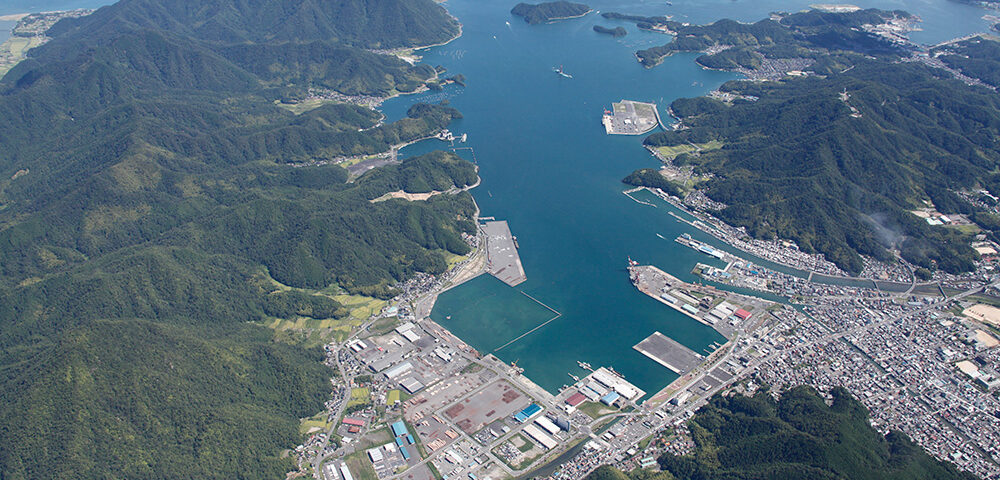
The 15th annual meeting of the Port Performance Research Network (PPRN) brings the leading port economists from all over the globe in Kyoto, Japan, on Tuesday 27 June 2017, to discuss the way forward for port studies

PortEconomics members will join fellow maritime economists interested in port research at the eve of the 2017 Annual Conference of the International Association of Maritime Economists (IAME) to discuss the latest findings and trends in port studies and shape together the future of research in port economics policies and management.

The Port Performance Research Network (PPRN) is a network of leading maritime economists studying port economics, management and policy. Established in 2001 meeting in Hong Kong to undertake empirical testing of port governance, it is currently coordinated by PortEconomics members Gordon Wilmsmeier and Thanos Pallis.

The full – which f each session of the meeting is to hold in depth discussions and dialogue on challenges, ideas, critical issues and future projects in port research.

Programme

09:00 – 10:30 Port Performance Research Network Meeting Part 1

I. Welcome and Announcements

Moderator: Gordon Wilmsmeier
A session to present new and old members and to announce and briefly discuss, special issues and any other business.

II. Roundtable-1: Port Strategies

Moderators: Francesco Parola & Theo Notteboom

Co-operation, integration and co-ordination are much researched themes in mainstream economic and management literature. The port industry has witnessed a multiplication of port co-operation/integration schemes in recent years partly driven by governance reforms, public policy, political forces and market pressures. The cooperation among ports comes in various forms: port authority mergers (Ningbo-Zhoushan, Copenhagen-Malmo, Port Metro Vancouver, Genoa-Savona), port alliances (Seattle/Tacoma), far-reaching coordination (Haropa, Kobe-Osaka), etc.

Key questions:

  • Why is this area relevant for current and future research?
  • What sub-areas are particularly relevant?
  • What are the conceptual and theoretical questions to be answered

11:00 – 12:30 Port Performance Research Network Meeting Part 2

III. RT-2: Sustainability and ports

Moderator: Gordon Wilmsmeier
Today the port industry is under significant pressure to meet not only economic, but also social and environmental criteria. In this context the environmental and social dimension as factors of port performance are becoming more relevant. Port authorities and terminal operators have started to become aware of reaching sustainability goals, andmany of them are increasingly concerned with their emission profiles, asregulation are becoming more stringent. A clear link exists between sustainability, efficiency, competitiveness and profit of a terminal. This sustainability efficiency link between is still not well understood or analysed in detail. Issues like measuring performance beyond traditional efficiency and productivity measures is an emerging challenge and offers new reseach opportunities.

Key questions include:

  • What are the new opportunities for research in the area of sustainability of ports and terminals?
  • What are the conceptual and theoretical questions to be answered?
  • What are new and emerging data and information requirements and needs? particular sub-areas of this topic are relevant for current and future research?
  • What are the challenges in obtaining such data?
  • What are current project of PPRN members to address sustainability challenges?

IV. RT-3: “Twittering or Research” – a discussion on the future of port research

Moderator: Thanos Pallis
Port studies are an emerging, and maturing research field, the number of published port studies increased substantially over the last decade. The huge output leads to important advances in the field. However, we would argue that the quality of published research could be improved substantially. Perhaps a greater focus of the research community on quality of research output to some extent opposed to quantity of research output) would lead to greater advances of port studies?

  • What do you perceive as major challenges in research?
  • How have the use and perception of new media outlets influenced your research?
  • In how far has the increasing volumen and acceleration of information flows altered your research and dissemination activities?
  • What is your opinion on the quality and contribution to theory advances of recent recent research? Give good and bad examples
  • What can we learn from other disciplines?
  • Is the room and need for a movement of „slow port studies“?

V. In-camera meeting – to discuss organisational issues and the way forward.

Moderators: Gordon Wilmsmeier & Thanos Pallis

The goal of the “in camera” meeting is to discuss organisational issues and to hear your proposals for the future development of PPRN

  • What possible projects can we develop?
  • How do we increase the visibility and value added of PPRN to its memers?
  • Is there interest to organize specific PPRN reserach seminars among members?

IV. Special issues

The current issues are being developed by PPRN members:

  • Special Issue on “Shipping and Port Marketing: Policy and Strategy” in Transport Policy – Guest editors: Francesco, Thanos and Dong-Wook: https://www.mar-economists.org/blog/2017/03/22/shipping-and-port-marketing-policy-and-strategy-call-for-papers/
  • Special issue on “Port co-operation” Research in Transportation Business & Management (RTBM) – Guest editors: Theo, Geraldine and Francesco: https://www.mar-economists.org/blog/2017/03/21/call-for-papers-for-rtbm-special-issue-on-port-co-operation

You may also download the agenda here

Next article Mariana-Max containership class introduced
Previous article Performance of initial public offerings (IPOs) in the port industry

Related Posts

Risk-driven supply chain designs – a re-assessment with geopolitical and geoeconomic considerations Featured

Risk-driven supply chain designs – a re-assessment with geopolitical and geoeconomic considerations

Port-city integration European Port Policy

Port-city integration

Rhine-Scheldt delta port system Featured

Rhine-Scheldt delta port system

Weekly Timeline
Apr 8th 1:36 PM
Featured

Risk-driven supply chain designs – a re-assessment with geopolitical and geoeconomic considerations

Mar 27th 5:31 PM
Thematic Area

Port-city integration

Mar 9th 4:35 PM
Featured

Rhine-Scheldt delta port system

Mar 6th 1:23 PM
Thematic Area

Commission unveils new EU Ports Strategy

Feb 18th 1:46 PM
Thematic Area

PortGraphic: Container port dynamics near Gibraltar

Tweets by @PortEconomics
  • Containers
  • Cruise
  • EPP
  • Ports & COVID-19
  • Back to top
About PortEconomics

PortEconomics is a web-based initiative aiming to advance knowledge exchange on seaport studies. Established by maritime economists affiliated to academic institutions in Belgium, Greece and the Netherlands. It provides freely accessible research, education, information, and network-building material on critical issues of port economics, management and policies.

Additional Information
  • About
  • Login
  • Register
  • Edit Profile
  • Contact us
  • PortProfessionals
  • PortReport Series
  • Terms and Conditions
  • Cookie Policy
© PortEconomics 2025. All rights reserved.
Produced by PortEconomics
Manage Consent
To provide the best experiences, we use technologies like cookies to store and/or access device information. Consenting to these technologies will allow us to process data such as browsing behavior or unique IDs on this site. Not consenting or withdrawing consent, may adversely affect certain features and functions.
Functional Always active
The technical storage or access is strictly necessary for the legitimate purpose of enabling the use of a specific service explicitly requested by the subscriber or user, or for the sole purpose of carrying out the transmission of a communication over an electronic communications network.
Preferences
The technical storage or access is necessary for the legitimate purpose of storing preferences that are not requested by the subscriber or user.
Statistics
The technical storage or access that is used exclusively for statistical purposes. The technical storage or access that is used exclusively for anonymous statistical purposes. Without a subpoena, voluntary compliance on the part of your Internet Service Provider, or additional records from a third party, information stored or retrieved for this purpose alone cannot usually be used to identify you.
Marketing
The technical storage or access is required to create user profiles to send advertising, or to track the user on a website or across several websites for similar marketing purposes.
  • Manage options
  • Manage services
  • Manage {vendor_count} vendors
  • Read more about these purposes
View preferences
  • {title}
  • {title}
  • {title}