Thematic Area
Thematic Area
Thematic Area
Productive arrangements in container logistics
PortEconomics co-director Peter de Langen wrote a policy report to help shape port policies in Brazil. The report ‘Productive Arrangements in Container Logistics: Policy Challenges for Granting Terminal Concessions’, was commissioned by the leading Brazilian terminal operator BTP, and written, in full independence, by Peter de Langen. The two central issues that are addressed are first, how to deal with shipping line owned container terminal operators and second, how to prevent dominant market positions of terminal operators or, if this...
Thematic Area
Visibility in Canadian port governance transparency: stakeholders expectations
Transparency remains a remarkably under-analyzed notion in port studies internationally, and Canada is no exception. Over the last three decades, many governments globally have reformed port governance from central government management to more autonomous ports but their practices do not necessarily reflect 21st-century public expectations for transparency. In this phase of their research, PortEconomics members Mary Brooks, Geraldine Knatz, Thanos Pallis and Gordon Wilmsmeier extend their earlier study (see the technical report:...
Thematic Area
Automation in container port systems and management
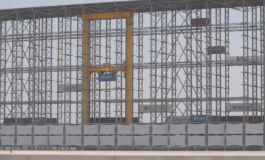
Terminal automation is a full or partial substitution of terminal operations through automated equipment and processes. Depending on how automation is defined, it is already present in many terminals, at least in its simplest form using information technologies (ITs) to manage terminal assets and supplement human activity. Automation processes often result in two major types of automated terminals. A fully automated terminal uses a computer–IT-led system to handle a container from dockside to the pickup area through remotely...
Thematic Area
National Integrated Maritime Policies: vision formulation, regional embeddedness
Integrated maritime policies (IMPs) provide a comprehensive governance framework to support the sustainable use of the seas and oceans while ensuring a horizon of prosperity for the population of the surrounding coastal regions. PortEconomics co-director Theo Notteboom along with Hubert Paridaens (Antwerp Maritime Academy), developed a study, published in the academic journal Sustainability, on how IMP governance can be arranged to support more effective policy integration. The authors identify and discuss a number of key strategic and...
Thematic Area
Revolutionisation of how ports operate
By Giovanni Prati, CNN How this technology could shake up logistics at major ports Dubai (CNN) In Dubai's Jebel Ali port, a new technology is being tested that aims to speed up, improve and automate the way shipping containers are stored, moved and shipped. Typically, at major ports, shipping containers awaiting transport are simply piled up on top of each other six or seven high, waiting to be moved onto ships by cranes. As well as taking up a huge amount of space, this approach means locating and picking up the right box can be...
Thematic Area
An evaluation of autonomous ship alternatives for future container shipping in the Arctic routes
The latest portstudy of PortEconomics members Theo Notteboom and Adolf Ng, co-authored by Ziaul Haque Munim, Rana Saha and Halvor Schøyen (University of South-Eastern Norway, Horten, Norway) investigates the competitiveness of various autonomous ship categories for container shipping in the Arctic route. The authors propose a multi-criteria decision-making (MCDM) framework using four ship categories as alternatives and eight criteria for competitiveness evaluation. We analyse collected data using the Best–Worst Method (BWM), one of the...
Thematic Area
Improving a congested maritime supply chain with time slot management for port calls
by Mikael Lind, Research Institutes of Sweden (RISE) and Chalmers University of Technology, Wolfgang Lehmacher, Anchor Group, Jan Hoffmann, UNCTAD, Lars Jensen, Vespucci Maritime, Theo Notteboom, Ghent University and Antwerp Maritime Academy, Torbjörn Rydbergh, Marine Benchmark, Peter Sand, BIMCO, Sandra Haraldson, RISE, Rachael White, Next Level Information & Cool Logistics, Hanane Becha, UN/CEFACT, Patrik Berglund, Xeneta Abstract Disruption and congestion are occurring across the global maritime...
Thematic Area
Port and hinterland: the impact of containerisation
The traditional notion of hinterland refers to the inland economic area influenced by the ports. In other words, hinterland represents the set of points of origin/destination of cargo flows, which pass through the port and generates the majority of its business. Following logistics and market transformations, the concept of hinterland has become rather dynamic and the traditional static approach may be misleading. In particular, it appears rather complex to identify hinterland’s boundaries due to the influence of drivers that are constantly...
Thematic Area