

• Home
  • About
    • Members
    • Associate Members
    • Former members
  • Thematic Areas
    • Containers
    • Cruise
    • European Port Policy
    • Ports & COVID-19
  • PortStudies
  • Presentations
  • Noticeboard
  • Viewpoints
  • PortLibrary
  • PortReport
PortEconomics
  • March 19th, 2026
PortEconomics
  • Home
  • About
    • Members
    • Associate Members
    • Former members
  • Thematic Areas
    • Containers
    • Cruise
    • European Port Policy
    • Ports & COVID-19
  • PortStudies
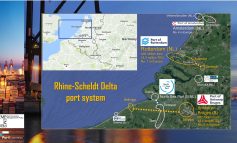
    Rhine-Scheldt delta port system

    Rhine-Scheldt delta port system

    A metric of global maritime supply chain disruptions: The global supply chain stress index - maritime (GSCSI-M)

    A metric of global maritime supply chain disruptions: The global supply chain stress index - maritime (GSCSI-M)

    ESG disclosure as a proxy of port corporate communication and sustainable management strategy: An LDA approach

    ESG disclosure as a proxy of port corporate communication and sustainable management strategy: An LDA approach

    From coal exports to green steel production? The role of circular economy precincts for sustainable port diversification

    From coal exports to green steel production? The role of circular economy precincts for sustainable port diversification

    Maritime transport in net zero

    Maritime transport in net zero

  • Presentations
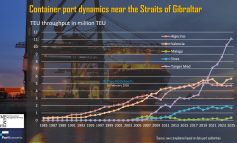
    PortGraphic: Container port dynamics near Gibraltar

    PortGraphic: Container port dynamics near Gibraltar

    Top-10 PortReads in 2025

    Top-10 PortReads in 2025

    Port reform: World Bank publishes the third edition of its port reform toolkit

    Port reform: World Bank publishes the third edition of its port reform toolkit

    When will we admit that maritime transport will not be decarbonised by 2050?

    When will we admit that maritime transport will not be decarbonised by 2050?

    Digital technologies for efficient and resilient sea-land logistics

    Digital technologies for efficient and resilient sea-land logistics

  • Noticeboard
    Call for papers: Contemporary Maritime Economics: Transformations and Emerging Perspectives

    Call for papers: Contemporary Maritime Economics: Transformations and Emerging Perspectives

    ECONSHIP2026: Call for papers

    ECONSHIP2026: Call for papers

    Call for papers: 1st Florence Maritime Regulation Conference

    Call for papers: 1st Florence Maritime Regulation Conference

    PortEconomics co-director appointed Senior Scientific Advisor to the Florence School of Regulation

    PortEconomics co-director appointed Senior Scientific Advisor to the Florence School of Regulation

    Jean Monnet Chair in European Port Policy

    Jean Monnet Chair in European Port Policy

  • Viewpoints
    Commission unveils new EU Ports Strategy

    Commission unveils new EU Ports Strategy

    PortGraphic: Top-15 EU container ports in Q3 2025

    PortGraphic: Top-15 EU container ports in Q3 2025

    Maritime transport in net zero

    Maritime transport in net zero

    Portgraphic: Top-15 EU container ports in H1 2025

    Portgraphic: Top-15 EU container ports in H1 2025

    Portgraphic: fleet capacity (owned/chartered) of container shipping lines

    Portgraphic: fleet capacity (owned/chartered) of container shipping lines

  • PortLibrary
  • PortReport
IAPH-WPSP Port Economic Impact Barometer for Week 25: intensified inland competition, ro-pax restartingFeatured

IAPH-WPSP Port Economic Impact Barometer for Week 25: intensified inland competition, ro-pax restarting

June 22nd, 2020 Featured, Ports & COVID-19, Thematic Area

READ ALSO

PortGraphic: Container port dynamics near Gibraltar
Call for papers: Contemporary Maritime Economics: Transformations and Emerging Perspectives
PortGraphic: Top-15 EU container ports in Q3 2025
Rhine-Scheldt delta port system

IAPH-WPSP Port Economic Impact Barometer for Week 25 reports on reduced cargo volumes, intensified competition in inland transport modes, and passenger and ro-pax services restarting with limited capacity

In its ninth weekly edition,  the IAPH-WPSP Port Economic Impact Barometer, published following a survey of 75 ports around the world – co-authored by PortEconomics members Theo Notteboom and Thanos Pallis – confirms that first passenger and ro-pax services restarting with limited capacity in some regions, while reduced cargo volumes intensifies competition in inland transport modes.

For the first time since the WPSP survey began, a limited number of sampled ports in predominantly European countries are reporting some activity on passenger and mini- cruise services with major safety restrictions in place on numbers and trajectories. There are confirmed reports of limited ferry and river cruise services returning to operation as Continental Europe emerges from the lockdown. However, in most parts of the rest of the world, a complete ban remains in place on cruise and passenger vessel services due to immigration controls, with passengers only being permitted to enter in the case of repatriation. With many cruise vessels inactive, competition has been heating up between ports to attract owner-operators to use their anchorage berths with reduced fee incentives. In some cases, this has led to a shortage of anchorage space at ports due to idled container vessel tonnage, with many liquid bulk tankers and ro-ro vessels being used for floating storage during this low demand period.

Co-author Professor Theo Notteboom commented : “Vessel activity was also affected by almost half of new car exports and the export of automotive components since the outbreak of COVID19.”

Lower overall container vessel calls persist whilst many ports in the sample experience upticks in general cargo vessel calls

Blank sailings, mainly on trade routes with the Far East, continue to affect this week’s results for container vessels. However, their impact is lower than the one recorded by the Barometer in the last five weeks. About 45% of the ports are reporting that the number of container vessel calls fell by 5% to 25% compared to a normal situation. This figure is higher than 39% in week 23, but comparable to the figures of weeks 19 and 21. Another observation this week has been the call sizes in terms of overall container moves, with records being broken at individual hub ports because of the many blank sailings. Reports have come in of 18,000 plus TEU being handled on one ultra-large container vessel (ULCV) call in Europe and over 34,000 TEU on another in North America. Similar testaments of other ports in these two regions will mean they will be kept busy with these mini cargo peaks in the coming weeks.

Nonetheless, in response to the question about availability and capacity of trucks and barges for hinterland and cross-border transport, many ports in different regions report intensifying competition among respective truck and barge owner-operators for increasingly scarce road and waterway cargo volumes. In Europe, the lower levels on key river routes such as the Rhine have only exacerbated the problems for barge owners trying to deliver cargos inland

The share of ports reporting reductions in other cargo vessel calls of more than 25% gradually decreased from 16% in week 21 to 4% this week, which is also far below the 12 to 15% observations throughout weeks 16 to 20. Some 59% of the ports are now reporting that the number of calls by other cargo vessels is rather stable compared to a normal situation, the highest figure to date. Some ports, particularly in Europe, are reporting an increase in tanker vessel calls.

Impact by region of the crisis on hinterland cargo transits

Overall for the 75 port sample, hinterland transport operations are back to working fairly close to normal – especially in many of the (European) countries where businesses are gradually reopening. The reduced cargo volumes are not seen as irrelevant for the absence of delays. Some economic activities are starting to resume with goods flows just beginning to pick up. Nonetheless, this is only happening very slowly.

Even though large parts of North America are still fighting to get the number of infections down, the overall impact on hinterland transport has been small. In some regions of Central and South America, delays in hinterland transportation and cross-border delays have not yet disappeared with the COVID19 contagion spreading further. With lower maritime volumes arriving/leaving ports in all three regions considered, the situation in road haulage and inland barge operators has become very competitive. Rail services are only occasionally disrupted with services experiencing few difficulties related to the crisis.

Co-author Professor Thanos Pallis commented: “The next two bi-weekly Port Economic Impact Barometer reports will include regional comparisons on port capacity utilization, as well as port worker availability. We still continue to observe increasing regional disparities in terms of the impact of COVID19, also in the regions which are under-represented in the regular sample ports such as Southern Asia, the Middle East, and Africa. Moving forward, our intention is to further examine the economic impact of the COVID19 crisis on ports in terms of medium and long-term business risk, which in turn will also allow us to provide insights into the post COVID19 global supply chain landscape.”

To download the report, click here.
Next article PortReport 5 | Transparency in governance: seaport practices
Previous article Consequences of circular economy on the business model of the port authority

Related Posts

Rhine-Scheldt delta port system Featured

Rhine-Scheldt delta port system

Commission unveils new EU Ports Strategy European Port Policy

Commission unveils new EU Ports Strategy

PortGraphic: Container port dynamics near Gibraltar Containers

PortGraphic: Container port dynamics near Gibraltar

Weekly Timeline
Mar 9th 4:35 PM
Featured

Rhine-Scheldt delta port system

Mar 6th 1:23 PM
Thematic Area

Commission unveils new EU Ports Strategy

Feb 18th 1:46 PM
Thematic Area

PortGraphic: Container port dynamics near Gibraltar

Feb 12th 12:25 PM
Featured

A metric of global maritime supply chain disruptions: The global supply chain stress index – maritime (GSCSI-M)

Jan 14th 12:56 PM
Noticeboard

Call for papers: Contemporary Maritime Economics: Transformations and Emerging Perspectives

Tweets by @PortEconomics
  • Containers
  • Cruise
  • EPP
  • Ports & COVID-19
  • Back to top
About PortEconomics

PortEconomics is a web-based initiative aiming to advance knowledge exchange on seaport studies. Established by maritime economists affiliated to academic institutions in Belgium, Greece and the Netherlands. It provides freely accessible research, education, information, and network-building material on critical issues of port economics, management and policies.

Additional Information
  • About
  • Login
  • Register
  • Edit Profile
  • Contact us
  • PortProfessionals
  • PortReport Series
  • Terms and Conditions
  • Cookie Policy
© PortEconomics 2025. All rights reserved.
Produced by PortEconomics
Manage Consent
To provide the best experiences, we use technologies like cookies to store and/or access device information. Consenting to these technologies will allow us to process data such as browsing behavior or unique IDs on this site. Not consenting or withdrawing consent, may adversely affect certain features and functions.
Functional Always active
The technical storage or access is strictly necessary for the legitimate purpose of enabling the use of a specific service explicitly requested by the subscriber or user, or for the sole purpose of carrying out the transmission of a communication over an electronic communications network.
Preferences
The technical storage or access is necessary for the legitimate purpose of storing preferences that are not requested by the subscriber or user.
Statistics
The technical storage or access that is used exclusively for statistical purposes. The technical storage or access that is used exclusively for anonymous statistical purposes. Without a subpoena, voluntary compliance on the part of your Internet Service Provider, or additional records from a third party, information stored or retrieved for this purpose alone cannot usually be used to identify you.
Marketing
The technical storage or access is required to create user profiles to send advertising, or to track the user on a website or across several websites for similar marketing purposes.
  • Manage options
  • Manage services
  • Manage {vendor_count} vendors
  • Read more about these purposes
View preferences
  • {title}
  • {title}
  • {title}