

• Home
  • About
    • Members
    • Associate Members
    • Former members
  • Thematic Areas
    • Containers
    • Cruise
    • European Port Policy
    • Ports & COVID-19
  • PortStudies
  • Presentations
  • Noticeboard
  • Viewpoints
  • PortLibrary
  • PortReport
PortEconomics
  • February 22nd, 2026
PortEconomics
  • Home
  • About
    • Members
    • Associate Members
    • Former members
  • Thematic Areas
    • Containers
    • Cruise
    • European Port Policy
    • Ports & COVID-19
  • PortStudies
    A metric of global maritime supply chain disruptions: The global supply chain stress index - maritime (GSCSI-M)

    A metric of global maritime supply chain disruptions: The global supply chain stress index - maritime (GSCSI-M)

    ESG disclosure as a proxy of port corporate communication and sustainable management strategy: An LDA approach

    ESG disclosure as a proxy of port corporate communication and sustainable management strategy: An LDA approach

    From coal exports to green steel production? The role of circular economy precincts for sustainable port diversification

    From coal exports to green steel production? The role of circular economy precincts for sustainable port diversification

    Maritime transport in net zero

    Maritime transport in net zero

    Onboard carbon capture, utilisation and storage (CCUS) supply chain optimisation: an application to vessels active in the offshore wind industry

    Onboard carbon capture, utilisation and storage (CCUS) supply chain optimisation: an application to vessels active in the offshore wind industry

  • Presentations
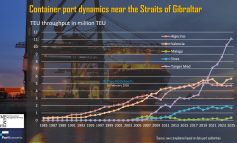
    PortGraphic: Container port dynamics near Gibraltar

    PortGraphic: Container port dynamics near Gibraltar

    Top-10 PortReads in 2025

    Top-10 PortReads in 2025

    Port reform: World Bank publishes the third edition of its port reform toolkit

    Port reform: World Bank publishes the third edition of its port reform toolkit

    When will we admit that maritime transport will not be decarbonised by 2050?

    When will we admit that maritime transport will not be decarbonised by 2050?

    Digital technologies for efficient and resilient sea-land logistics

    Digital technologies for efficient and resilient sea-land logistics

  • Noticeboard
    Call for papers: Contemporary Maritime Economics: Transformations and Emerging Perspectives

    Call for papers: Contemporary Maritime Economics: Transformations and Emerging Perspectives

    ECONSHIP2026: Call for papers

    ECONSHIP2026: Call for papers

    Call for papers: 1st Florence Maritime Regulation Conference

    Call for papers: 1st Florence Maritime Regulation Conference

    PortEconomics co-director appointed Senior Scientific Advisor to the Florence School of Regulation

    PortEconomics co-director appointed Senior Scientific Advisor to the Florence School of Regulation

    Jean Monnet Chair in European Port Policy

    Jean Monnet Chair in European Port Policy

  • Viewpoints
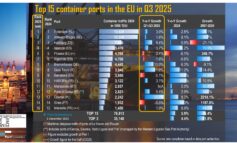
    PortGraphic: Top-15 EU container ports in Q3 2025

    PortGraphic: Top-15 EU container ports in Q3 2025

    Maritime transport in net zero

    Maritime transport in net zero

    Portgraphic: Top-15 EU container ports in H1 2025

    Portgraphic: Top-15 EU container ports in H1 2025

    Portgraphic: fleet capacity (owned/chartered) of container shipping lines

    Portgraphic: fleet capacity (owned/chartered) of container shipping lines

    In a tight spot: American ports in global supply chains

    In a tight spot: American ports in global supply chains

  • PortLibrary
  • PortReport
Liner shipping markets, networks & strategies: implications for port development on South AmericaPresentations

Liner shipping markets, networks & strategies: implications for port development on South America

January 28th, 2014 Presentations, Viewpoints

READ ALSO

Container alliance strategies, market concentration and equality: A dynamic time warping clustering approach
Port Governance & the Implications of Institutional fragmentation: lessons from Colombia
A new conception of port governance under climate change
PortGraphic: Container port dynamics near Gibraltar

Port infrastructure and the quality of shipping services in a region or country are important determinants for the countries integration in the global market and the competitiveness of the same. PortEconomics associate member Gordon Wilmsmeir analyses the evolution of symptoms of change in the liner shipping industry within South America and more particularly on the West Coast, as  direct drivers for port infrastructure and port system development – in a study which was first presented at the OECD Port Investment and Container Shipping Markets Santiago, in Chile and is both economically interesting and a matter of serious policy significance.

In a study predominantly on the challenges for port development, Gordnon discusses the deeper phenomena of structural change in the maritime industry and geographical shift. Given the sustained growth in emerging economies, despite the recent crisis, port infrastructure development has emerged as a crucial issue for future economic growth. The West Coast of South America (WCSA) and particularly Chile have been experiencing significant economic expansion over the last two decades. However, the role of infrastructure and its contribution to continued economic and social development has only recently returned to the political agendas.

The growth in demand for port infrastructure, the structural changes in the maritime industry and a changing geography of trade have clearly revealed the limits of the current transport infrastructure in the region and the country. Infrastructure development, and in particularly port infrastructure expansion decisions are politicized full of historicism and case-specific empiricism. Thus this work tries to stimulate a more systemic view to support more contextual, integrated and long-term policy decisions as regards container port developments in the West Coast of South America (WCSA) and particularly Chile.

You might download the discussion paper via the the ITF/OECD website: Liner Shipping Markets, Networks and Strategies. The implications for port development on the West Coast of South America. The case of Chile

Download the presentation.

Next article Container vessel turnaround times across the world
Previous article Port-focal logistics and global supply chains

Gordon Wilmsmeier

Gordon Wilmsmeier holds the Kühne Professorial Chair in Logistics at the Universidad de los Andes in Bogota, Colombia. From 2011 to 2017, he worked as Economic Affairs Officer in the Infrastructure Services Unit at the Economic Commission for Latin America and the Caribbean. Previously he worked at Edinburgh Napier University’s Transport Research Institute (TRI), and as consultant for UN-ECLAC, UNCTAD, UN-OHRLLS, World Bank, JICA, IDB, CAF, and the OAS. Gordon is honorary professor for Maritime Geography at the University of Applied Sciences in Bremen, Germany, visiting lecturer at Göteborg University, Sweden and Universidad Nacional de San Martín, Argentina. He has published over 100 book chapters, journal papers, institutional publications and working papers. His research focuses on transport and economic geography, maritime economics and energy efficiency with particular interests in international trade and transport geography and transport costs, sustainable mobility strategies, maritime transport networks and connectivity , inland waterways and inland shipping policy. In the area of port economics his research concentrates on devolution and privatization, and organizational performance and efficiency, as well as sustainable performance analysis. Currently, a specific focus is related to measuring energy, emissions and water footprints in ports. He is chair of the global Port Performance Research Network (PPRN), IAME member, the Sustainability Working Group of the European Freight & Logistics Leaders Forum, and associate member of PortEconomics.

Related Posts

PortGraphic: Container port dynamics near Gibraltar Containers

PortGraphic: Container port dynamics near Gibraltar

PortGraphic: Top-15 EU container ports in Q3 2025 Containers

PortGraphic: Top-15 EU container ports in Q3 2025

Top-10 PortReads in 2025 Featured

Top-10 PortReads in 2025

Weekly Timeline
Feb 18th 1:46 PM
Thematic Area

PortGraphic: Container port dynamics near Gibraltar

Feb 12th 12:25 PM
Featured

A metric of global maritime supply chain disruptions: The global supply chain stress index – maritime (GSCSI-M)

Jan 14th 12:56 PM
Noticeboard

Call for papers: Contemporary Maritime Economics: Transformations and Emerging Perspectives

Jan 4th 12:46 PM
Thematic Area

PortGraphic: Top-15 EU container ports in Q3 2025

Dec 16th 1:12 PM
Featured

Top-10 PortReads in 2025

Tweets by @PortEconomics
  • Containers
  • Cruise
  • EPP
  • Ports & COVID-19
  • Back to top
About PortEconomics

PortEconomics is a web-based initiative aiming to advance knowledge exchange on seaport studies. Established by maritime economists affiliated to academic institutions in Belgium, Greece and the Netherlands. It provides freely accessible research, education, information, and network-building material on critical issues of port economics, management and policies.

Additional Information
  • About
  • Login
  • Register
  • Edit Profile
  • Contact us
  • PortProfessionals
  • PortReport Series
  • Terms and Conditions
  • Cookie Policy
© PortEconomics 2025. All rights reserved.
Produced by PortEconomics
Manage Consent
To provide the best experiences, we use technologies like cookies to store and/or access device information. Consenting to these technologies will allow us to process data such as browsing behavior or unique IDs on this site. Not consenting or withdrawing consent, may adversely affect certain features and functions.
Functional Always active
The technical storage or access is strictly necessary for the legitimate purpose of enabling the use of a specific service explicitly requested by the subscriber or user, or for the sole purpose of carrying out the transmission of a communication over an electronic communications network.
Preferences
The technical storage or access is necessary for the legitimate purpose of storing preferences that are not requested by the subscriber or user.
Statistics
The technical storage or access that is used exclusively for statistical purposes. The technical storage or access that is used exclusively for anonymous statistical purposes. Without a subpoena, voluntary compliance on the part of your Internet Service Provider, or additional records from a third party, information stored or retrieved for this purpose alone cannot usually be used to identify you.
Marketing
The technical storage or access is required to create user profiles to send advertising, or to track the user on a website or across several websites for similar marketing purposes.
  • Manage options
  • Manage services
  • Manage {vendor_count} vendors
  • Read more about these purposes
View preferences
  • {title}
  • {title}
  • {title}