


• Home
  • About
    • Members
    • Associate Members
    • Former members
  • Thematic Areas
    • Containers
    • Cruise
    • European Port Policy
    • Ports & COVID-19
  • PortStudies
  • Presentations
  • Noticeboard
  • Viewpoints
  • PortLibrary
  • PortReport
PortEconomics
  • March 19th, 2026
PortEconomics
  • Home
  • About
    • Members
    • Associate Members
    • Former members
  • Thematic Areas
    • Containers
    • Cruise
    • European Port Policy
    • Ports & COVID-19
  • PortStudies
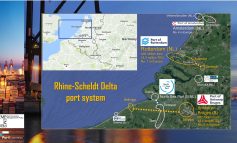
    Rhine-Scheldt delta port system

    Rhine-Scheldt delta port system

    A metric of global maritime supply chain disruptions: The global supply chain stress index - maritime (GSCSI-M)

    A metric of global maritime supply chain disruptions: The global supply chain stress index - maritime (GSCSI-M)

    ESG disclosure as a proxy of port corporate communication and sustainable management strategy: An LDA approach

    ESG disclosure as a proxy of port corporate communication and sustainable management strategy: An LDA approach

    From coal exports to green steel production? The role of circular economy precincts for sustainable port diversification

    From coal exports to green steel production? The role of circular economy precincts for sustainable port diversification

    Maritime transport in net zero

    Maritime transport in net zero

  • Presentations
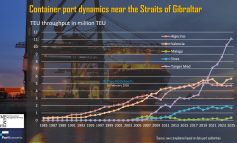
    PortGraphic: Container port dynamics near Gibraltar

    PortGraphic: Container port dynamics near Gibraltar

    Top-10 PortReads in 2025

    Top-10 PortReads in 2025

    Port reform: World Bank publishes the third edition of its port reform toolkit

    Port reform: World Bank publishes the third edition of its port reform toolkit

    When will we admit that maritime transport will not be decarbonised by 2050?

    When will we admit that maritime transport will not be decarbonised by 2050?

    Digital technologies for efficient and resilient sea-land logistics

    Digital technologies for efficient and resilient sea-land logistics

  • Noticeboard
    Call for papers: Contemporary Maritime Economics: Transformations and Emerging Perspectives

    Call for papers: Contemporary Maritime Economics: Transformations and Emerging Perspectives

    ECONSHIP2026: Call for papers

    ECONSHIP2026: Call for papers

    Call for papers: 1st Florence Maritime Regulation Conference

    Call for papers: 1st Florence Maritime Regulation Conference

    PortEconomics co-director appointed Senior Scientific Advisor to the Florence School of Regulation

    PortEconomics co-director appointed Senior Scientific Advisor to the Florence School of Regulation

    Jean Monnet Chair in European Port Policy

    Jean Monnet Chair in European Port Policy

  • Viewpoints
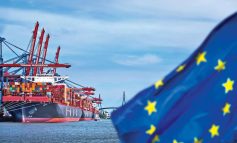
    Commission unveils new EU Ports Strategy

    Commission unveils new EU Ports Strategy

    PortGraphic: Top-15 EU container ports in Q3 2025

    PortGraphic: Top-15 EU container ports in Q3 2025

    Maritime transport in net zero

    Maritime transport in net zero

    Portgraphic: Top-15 EU container ports in H1 2025

    Portgraphic: Top-15 EU container ports in H1 2025

    Portgraphic: fleet capacity (owned/chartered) of container shipping lines

    Portgraphic: fleet capacity (owned/chartered) of container shipping lines

  • PortLibrary
  • PortReport
The Analyst: Maersk Line’s clean fuel efforts; gaining competitive advantage through moving early?
Featured

The Analyst: Maersk Line’s clean fuel efforts; gaining competitive advantage through moving early?

January 20th, 2023 Featured, Viewpoints

READ ALSO

Commission unveils new EU Ports Strategy
Investments and financing challenges of the EU’s port managing bodies; findings from a comprehensive survey
Port reform: World Bank publishes the third edition of its port reform toolkit
Rhine-Scheldt delta port system

By Peter de Langen

Maersk is clearly an early mover when it comes to transitioning to clean fuels. It has decided to opt mainly for green methanol and has now 19 ships with dual fuel engines capable of sailing on methanol on order. In addition, Maersk is focusing on securing the supply of green methanol, and currently has 7 partnerships with clean methanol providers in various continents. However, even with these seven, Maersk is still short on methanol fuel supply; the agreements will generate over 1 million ton of methanol, but Maersk demand is around 6 million ton. Thus, Maersk is taking further steps, amongst others exploring a partnership in Spain, which would be the largest of its kind, and may be able to generate 2 to 3 million methanol.

The huge efforts of Maersk demonstrate that unlike the current fuels, where there are various established suppliers, for methanol there is no open market. Thus, Maersk choice to be an early mover may pay off when methanol becomes to go-to clean shipping fuel. In that scenario, competing companies may face an uphill battle to secure the supply of methanol, and may not be able to source methanol at the same price levels as Maersk. In that sense, it is relevant to note that Maersk’s potential partnership in Spain would involve massive investments in wind and solar energy, which in may benefit substantially from EU funding as part of EU’s greening policies (fit for 55).

In the same way that Maersk may aspire gaining a competitive edge as early mover, Spanish ports may aspire to benefit from moving early, by strengthening the ties with Maersk through expanding their role as bunkering ports. Thus, the Spanish ports may need to remind themselves: if you want to be an early mover, you need to move fast.

The article has been first published @PortStrategy.
Next article Logistics integration strategies in container shipping: a multiple case-study on Maersk Line, MSC and CMA CGM
Previous article GREPORT2022- report on Greek ports

Peter de Langen

Dr. Peter de Langen is the owner and principal consultant of Ports & Logistics Advisory, based in Malaga, Spain and established in 2013. Peter de Langen is part-time professor at Copenhagen Business School and held a part-time position as professor Cargo Transport & Logistics, at Eindhoven University of Technology, from 2009 to 2016, From 2007 to 2013, Peter worked at Port of Rotterdam Authority (PoR), department Corporate Strategy as senior advisor. From 1997 to 2007, he worked at Erasmus University Rotterdam (EUR). Peter is co-director of the knowledge dissemination platform www.porteconomics.eu, co-organiser of conferences and training events and regular speaker at industry conferences on ports and shipping.

Related Posts

Rhine-Scheldt delta port system Featured

Rhine-Scheldt delta port system

Commission unveils new EU Ports Strategy European Port Policy

Commission unveils new EU Ports Strategy

PortGraphic: Container port dynamics near Gibraltar Containers

PortGraphic: Container port dynamics near Gibraltar

Weekly Timeline
Mar 9th 4:35 PM
Featured

Rhine-Scheldt delta port system

Mar 6th 1:23 PM
Thematic Area

Commission unveils new EU Ports Strategy

Feb 18th 1:46 PM
Thematic Area

PortGraphic: Container port dynamics near Gibraltar

Feb 12th 12:25 PM
Featured

A metric of global maritime supply chain disruptions: The global supply chain stress index – maritime (GSCSI-M)

Jan 14th 12:56 PM
Noticeboard

Call for papers: Contemporary Maritime Economics: Transformations and Emerging Perspectives

Tweets by @PortEconomics
  • Containers
  • Cruise
  • EPP
  • Ports & COVID-19
  • Back to top
About PortEconomics

PortEconomics is a web-based initiative aiming to advance knowledge exchange on seaport studies. Established by maritime economists affiliated to academic institutions in Belgium, Greece and the Netherlands. It provides freely accessible research, education, information, and network-building material on critical issues of port economics, management and policies.

Additional Information
  • About
  • Login
  • Register
  • Edit Profile
  • Contact us
  • PortProfessionals
  • PortReport Series
  • Terms and Conditions
  • Cookie Policy
© PortEconomics 2025. All rights reserved.
Produced by PortEconomics
Manage Consent
To provide the best experiences, we use technologies like cookies to store and/or access device information. Consenting to these technologies will allow us to process data such as browsing behavior or unique IDs on this site. Not consenting or withdrawing consent, may adversely affect certain features and functions.
Functional Always active
The technical storage or access is strictly necessary for the legitimate purpose of enabling the use of a specific service explicitly requested by the subscriber or user, or for the sole purpose of carrying out the transmission of a communication over an electronic communications network.
Preferences
The technical storage or access is necessary for the legitimate purpose of storing preferences that are not requested by the subscriber or user.
Statistics
The technical storage or access that is used exclusively for statistical purposes. The technical storage or access that is used exclusively for anonymous statistical purposes. Without a subpoena, voluntary compliance on the part of your Internet Service Provider, or additional records from a third party, information stored or retrieved for this purpose alone cannot usually be used to identify you.
Marketing
The technical storage or access is required to create user profiles to send advertising, or to track the user on a website or across several websites for similar marketing purposes.
  • Manage options
  • Manage services
  • Manage {vendor_count} vendors
  • Read more about these purposes
View preferences
  • {title}
  • {title}
  • {title}