

• Home
  • About
    • Members
    • Associate Members
    • Former members
  • Thematic Areas
    • Containers
    • Cruise
    • European Port Policy
    • Ports & COVID-19
  • PortStudies
  • Presentations
  • Noticeboard
  • Viewpoints
  • PortLibrary
  • PortReport
PortEconomics
  • November 26th, 2026
PortEconomics
  • Home
  • About
    • Members
    • Associate Members
    • Former members
  • Thematic Areas
    • Containers
    • Cruise
    • European Port Policy
    • Ports & COVID-19
  • PortStudies
    Port regionalisation revisited: conceptual evolution and future research directions

    Port regionalisation revisited: conceptual evolution and future research directions

    Geopolitical leverage through the international activities of State-Owned Enterprises (SOEs) in ports and maritime logistics

    Geopolitical leverage through the international activities of State-Owned Enterprises (SOEs) in ports and maritime logistics

    Risk-driven supply chain designs – a re-assessment with geopolitical and geoeconomic considerations

    Risk-driven supply chain designs – a re-assessment with geopolitical and geoeconomic considerations

    Rhine-Scheldt delta port system

    Rhine-Scheldt delta port system

    A metric of global maritime supply chain disruptions: The global supply chain stress index - maritime (GSCSI-M)

    A metric of global maritime supply chain disruptions: The global supply chain stress index - maritime (GSCSI-M)

  • Presentations
    Top-15 EU container ports in H1 2026

    Top-15 EU container ports in H1 2026

    European ports: The need to avoid the great divide

    European ports: The need to avoid the great divide

    Florence maritime regulation conference: PortEconomics members shape maritime regulation

    Florence maritime regulation conference: PortEconomics members shape maritime regulation

    New edition: Developing ports as business ecosystems

    New edition: Developing ports as business ecosystems

    European Ports: Reflection on policies and strategies for the energy transition

    European Ports: Reflection on policies and strategies for the energy transition

  • Noticeboard
    Call for papers: Contemporary Maritime Economics: Transformations and Emerging Perspectives

    Call for papers: Contemporary Maritime Economics: Transformations and Emerging Perspectives

    ECONSHIP2026: Call for papers

    ECONSHIP2026: Call for papers

    Call for papers: 1st Florence Maritime Regulation Conference

    Call for papers: 1st Florence Maritime Regulation Conference

    PortEconomics co-director appointed Senior Scientific Advisor to the Florence School of Regulation

    PortEconomics co-director appointed Senior Scientific Advisor to the Florence School of Regulation

    Jean Monnet Chair in European Port Policy

    Jean Monnet Chair in European Port Policy

  • Viewpoints
    The trajectory of container port activity in the Americas and the Caribbean basin over the first 25 years of the millennium

    The trajectory of container port activity in the Americas and the Caribbean basin over the first 25 years of the millennium

    Top-15 EU container ports in H1 2026

    Top-15 EU container ports in H1 2026

    European ports: The need to avoid the great divide

    European ports: The need to avoid the great divide

    New edition: Developing ports as business ecosystems

    New edition: Developing ports as business ecosystems

    Maritime and port strategies as state policies: an introductory approach

    Maritime and port strategies as state policies: an introductory approach

  • PortLibrary
  • PortReport
The legacy and future of the Panama canal: from point of transit to transshipment hubContainers

The legacy and future of the Panama canal: from point of transit to transshipment hub

March 31st, 2015 Containers, Featured, Viewpoints

READ ALSO

Port regionalisation revisited: conceptual evolution and future research directions
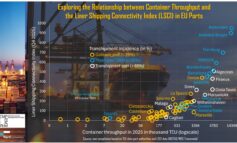
PortGraphic: Are bigger ports better connected to maritime liner service networks?
Top-15 EU container ports in H1 2026
Port regionalisation revisited: conceptual evolution and future research directions

In 2014, the Panama Canal celebrated its centennial-spotlighting its legacy as an important gateway of international trade but also raising questions about its future in an increasingly integrated global economy. The Panama Canal expansion project will open a new set of locks and will complete several ancillary projects, such as dredging and widening, in early 2016 at an estimated cost of $6.2 billion. As is common with megaprojects, however, unforeseen events and cost overruns are likely to increase the final price tag.

The expansion is timely and necessary and will accommodate containerships in the range of 12,000 to 15,000 20-foot equivalent units (TEUs) with a draft of 50 feet. Before the expansion, the canal could handle containerships of up to 4,500 TEUs with a draft of 42 feet.

Read more at PortEconomics members Jean-Paul Rodrigue and Theo Notteboom interesting ariticle, pubished at the 296th Issue of TR News.

The article is free and available @PortEconomics.eu

Next article How much container volume can a weekly service bring to your port?
Previous article Mega vessel stop-over: transhipment near the straits of Gibraltar

Related Posts

Port regionalisation revisited: conceptual evolution and future research directions Featured

Port regionalisation revisited: conceptual evolution and future research directions

PortGraphic: Are bigger ports better connected to maritime liner service networks? Containers

PortGraphic: Are bigger ports better connected to maritime liner service networks?

The trajectory of container port activity in the Americas and the Caribbean basin over the first 25 years of the millennium Containers

The trajectory of container port activity in the Americas and the Caribbean basin over the first 25 years of the millennium

Weekly Timeline
Nov 23rd 10:10 AM
Featured

Port regionalisation revisited: conceptual evolution and future research directions

Nov 4th 11:00 AM
Thematic Area

PortGraphic: Are bigger ports better connected to maritime liner service networks?

Oct 2nd 10:28 AM
Thematic Area

The trajectory of container port activity in the Americas and the Caribbean basin over the first 25 years of the millennium

Sep 22nd 10:21 AM
Thematic Area

Top-15 EU container ports in H1 2026

Sep 17th 12:11 PM
Category

Geopolitical leverage through the international activities of State-Owned Enterprises (SOEs) in ports and maritime logistics

Tweets by @PortEconomics
  • Containers
  • Cruise
  • EPP
  • Ports & COVID-19
  • Back to top
About PortEconomics

PortEconomics is a web-based initiative aiming to advance knowledge exchange on seaport studies. Established by maritime economists affiliated to academic institutions in Belgium, Greece and the Netherlands. It provides freely accessible research, education, information, and network-building material on critical issues of port economics, management and policies.

Additional Information
  • About
  • Login
  • Register
  • Edit Profile
  • Contact us
  • PortProfessionals
  • PortReport Series
  • Terms and Conditions
  • Cookie Policy
© PortEconomics 2025. All rights reserved.
Produced by PortEconomics
Manage Consent
To provide the best experiences, we use technologies like cookies to store and/or access device information. Consenting to these technologies will allow us to process data such as browsing behavior or unique IDs on this site. Not consenting or withdrawing consent, may adversely affect certain features and functions.
Functional Always active
The technical storage or access is strictly necessary for the legitimate purpose of enabling the use of a specific service explicitly requested by the subscriber or user, or for the sole purpose of carrying out the transmission of a communication over an electronic communications network.
Preferences
The technical storage or access is necessary for the legitimate purpose of storing preferences that are not requested by the subscriber or user.
Statistics
The technical storage or access that is used exclusively for statistical purposes. The technical storage or access that is used exclusively for anonymous statistical purposes. Without a subpoena, voluntary compliance on the part of your Internet Service Provider, or additional records from a third party, information stored or retrieved for this purpose alone cannot usually be used to identify you.
Marketing
The technical storage or access is required to create user profiles to send advertising, or to track the user on a website or across several websites for similar marketing purposes.
  • Manage options
  • Manage services
  • Manage {vendor_count} vendors
  • Read more about these purposes
View preferences
  • {title}
  • {title}
  • {title}