

• Home
  • About
    • Members
    • Associate Members
    • Former members
  • Thematic Areas
    • Containers
    • Cruise
    • European Port Policy
    • Ports & COVID-19
  • PortStudies
  • Presentations
  • Noticeboard
  • Viewpoints
  • PortLibrary
  • PortReport
PortEconomics
  • February 20th, 2026
PortEconomics
  • Home
  • About
    • Members
    • Associate Members
    • Former members
  • Thematic Areas
    • Containers
    • Cruise
    • European Port Policy
    • Ports & COVID-19
  • PortStudies
    A metric of global maritime supply chain disruptions: The global supply chain stress index - maritime (GSCSI-M)

    A metric of global maritime supply chain disruptions: The global supply chain stress index - maritime (GSCSI-M)

    ESG disclosure as a proxy of port corporate communication and sustainable management strategy: An LDA approach

    ESG disclosure as a proxy of port corporate communication and sustainable management strategy: An LDA approach

    From coal exports to green steel production? The role of circular economy precincts for sustainable port diversification

    From coal exports to green steel production? The role of circular economy precincts for sustainable port diversification

    Maritime transport in net zero

    Maritime transport in net zero

    Onboard carbon capture, utilisation and storage (CCUS) supply chain optimisation: an application to vessels active in the offshore wind industry

    Onboard carbon capture, utilisation and storage (CCUS) supply chain optimisation: an application to vessels active in the offshore wind industry

  • Presentations
    PortGraphic: Container port dynamics near Gibraltar

    PortGraphic: Container port dynamics near Gibraltar

    Top-10 PortReads in 2025

    Top-10 PortReads in 2025

    Port reform: World Bank publishes the third edition of its port reform toolkit

    Port reform: World Bank publishes the third edition of its port reform toolkit

    When will we admit that maritime transport will not be decarbonised by 2050?

    When will we admit that maritime transport will not be decarbonised by 2050?

    Digital technologies for efficient and resilient sea-land logistics

    Digital technologies for efficient and resilient sea-land logistics

  • Noticeboard
    Call for papers: Contemporary Maritime Economics: Transformations and Emerging Perspectives

    Call for papers: Contemporary Maritime Economics: Transformations and Emerging Perspectives

    ECONSHIP2026: Call for papers

    ECONSHIP2026: Call for papers

    Call for papers: 1st Florence Maritime Regulation Conference

    Call for papers: 1st Florence Maritime Regulation Conference

    PortEconomics co-director appointed Senior Scientific Advisor to the Florence School of Regulation

    PortEconomics co-director appointed Senior Scientific Advisor to the Florence School of Regulation

    Jean Monnet Chair in European Port Policy

    Jean Monnet Chair in European Port Policy

  • Viewpoints
    PortGraphic: Top-15 EU container ports in Q3 2025

    PortGraphic: Top-15 EU container ports in Q3 2025

    Maritime transport in net zero

    Maritime transport in net zero

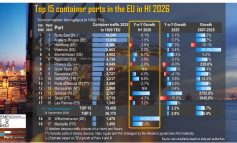
    Portgraphic: Top-15 EU container ports in H1 2025

    Portgraphic: Top-15 EU container ports in H1 2025

    Portgraphic: fleet capacity (owned/chartered) of container shipping lines

    Portgraphic: fleet capacity (owned/chartered) of container shipping lines

    In a tight spot: American ports in global supply chains

    In a tight spot: American ports in global supply chains

  • PortLibrary
  • PortReport
Strategy formulation of new generation ports: the Hong-Kong caseFeatured

Strategy formulation of new generation ports: the Hong-Kong case

August 28th, 2017 Featured, PortStudies

shippingherald.com

READ ALSO

PortEconomics members among best-performing scholars globally
An evaluation of autonomous ship alternatives for future container shipping in the Arctic routes
Competing institutional logics and institutional erosion in environmental governance of maritime transport
PortGraphic: Container port dynamics near Gibraltar

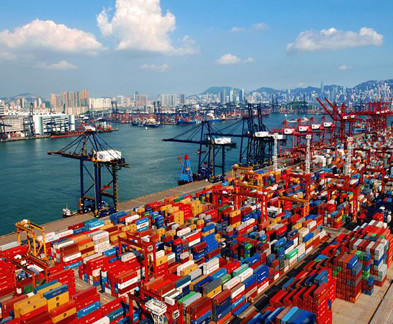
In 1992, UNCTAD outlined a three-generation model to classify different stages that the port industry has experienced. It illustrates that port evolution is not a linear progress but periodically with key events to re-start every stage. An important research question emerges on whether the port industry has involved to the new generation or not after more than two decades of development. To provide useful insight into this research question, PortEconomics member Adolf Ng along with Kennth H. Wong (Hutchison Port Holdings, Hong Kong, China), Eva C. Shou (Hongkong International Terminals Ltd., Hong Kong, China) and Huiying Zhang (Transport Institute, University of Manitoba, MB, Canada) adopt the resource-based view (RBV) as the theoretical foundation for an in-depth investigation on the strategy formulation of Hong Kong International Terminals (HIT) in the first decade of the 21st century.

The authors found that a changing stage is proved to be existed with the comparison between the pre- and post-stages, which endorse the point that the third-generation model is no longer capable to explain port development. The port study offers valuable academic and professional contributions. For academic contribution, it contributes to the application of the RBV theory in port industry as well as the improvement of the theory itself. For professional contribution, it gives suggestions to both governments and terminal operators. For governments, the less participation in port operation activities does not necessarily compromise their role in supervision, especially for the security factor. Also, it is essential for terminal operators to make use of its abundant resource to conduct innovative activities or, as this study suggests, it will be dangerous for terminal industry to keep its energy and generate welfare for economy and society.

The port study titled Strategy formulation of new generation ports: a case study of the Hongkong International Terminals Ltd published in the Research in Transportation Business and Management, Issue 22.

PortEconomics provides you the authors’ version free for downloading here.


Next article PortReport 2 | Caribbean container port catchment areas: 1998-2016 evolution and the risk of over-investment
Previous article Unveiling configurations of shipping clusters: challenges and opportunities in the case of Piraeus

Adolf K.Y. Ng

Adolf K.Y. Ng is Professor of Transport and Supply Chain Management at the Asper School of Business of the University of Manitoba (Canada) and the Director of the University of Manitoba Transport Institute (UMTI) (Canada). He obtained his DPhil from University of Oxford (UK), and worked as a faculty member at the Hong Kong Polytechnic University (China) and Erasmus University Rotterdam, (Netherlands). He primary research interests include maritime management, transport geography, climate change, transport infrastructure planning and management, and global supply chains. He has (co-)authored three scholarly books, more than 40 papers in leading scholarly journals, and other forms of publications. He has received numerous prestigious accolades around the world. Notable examples include Fulbright Scholar Program (USA), Endeavour Research Fellowship (Australia), Universités Parisiennes Fellowship (France), Rh Award for Outstanding Contributions to Scholarship and Research in Interdisciplinary Studies (Canada), Associates’ Achievement Award for Outstanding Business Research (Canada), Eagle Prize for Outstanding Young Scholar in Maritime Research (International Association of Maritime Economists) (IAME), and several Best Paper Awards by various international transport, logistics, and supply chain conferences. With such expertise, he has provided strategic advice to major intergovernmental organizations, such as the United Nations (UN), European Commission (EC) and the African Development Bank (AFDB). Currently, he is a council member of IAME, Associate Editor of Maritime Policy & Management, Co-Editor of Journal of Transport Literature, Associate Editor of The Maritime Economist, and an editorial board member of reputable geography, transport, and logistics journals.

Related Posts

PortGraphic: Container port dynamics near Gibraltar Containers

PortGraphic: Container port dynamics near Gibraltar

A metric of global maritime supply chain disruptions: The global supply chain stress index - maritime (GSCSI-M) Featured

A metric of global maritime supply chain disruptions: The global supply chain stress index - maritime (GSCSI-M)

PortGraphic: Top-15 EU container ports in Q3 2025 Containers

PortGraphic: Top-15 EU container ports in Q3 2025

Weekly Timeline
Feb 18th 1:46 PM
Thematic Area

PortGraphic: Container port dynamics near Gibraltar

Feb 12th 12:25 PM
Featured

A metric of global maritime supply chain disruptions: The global supply chain stress index – maritime (GSCSI-M)

Jan 14th 12:56 PM
Noticeboard

Call for papers: Contemporary Maritime Economics: Transformations and Emerging Perspectives

Jan 4th 12:46 PM
Thematic Area

PortGraphic: Top-15 EU container ports in Q3 2025

Dec 16th 1:12 PM
Featured

Top-10 PortReads in 2025

Tweets by @PortEconomics
  • Containers
  • Cruise
  • EPP
  • Ports & COVID-19
  • Back to top
About PortEconomics

PortEconomics is a web-based initiative aiming to advance knowledge exchange on seaport studies. Established by maritime economists affiliated to academic institutions in Belgium, Greece and the Netherlands. It provides freely accessible research, education, information, and network-building material on critical issues of port economics, management and policies.

Additional Information
  • About
  • Login
  • Register
  • Edit Profile
  • Contact us
  • PortProfessionals
  • PortReport Series
  • Terms and Conditions
  • Cookie Policy
© PortEconomics 2025. All rights reserved.
Produced by PortEconomics
Manage Consent
To provide the best experiences, we use technologies like cookies to store and/or access device information. Consenting to these technologies will allow us to process data such as browsing behavior or unique IDs on this site. Not consenting or withdrawing consent, may adversely affect certain features and functions.
Functional Always active
The technical storage or access is strictly necessary for the legitimate purpose of enabling the use of a specific service explicitly requested by the subscriber or user, or for the sole purpose of carrying out the transmission of a communication over an electronic communications network.
Preferences
The technical storage or access is necessary for the legitimate purpose of storing preferences that are not requested by the subscriber or user.
Statistics
The technical storage or access that is used exclusively for statistical purposes. The technical storage or access that is used exclusively for anonymous statistical purposes. Without a subpoena, voluntary compliance on the part of your Internet Service Provider, or additional records from a third party, information stored or retrieved for this purpose alone cannot usually be used to identify you.
Marketing
The technical storage or access is required to create user profiles to send advertising, or to track the user on a website or across several websites for similar marketing purposes.
  • Manage options
  • Manage services
  • Manage {vendor_count} vendors
  • Read more about these purposes
View preferences
  • {title}
  • {title}
  • {title}