


• Home
  • About
    • Members
    • Associate Members
    • Former members
  • Thematic Areas
    • Containers
    • Cruise
    • European Port Policy
    • Ports & COVID-19
  • PortStudies
  • Presentations
  • Noticeboard
  • Viewpoints
  • PortLibrary
  • PortReport
PortEconomics
  • March 19th, 2026
PortEconomics
  • Home
  • About
    • Members
    • Associate Members
    • Former members
  • Thematic Areas
    • Containers
    • Cruise
    • European Port Policy
    • Ports & COVID-19
  • PortStudies
    Rhine-Scheldt delta port system

    Rhine-Scheldt delta port system

    A metric of global maritime supply chain disruptions: The global supply chain stress index - maritime (GSCSI-M)

    A metric of global maritime supply chain disruptions: The global supply chain stress index - maritime (GSCSI-M)

    ESG disclosure as a proxy of port corporate communication and sustainable management strategy: An LDA approach

    ESG disclosure as a proxy of port corporate communication and sustainable management strategy: An LDA approach

    From coal exports to green steel production? The role of circular economy precincts for sustainable port diversification

    From coal exports to green steel production? The role of circular economy precincts for sustainable port diversification

    Maritime transport in net zero

    Maritime transport in net zero

  • Presentations
    PortGraphic: Container port dynamics near Gibraltar

    PortGraphic: Container port dynamics near Gibraltar

    Top-10 PortReads in 2025

    Top-10 PortReads in 2025

    Port reform: World Bank publishes the third edition of its port reform toolkit

    Port reform: World Bank publishes the third edition of its port reform toolkit

    When will we admit that maritime transport will not be decarbonised by 2050?

    When will we admit that maritime transport will not be decarbonised by 2050?

    Digital technologies for efficient and resilient sea-land logistics

    Digital technologies for efficient and resilient sea-land logistics

  • Noticeboard
    Call for papers: Contemporary Maritime Economics: Transformations and Emerging Perspectives

    Call for papers: Contemporary Maritime Economics: Transformations and Emerging Perspectives

    ECONSHIP2026: Call for papers

    ECONSHIP2026: Call for papers

    Call for papers: 1st Florence Maritime Regulation Conference

    Call for papers: 1st Florence Maritime Regulation Conference

    PortEconomics co-director appointed Senior Scientific Advisor to the Florence School of Regulation

    PortEconomics co-director appointed Senior Scientific Advisor to the Florence School of Regulation

    Jean Monnet Chair in European Port Policy

    Jean Monnet Chair in European Port Policy

  • Viewpoints
    Commission unveils new EU Ports Strategy

    Commission unveils new EU Ports Strategy

    PortGraphic: Top-15 EU container ports in Q3 2025

    PortGraphic: Top-15 EU container ports in Q3 2025

    Maritime transport in net zero

    Maritime transport in net zero

    Portgraphic: Top-15 EU container ports in H1 2025

    Portgraphic: Top-15 EU container ports in H1 2025

    Portgraphic: fleet capacity (owned/chartered) of container shipping lines

    Portgraphic: fleet capacity (owned/chartered) of container shipping lines

  • PortLibrary
  • PortReport
Cruise ports need to upscale their representation by subscribing to the WPSPCruise

Cruise ports need to upscale their representation by subscribing to the WPSP

April 3rd, 2018 Cruise, Featured, Viewpoints

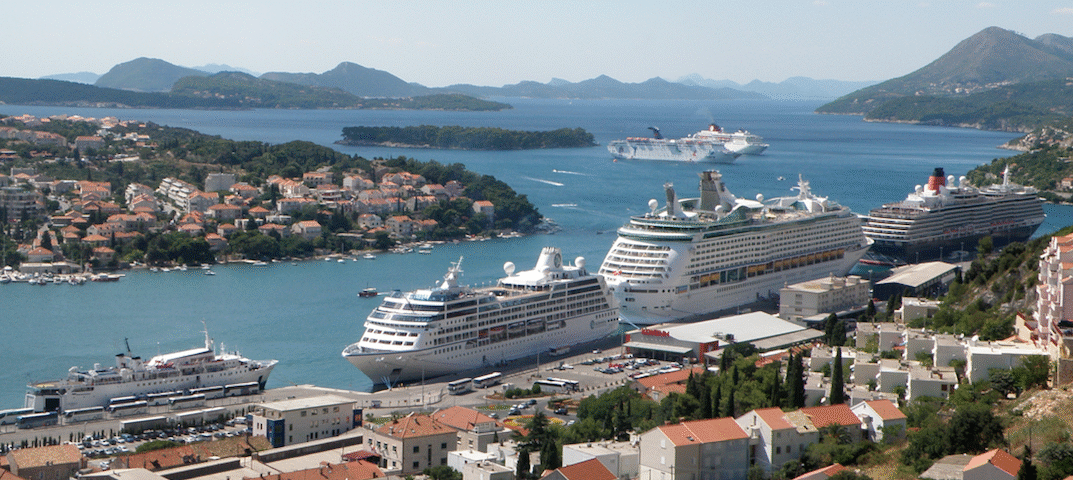
Dubrovnik cruise port

READ ALSO

Call for papers: 1st Florence Maritime Regulation Conference
Jean Monnet Chair in European Port Policy
Port reform: World Bank publishes the third edition of its port reform toolkit
Rhine-Scheldt delta port system

By Thanos Pallis

The launching of the World Ports Sustainability Programme (WPSP) by the International Association of Ports and Harbours (IAPH), the American Association of Port Authorities (AAPA), the European Sea Ports Organisation (ESPO), AIVP – The Worldwide Network of Port Cities (AIVP) and the World Association for Waterborne Transport Infrastructure (PIANC) in March is a major step towards a responsible growth of the port industry. It is a most welcomed initiative by all of us serving ports and the maritime world.

WPSP aims to demonstrate global leadership of ports in contributing to the Sustainable Development Goals of the United Nations. This initiative wants to empower port community actors worldwide to engage with business, governmental and societal stakeholders in creating sustainable added value for the local communities and wider regions in which their ports are embedded.

It is not surprising that nearly 1,000 ports and port-related companies committed themselves in Antwerp to achieving the 17 Sustainable Development Goals (SDGs) set by the United Nations.

All those loving the industry are pleased that an idea advanced by IAPH  (note: congratulations to a fellow PortEconomics member, Patrick Verhoeven for his leading role in making this happen) developed to a concrete initiative. The port Community has appreciated the initiative and works full steam ahead to make it happening.

The missing piece: cruise ports associations

What seems surprising though, is the slow reaction of the cruise port community: specialised associations representing it were absent from the signatories’ list.

When societal pressures are mounting this presence would be more important than ever. Cleaner fuel consumption, reduced emissions, aesthetics of large ships, balanced deployment of cruise vessels, better waste reception treatment, the avoidance of overcrowding, environmentally sustainable chains, and nature and wildlife conservation, are few of the relevant issues that challenge cruise port.

The cruise port community needs more than anybody else to develop synergies to solve collective active problems in and outside the port area.

It was for precisely these reasons, that cruise and ferry ports throughout Europe have been fully committed to serve the UN 2030 Agenda for Sustainable Development and the 17 UN Sustainable Development Goals.

In recent times this was demonstrated at various other fronts as well, whether this translates to being instrumental at the European Sustainable Shipping Forum, or to specialised cruise and ferry ports Associations working within the ESPO Cruise and Ferry Ports Network to develop collaborative initiatives that combine the growth of cruise activities with social responsibility and environmental friendly strategy.

Thus, one would expect them to be vocal in favour of the WPSP cause.  Ufortunately, silence has prevailed this time.

Upscale of efforts is urgently needed

The slow reaction should be reversed, and cruise ports to be effectively represented. Cruise ports associations should continue to demonstrate in practice the existing commitment of their memberships to sustainable development in all respects, by subscribing to the aims of the World Ports Sustainability Programme.

Cruise ports associations need to be partners of WPSP, in a move that would commit them to:

  • Contribute to the UN Sustainable Development Goals where and when possible within its own field of activity, competence and responsibility through existing as well as new projects and initiatives;
  • Encourage their members to sharing best practices as well as relevant information about running and new initiatives as well as publicly available data;
  • Provide guidance, support and recognition to their members on the areas covered by the 17 sustainable development goals;
  • Engage their organisation to promote the activities of the World Ports Sustainability Program;
  • Exchange on regular basis information, to evaluate the implementation of initiatives and commitments and to assess ways to strengthen cooperation.
  • Establish and maintain best practices;
  • Function as think-tanks and breeding ground for new collaborative projects;
  • Report regularly about the sustainability performance of the cruise ports sector.

WPSP offers a unique opportunity not to be missed:

By signing or practically supporting the WPSP Declaration cruise ports and their associations will engage to continuation and further development of existing initiatives towards sustainable and social responsible growth of cruise activities.

Associations representing cruise ports should jockey towards this end, rather than confirming any signs of inertia.
Next article Toward digitalisation of maritime supply chains
Previous article Seaborne trade has brought prosperity. How to ensure its sustainability

Thanos Pallis

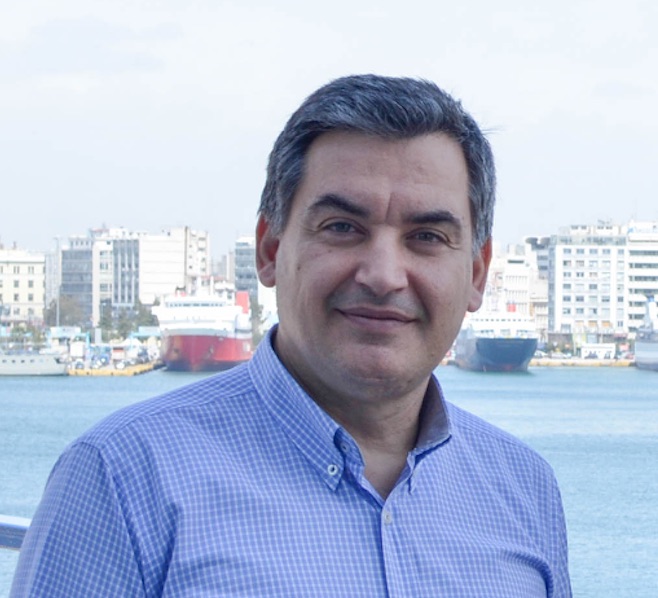
Dr. Thanos Pallis is Professor of Port Economics & Policy & the scientific coordinator of the Jean Monnet Action on European Port Policy at the Department of Shipping, Trade and Transport (STT), University of the Aegean, Greece. He is currently the President of the International Association of Maritime Economists (IAME), and has served as secretary general of MedCruise, the association of cruise ports in the Med. The author of the acclaimed book "European Port Policy", he has an extensive international experience in port policy and economics. Thanos co-directs PortEconomics and is a regular contributor at the work of national governments and international organisation (UNCTAD, OECD, and ESPO, IAPH, and AVIP) shaping the port sector.

Related Posts

Rhine-Scheldt delta port system Featured

Rhine-Scheldt delta port system

Commission unveils new EU Ports Strategy European Port Policy

Commission unveils new EU Ports Strategy

PortGraphic: Container port dynamics near Gibraltar Containers

PortGraphic: Container port dynamics near Gibraltar

Weekly Timeline
Mar 9th 4:35 PM
Featured

Rhine-Scheldt delta port system

Mar 6th 1:23 PM
Thematic Area

Commission unveils new EU Ports Strategy

Feb 18th 1:46 PM
Thematic Area

PortGraphic: Container port dynamics near Gibraltar

Feb 12th 12:25 PM
Featured

A metric of global maritime supply chain disruptions: The global supply chain stress index – maritime (GSCSI-M)

Jan 14th 12:56 PM
Noticeboard

Call for papers: Contemporary Maritime Economics: Transformations and Emerging Perspectives

Tweets by @PortEconomics
  • Containers
  • Cruise
  • EPP
  • Ports & COVID-19
  • Back to top
About PortEconomics

PortEconomics is a web-based initiative aiming to advance knowledge exchange on seaport studies. Established by maritime economists affiliated to academic institutions in Belgium, Greece and the Netherlands. It provides freely accessible research, education, information, and network-building material on critical issues of port economics, management and policies.

Additional Information
  • About
  • Login
  • Register
  • Edit Profile
  • Contact us
  • PortProfessionals
  • PortReport Series
  • Terms and Conditions
  • Cookie Policy
© PortEconomics 2025. All rights reserved.
Produced by PortEconomics
Manage Consent
To provide the best experiences, we use technologies like cookies to store and/or access device information. Consenting to these technologies will allow us to process data such as browsing behavior or unique IDs on this site. Not consenting or withdrawing consent, may adversely affect certain features and functions.
Functional Always active
The technical storage or access is strictly necessary for the legitimate purpose of enabling the use of a specific service explicitly requested by the subscriber or user, or for the sole purpose of carrying out the transmission of a communication over an electronic communications network.
Preferences
The technical storage or access is necessary for the legitimate purpose of storing preferences that are not requested by the subscriber or user.
Statistics
The technical storage or access that is used exclusively for statistical purposes. The technical storage or access that is used exclusively for anonymous statistical purposes. Without a subpoena, voluntary compliance on the part of your Internet Service Provider, or additional records from a third party, information stored or retrieved for this purpose alone cannot usually be used to identify you.
Marketing
The technical storage or access is required to create user profiles to send advertising, or to track the user on a website or across several websites for similar marketing purposes.
  • Manage options
  • Manage services
  • Manage {vendor_count} vendors
  • Read more about these purposes
View preferences
  • {title}
  • {title}
  • {title}