PortStudies

July 31st, 2017
PortStudies

Celebrating 25 years since the establishment of the Association, the International Association of Maritime Economists (IAME) Annual Conference organised a special opening session to discuss the future of maritime and port economics. PortEconomics co-director Thanos Pallis presented a call for a more measured pace port studies development and dissemination. PortEconomics invites its readers to follow the link in order to download the call – and, not least, to apply the concept: Pallis A.A. (2017): Slow port studies. IAME 2017, Kyoto,...
July 26th, 2017
PortStudies

Since the 1990s, negative environmental externalities related to port activity have been a widely researched topic, in particular since port expansion projects in developed economies got delayed due to litigation and court decisions invoking environmental harms (e.g. emissions) or losses (e.g. birds and habitats). The introduction of a green port management or a green port policies was formulated as an answer on the level of port authorities, and in particular trade associations in the developed economies have been active in promoting green...
July 24th, 2017
PortStudies

In the context of increased scale of carriers and vessel sizes, stakeholder opposition to port expansion, and heavy regulation, ports prepare their strategic response. A port’s competitive strength strongly depends on its capability of developing competitive advantages. Ports consider options such as strategic partnership(s), or any form of collaboration, which could lead to more or alternative combinations of unique resources as sources of competitive advantage. Taking an extended resource base perspective, the competitive advantages of the...
July 11th, 2017
PortStudies

The concept of resilience in seaport-related research is the subject of the PortEconomics members Theo Notteboom, Michael Dooms and Indra Vonck new port study. The authors build upon the notion of resilience based on the literature and construct an integrated framework of port resilience encompassing all layers of port activities. Resilience is the science of preparing for, dealing with, and recuperating from shocks. Recent highly disruptive natural and man made events have shown the social costs of seaport failures. Three propositions are...
July 5th, 2017
PortStudies

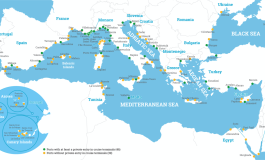
PortEconomics members Thanos Pallis, Francesco Parola, Giovanni Satta, and Theo Notteboom study on private entry and emerging partnerships in cruise terminals operations in cruise ports in the Mediterranean and its adjoining seas has won the Maritime Economics and Logistics (MEL) Best paper award at the Annual Conference of the International Association of Maritime Economists (IAME), that was held in Kyoto Japan. The study which will be soon published in the scholarly journal Maritime Economics and Logistics (MEL) details the entry...
June 20th, 2017
PortStudies

Market players active in the port industry deploy a range of financial sources to meet the growing investment requirements in port infrastructure and to fund their (overseas) expansion strategies. Recent empirical evidence shows that equity capital markets are expected to extend their role in this regard. The latest port study of PortEconomics members Theo Notteboom, Francesco Parola and Giovanni Satta, along with Luca Persico (University of Genoa) deals with the long-term performance of IPOs in the seaport industry as a strategic...
May 27th, 2017
PortStudies

The social and economic value of commercial marine shipping to Canada was the theme of a report that was published this week by the Council of Canadian Academies. The report is the outcome of the work of a 10 membes Expert panel chaired by PortEconomics member Mary R. Brooks As a maritime nation, Canada’s economy, culture, environment, and security have long been interlinked with commercial marine shipping. Critical to Canada’s historical development, marine shipping continues to be vital to international trade and the development of...
April 24th, 2017
PortStudies

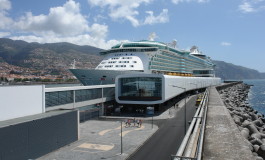
The structures of the growth of the cruise port industry in the Mediterranean and its adjoining seas the last decade is the theme of a port study by Portecoomics co-director Thanos Pallis and Kleopatra Arapi. The scholars analyse passenger movements in cruise ports in the region, focusing on the trends observed and concludes on the regional dynamics, i.e. growth variations, levels of market concentration, home-porting levels and seasonality. Cruise witnessed an uninterrupted growth over the last 30 years.  While the global financial...
April 17th, 2017
PortStudies

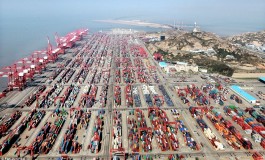
China is home to the largest port system in the world, certainly in terms of cargo volumes. Chinese ports are subject to a unique port governance framework which differs from the traditional landlord port system found in most key ports around the world. Port governance in China is the theme of a recent port study co-authored by PortEconomics co-director Theo Notteboom and Yang Zhongzhen. The global and domestic economic slowdown and structural changes in the economic base have affected volumes and freight traffic growth in Chinese...
April 3rd, 2017
PortStudies

The port reform processes in two neighbouring East African countries, Kenya and Tanzania is the theme of PortEconomics member Michael Dooms along with Sheila Farrell (Imperial College, London, United Kingdom) new port study. The port study provides historical analysis of port reforms in Kenya and Tanzania and is accompanied by a forward-looking assessment of whether existing institutions will allow these African ports to evolve in the same direction as North European ports. The authors examine whether or not Kenya and Tanzania ports are...
Page 19 of 37...1718192021...