

• Home
  • About
    • Members
    • Associate Members
    • Former members
  • Thematic Areas
    • Containers
    • Cruise
    • European Port Policy
    • Ports & COVID-19
  • PortStudies
  • Presentations
  • Noticeboard
  • Viewpoints
  • PortLibrary
  • PortReport
PortEconomics
  • March 21st, 2026
PortEconomics
  • Home
  • About
    • Members
    • Associate Members
    • Former members
  • Thematic Areas
    • Containers
    • Cruise
    • European Port Policy
    • Ports & COVID-19
  • PortStudies
    Rhine-Scheldt delta port system

    Rhine-Scheldt delta port system

    A metric of global maritime supply chain disruptions: The global supply chain stress index - maritime (GSCSI-M)

    A metric of global maritime supply chain disruptions: The global supply chain stress index - maritime (GSCSI-M)

    ESG disclosure as a proxy of port corporate communication and sustainable management strategy: An LDA approach

    ESG disclosure as a proxy of port corporate communication and sustainable management strategy: An LDA approach

    From coal exports to green steel production? The role of circular economy precincts for sustainable port diversification

    From coal exports to green steel production? The role of circular economy precincts for sustainable port diversification

    Maritime transport in net zero

    Maritime transport in net zero

  • Presentations
    PortGraphic: Container port dynamics near Gibraltar

    PortGraphic: Container port dynamics near Gibraltar

    Top-10 PortReads in 2025

    Top-10 PortReads in 2025

    Port reform: World Bank publishes the third edition of its port reform toolkit

    Port reform: World Bank publishes the third edition of its port reform toolkit

    When will we admit that maritime transport will not be decarbonised by 2050?

    When will we admit that maritime transport will not be decarbonised by 2050?

    Digital technologies for efficient and resilient sea-land logistics

    Digital technologies for efficient and resilient sea-land logistics

  • Noticeboard
    Call for papers: Contemporary Maritime Economics: Transformations and Emerging Perspectives

    Call for papers: Contemporary Maritime Economics: Transformations and Emerging Perspectives

    ECONSHIP2026: Call for papers

    ECONSHIP2026: Call for papers

    Call for papers: 1st Florence Maritime Regulation Conference

    Call for papers: 1st Florence Maritime Regulation Conference

    PortEconomics co-director appointed Senior Scientific Advisor to the Florence School of Regulation

    PortEconomics co-director appointed Senior Scientific Advisor to the Florence School of Regulation

    Jean Monnet Chair in European Port Policy

    Jean Monnet Chair in European Port Policy

  • Viewpoints
    Commission unveils new EU Ports Strategy

    Commission unveils new EU Ports Strategy

    PortGraphic: Top-15 EU container ports in Q3 2025

    PortGraphic: Top-15 EU container ports in Q3 2025

    Maritime transport in net zero

    Maritime transport in net zero

    Portgraphic: Top-15 EU container ports in H1 2025

    Portgraphic: Top-15 EU container ports in H1 2025

    Portgraphic: fleet capacity (owned/chartered) of container shipping lines

    Portgraphic: fleet capacity (owned/chartered) of container shipping lines

  • PortLibrary
  • PortReport
Connecting global cities by maritime networks: an empirical study (1890-2010)Presentations

Connecting global cities by maritime networks: an empirical study (1890-2010)

July 12th, 2016 Presentations

micecareers.com

READ ALSO

PortEconomics members among best-performing scholars globally
Ports and their influence on local air pollution and public health: A global analysis
Revisiting port system delineation through an analysis of maritime interdependencies among seaports
PortGraphic: Container port dynamics near Gibraltar

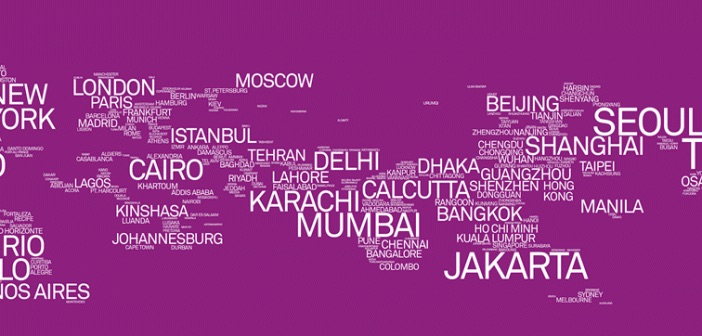
Global cities are still in many ways maritime cities (Dogan, 1988) or locate near seaports or sea-river ports (Vance, 1970). Port cities have also been vital centers of successive world systems throughout history (Braudel, 1979), from Tyr and Sidon in the Phoenician world to New York and Shanghai nowadays.

This communication aims to apply for the first time network analytical methods to maritime flows connecting cities of the world, over the long term (1890-2010). More likely were analyses of interurban connectivity through telecommunications, roads, highways, railways, which was extended later in the 1990s and after to airlines, multinational firms’ linkages, and the world-wide web.A global matrix of interurban vessel flows was elaborated for about 5,000 ports, 400,000 inter-port calls and 5,000 cities using data from the Geopolis, Populstats, World Gazetteer and Lloyd’s Shipping Index databases and the rigorous assignment of ports to both coastal and inland urban areas.

Preliminary results show that despite the observed decrease in the correlation between maritime flows and the urban hierarchy (10% loss between 1950 and 1990), the largest cities remain dominant in the network. These large cities (over 630) catch nearly 70% and 60% of worldwide flows and population, respectively. This dominance is also reflected in their higher network cen- trality, traffic share, and average (kilometric) length of flow linkages. Mapping largest maritime flows among world cities helps discovering hidden groups based on geographic or other proxim- ities, with a shift over time from a core-periphery to a more polycentric pattern. A typology of cities is also provided based on the evolution of their relative concentration index of population and traffic.

The latest research of PortEconomics member César Ducruet, along with Sylvain Cuyala and Ali El Hosni, contributes to question the ineluctable separation between ports and cities which dominated the literature, while offering new empirical evidence about the structure and dynamics of city-systems and spatial networks in general. All in all, this long-term historical perspective is a new empirical and methodological contribution to the theoretical debates on the intermingled evolution of cities, flows, networks, regionalisation, and globalisation.

EUSN2016Their study presented during the 2nd European Conference on Social Networks held 14-17 June in Paris, France and its presentation can be downloaded @ PortEconomics. Just follow the link.
 

Next article Green port infrastructure pricing
Previous article Mega vessels: the adaptive capacity of upstream ports Antwerp and Hamburg

Cesar Ducruet

Dr. César Ducruet is geographer and Research Director for the French National Centre for Scientific Research (CNRS) at the research laboratory UMR 7235 EconomiX (Paris-Nanterre University). His research interests include network analysis, urban & regional development, and spatial analysis, through the looking glass of ports and shipping networks, with a special focus on Europe and Asia. After being post-doctoral fellow in South Korea (KRIHS) and The Netherlands (Erasmus University), he joined the CNRS and worked as expert for various organisations (OECD, World Bank, Korea Maritime Institute), and guest lectured regularly abroad. Cesar is a member of the STAR Alliance (HK) and editorial board member of Journal of Transport Geography. After leading the ERC Starting Grant "World Seastems" (2013-2019) he also worked for the World Health Organisation (WHO). He edited two books with Routledge on "Maritime Networks" (2015) and "Advances in Shipping Data Analysis and Modeling" (2017) and co-edited "Global Logistics Network Modelling and Policy" (2021) with Elsevier. He has published more than 50 articles in peer-reviewed journals and 30 book chapters in the last 15 years or so. All my publications online: https://halshs.archives-ouvertes.fr/search/index/q/*/authIdHal_s/cesar-ducruet

Related Posts

PortGraphic: Container port dynamics near Gibraltar Containers

PortGraphic: Container port dynamics near Gibraltar

Top-10 PortReads in 2025 Featured

Top-10 PortReads in 2025

Port reform: World Bank publishes the third edition of its port reform toolkit European Port Policy

Port reform: World Bank publishes the third edition of its port reform toolkit

Weekly Timeline
Mar 9th 4:35 PM
Featured

Rhine-Scheldt delta port system

Mar 6th 1:23 PM
Thematic Area

Commission unveils new EU Ports Strategy

Feb 18th 1:46 PM
Thematic Area

PortGraphic: Container port dynamics near Gibraltar

Feb 12th 12:25 PM
Featured

A metric of global maritime supply chain disruptions: The global supply chain stress index – maritime (GSCSI-M)

Jan 14th 12:56 PM
Noticeboard

Call for papers: Contemporary Maritime Economics: Transformations and Emerging Perspectives

Tweets by @PortEconomics
  • Containers
  • Cruise
  • EPP
  • Ports & COVID-19
  • Back to top
About PortEconomics

PortEconomics is a web-based initiative aiming to advance knowledge exchange on seaport studies. Established by maritime economists affiliated to academic institutions in Belgium, Greece and the Netherlands. It provides freely accessible research, education, information, and network-building material on critical issues of port economics, management and policies.

Additional Information
  • About
  • Login
  • Register
  • Edit Profile
  • Contact us
  • PortProfessionals
  • PortReport Series
  • Terms and Conditions
  • Cookie Policy
© PortEconomics 2025. All rights reserved.
Produced by PortEconomics
Manage Consent
To provide the best experiences, we use technologies like cookies to store and/or access device information. Consenting to these technologies will allow us to process data such as browsing behavior or unique IDs on this site. Not consenting or withdrawing consent, may adversely affect certain features and functions.
Functional Always active
The technical storage or access is strictly necessary for the legitimate purpose of enabling the use of a specific service explicitly requested by the subscriber or user, or for the sole purpose of carrying out the transmission of a communication over an electronic communications network.
Preferences
The technical storage or access is necessary for the legitimate purpose of storing preferences that are not requested by the subscriber or user.
Statistics
The technical storage or access that is used exclusively for statistical purposes. The technical storage or access that is used exclusively for anonymous statistical purposes. Without a subpoena, voluntary compliance on the part of your Internet Service Provider, or additional records from a third party, information stored or retrieved for this purpose alone cannot usually be used to identify you.
Marketing
The technical storage or access is required to create user profiles to send advertising, or to track the user on a website or across several websites for similar marketing purposes.
  • Manage options
  • Manage services
  • Manage {vendor_count} vendors
  • Read more about these purposes
View preferences
  • {title}
  • {title}
  • {title}