

• Home
  • About
    • Members
    • Associate Members
    • Former members
  • Thematic Areas
    • Containers
    • Cruise
    • European Port Policy
    • Ports & COVID-19
  • PortStudies
  • Presentations
  • Noticeboard
  • Viewpoints
  • PortLibrary
  • PortReport
PortEconomics
  • May 3rd, 2026
PortEconomics
  • Home
  • About
    • Members
    • Associate Members
    • Former members
  • Thematic Areas
    • Containers
    • Cruise
    • European Port Policy
    • Ports & COVID-19
  • PortStudies
    Risk-driven supply chain designs – a re-assessment with geopolitical and geoeconomic considerations

    Risk-driven supply chain designs – a re-assessment with geopolitical and geoeconomic considerations

    Rhine-Scheldt delta port system

    Rhine-Scheldt delta port system

    A metric of global maritime supply chain disruptions: The global supply chain stress index - maritime (GSCSI-M)

    A metric of global maritime supply chain disruptions: The global supply chain stress index - maritime (GSCSI-M)

    ESG disclosure as a proxy of port corporate communication and sustainable management strategy: An LDA approach

    ESG disclosure as a proxy of port corporate communication and sustainable management strategy: An LDA approach

    From coal exports to green steel production? The role of circular economy precincts for sustainable port diversification

    From coal exports to green steel production? The role of circular economy precincts for sustainable port diversification

  • Presentations
    European Ports: Reflection on policies and strategies for the energy transition

    European Ports: Reflection on policies and strategies for the energy transition

    IAPH World Ports Tracker 2026 reveals state of global port sustainability

    IAPH World Ports Tracker 2026 reveals state of global port sustainability

    PortGraphic: Container port dynamics near Gibraltar

    PortGraphic: Container port dynamics near Gibraltar

    Top-10 PortReads in 2025

    Top-10 PortReads in 2025

    Port reform: World Bank publishes the third edition of its port reform toolkit

    Port reform: World Bank publishes the third edition of its port reform toolkit

  • Noticeboard
    Call for papers: Contemporary Maritime Economics: Transformations and Emerging Perspectives

    Call for papers: Contemporary Maritime Economics: Transformations and Emerging Perspectives

    ECONSHIP2026: Call for papers

    ECONSHIP2026: Call for papers

    Call for papers: 1st Florence Maritime Regulation Conference

    Call for papers: 1st Florence Maritime Regulation Conference

    PortEconomics co-director appointed Senior Scientific Advisor to the Florence School of Regulation

    PortEconomics co-director appointed Senior Scientific Advisor to the Florence School of Regulation

    Jean Monnet Chair in European Port Policy

    Jean Monnet Chair in European Port Policy

  • Viewpoints
    European Ports: Reflection on policies and strategies for the energy transition

    European Ports: Reflection on policies and strategies for the energy transition

    Port-city integration

    Port-city integration

    Commission unveils new EU Ports Strategy

    Commission unveils new EU Ports Strategy

    PortGraphic: Top-15 EU container ports in Q3 2025

    PortGraphic: Top-15 EU container ports in Q3 2025

    Maritime transport in net zero

    Maritime transport in net zero

  • PortLibrary
  • PortReport
Growing up fast: brazilian portsViewpoints

Growing up fast: brazilian ports

August 7th, 2015 Viewpoints

READ ALSO

Commission unveils new EU Ports Strategy
The Analyst: Amsterdam’s bold move on cruise may be a missed opportunity to promote sustainable cruise tourism
The strategy of the port development company: a business ecosystem perspective
European Ports: Reflection on policies and strategies for the energy transition

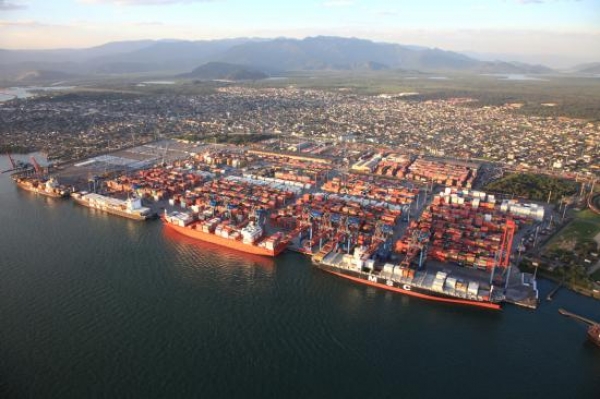
With a local market containing 196.7m consumers, a total area of 8.5 million km2 and the seventh largest economy in the world in terms of GDP, Brazil naturally attracts attention from investors from all sectors that are interested in the opportunities in this emerging country.

Recently, it’s the country’s 8,500 km coastline and its ports – responsible for more than 95% of the country’s international trade – that are attracting the attention of international players in the maritime and port logistics sector.

The Brazilian port sector has significant importance for the country’s economy. In 2014, Brazilian exports through its seaports reached 640.54m tons. The most commonly exported products were iron ore, containerised cargo, soybean and sugar. On the imports side, the most representative products were fertilisers, corn, containerised cargo and oil.

Total cargo movement through both public ports and private terminals in 2014 reached 964m tons, an increase of 3.7% over the previous year. Among public ports, most of the cargo moves through Santos (94m tons); Itaguaí (63.8m tons); Paranaguá (41.3m tons) and Rio Grande (22.4m tons). Within the private terminals, the ranking is led by Ponta da Madeira (112.5m tons); Tubarão (109.8m tons) and Almirante Barroso (53.11m tons).

PortEconomics associate member Jonas Constante examines the rising interest in Brazilian ports in a viewpoint article published @ Port Strategy

Next article Traffic decline in container ports: the exception or the new normal?
Previous article Port performance management: mind the gap

Jonas Mendes Constante

Jonas Constante is a port strategy and digital transformation consultant with experiences in leading large projects for governments and private companies, mainly in logistics and ports & maritime sector. Currently, he is working as a senior consultant for the Inter-American Development Bank (IADB) and the Valenciaport Foundation, involved with EU projects and Latin America port sector. He is also a partner at Inoplan, a brazilian strategy and business development consulting firm. Prior to this position, he was the head of the Ports and Airports Group inside the Logistics and Transport Lab (LabTrans/Brazil), responsible for the Brazilian National Port Logistics Plan (PNLP) and strategic planning for port authorities. His PhD thesis is on the influence of management practices in Port Authorities performance. He also holds a Master Degree from FGV-EAESP in Business Strategy, a B.A. in Management (ESAG) and a BSc. in Computer Science (UFSC). He is certificate in International Business and Global Entrepreneurship from Babson College (Boston/USA).

Related Posts

European Ports: Reflection on policies and strategies for the energy transition European Port Policy

European Ports: Reflection on policies and strategies for the energy transition

Port-city integration European Port Policy

Port-city integration

Commission unveils new EU Ports Strategy European Port Policy

Commission unveils new EU Ports Strategy

Weekly Timeline
Apr 29th 11:39 AM
Thematic Area

European Ports: Reflection on policies and strategies for the energy transition

Apr 23rd 4:58 PM
Featured

IAPH World Ports Tracker 2026 reveals state of global port sustainability

Apr 8th 1:36 PM
Featured

Risk-driven supply chain designs – a re-assessment with geopolitical and geoeconomic considerations

Mar 27th 5:31 PM
Thematic Area

Port-city integration

Mar 9th 4:35 PM
Featured

Rhine-Scheldt delta port system

Tweets by @PortEconomics
  • Containers
  • Cruise
  • EPP
  • Ports & COVID-19
  • Back to top
About PortEconomics

PortEconomics is a web-based initiative aiming to advance knowledge exchange on seaport studies. Established by maritime economists affiliated to academic institutions in Belgium, Greece and the Netherlands. It provides freely accessible research, education, information, and network-building material on critical issues of port economics, management and policies.

Additional Information
  • About
  • Login
  • Register
  • Edit Profile
  • Contact us
  • PortProfessionals
  • PortReport Series
  • Terms and Conditions
  • Cookie Policy
© PortEconomics 2025. All rights reserved.
Produced by PortEconomics
Manage Consent
To provide the best experiences, we use technologies like cookies to store and/or access device information. Consenting to these technologies will allow us to process data such as browsing behavior or unique IDs on this site. Not consenting or withdrawing consent, may adversely affect certain features and functions.
Functional Always active
The technical storage or access is strictly necessary for the legitimate purpose of enabling the use of a specific service explicitly requested by the subscriber or user, or for the sole purpose of carrying out the transmission of a communication over an electronic communications network.
Preferences
The technical storage or access is necessary for the legitimate purpose of storing preferences that are not requested by the subscriber or user.
Statistics
The technical storage or access that is used exclusively for statistical purposes. The technical storage or access that is used exclusively for anonymous statistical purposes. Without a subpoena, voluntary compliance on the part of your Internet Service Provider, or additional records from a third party, information stored or retrieved for this purpose alone cannot usually be used to identify you.
Marketing
The technical storage or access is required to create user profiles to send advertising, or to track the user on a website or across several websites for similar marketing purposes.
  • Manage options
  • Manage services
  • Manage {vendor_count} vendors
  • Read more about these purposes
View preferences
  • {title}
  • {title}
  • {title}