

• Home
  • About
    • Members
    • Associate Members
    • Former members
  • Thematic Areas
    • Containers
    • Cruise
    • European Port Policy
    • Ports & COVID-19
  • PortStudies
  • Presentations
  • Noticeboard
  • Viewpoints
  • PortLibrary
  • PortReport
PortEconomics
  • March 19th, 2026
PortEconomics
  • Home
  • About
    • Members
    • Associate Members
    • Former members
  • Thematic Areas
    • Containers
    • Cruise
    • European Port Policy
    • Ports & COVID-19
  • PortStudies
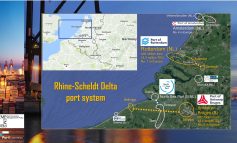
    Rhine-Scheldt delta port system

    Rhine-Scheldt delta port system

    A metric of global maritime supply chain disruptions: The global supply chain stress index - maritime (GSCSI-M)

    A metric of global maritime supply chain disruptions: The global supply chain stress index - maritime (GSCSI-M)

    ESG disclosure as a proxy of port corporate communication and sustainable management strategy: An LDA approach

    ESG disclosure as a proxy of port corporate communication and sustainable management strategy: An LDA approach

    From coal exports to green steel production? The role of circular economy precincts for sustainable port diversification

    From coal exports to green steel production? The role of circular economy precincts for sustainable port diversification

    Maritime transport in net zero

    Maritime transport in net zero

  • Presentations
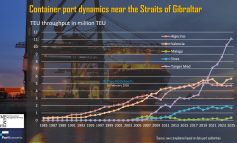
    PortGraphic: Container port dynamics near Gibraltar

    PortGraphic: Container port dynamics near Gibraltar

    Top-10 PortReads in 2025

    Top-10 PortReads in 2025

    Port reform: World Bank publishes the third edition of its port reform toolkit

    Port reform: World Bank publishes the third edition of its port reform toolkit

    When will we admit that maritime transport will not be decarbonised by 2050?

    When will we admit that maritime transport will not be decarbonised by 2050?

    Digital technologies for efficient and resilient sea-land logistics

    Digital technologies for efficient and resilient sea-land logistics

  • Noticeboard
    Call for papers: Contemporary Maritime Economics: Transformations and Emerging Perspectives

    Call for papers: Contemporary Maritime Economics: Transformations and Emerging Perspectives

    ECONSHIP2026: Call for papers

    ECONSHIP2026: Call for papers

    Call for papers: 1st Florence Maritime Regulation Conference

    Call for papers: 1st Florence Maritime Regulation Conference

    PortEconomics co-director appointed Senior Scientific Advisor to the Florence School of Regulation

    PortEconomics co-director appointed Senior Scientific Advisor to the Florence School of Regulation

    Jean Monnet Chair in European Port Policy

    Jean Monnet Chair in European Port Policy

  • Viewpoints
    Commission unveils new EU Ports Strategy

    Commission unveils new EU Ports Strategy

    PortGraphic: Top-15 EU container ports in Q3 2025

    PortGraphic: Top-15 EU container ports in Q3 2025

    Maritime transport in net zero

    Maritime transport in net zero

    Portgraphic: Top-15 EU container ports in H1 2025

    Portgraphic: Top-15 EU container ports in H1 2025

    Portgraphic: fleet capacity (owned/chartered) of container shipping lines

    Portgraphic: fleet capacity (owned/chartered) of container shipping lines

  • PortLibrary
  • PortReport
Latest IAPH World Ports Tracker: supply chain crunch over, ports invest in infrastructure, energy transition and sustainabilityCategory

Latest IAPH World Ports Tracker: supply chain crunch over, ports invest in infrastructure, energy transition and sustainability

March 30th, 2023 Category, Featured, Ports & COVID-19, Presentations, Thematic Area, Uncategorized

Photo 11366514 Cargo Port © Corepics Vof

READ ALSO

PortGraphic: Container port dynamics near Gibraltar
Call for papers: Contemporary Maritime Economics: Transformations and Emerging Perspectives
PortGraphic: Top-15 EU container ports in Q3 2025
Rhine-Scheldt delta port system

The latest IAPH World Port Tracker reports lower congestion and call size reductions with modest average port productivity gains in some regions; investments move ahead in infrastructure, new land use and sustainability projects; resurgence in cruise and ferry passenger volumes continues at pace.

The International Association of Ports and Harbors (IAPH) has just published its latest World Ports Tracker Report exclusively for its members and respondents, which combines confidential survey-based data collection on the container, bulk, tanker/gas and general cargo activities from its membership and quarterly comparative port performance data from S&P Global. With a sample comparable to the previous Tracker spread fairly evenly between the designated regions of the world, the aim of the report is to guide ports in their efforts to respond to industry and external trends, improve their services and develop and adapt their strategies.

A summary of the data from the survey on volumes confirms the end of the global supply chain crunch, with the last quarter seeing a drop in average call sizes in all port regions compared to the third quarter of 2022. The most pronounced is in North America, with a fall of 15,9%, Latin America (-8.5%) and Northern Europe (-8.3%).

Co-author and IAPH Risk and Resilience Committee member Professor Theo Notteboom commented : “Over half of the responding ports are reporting year-on-year container vessel call growth rates of over 2%. The fall in call sizes was significant in most regions in the final quarter of last year, although they do remain above the pre-pandemic figures of early 2019. Overall, ports are slightly less optimistic than three months ago about container traffic evolution over the next year. 40% of them expect TEU volume stagnation and 11% expecting a decline, most notably those responding from North America and Europe.”

The report for the fourth quarter of 2022 also points towards an overall reduction in congestion, a general improvement in truck availability, stable port worker availability and inland storage capacity.

Port investments proceed ahead in infrastructure, capacity expansion sustainability and land use

This edition of the Tracker also includes annual survey questions on port investment plans in advancing infrastructure and sustainability in ports. In both cases, 42% and 50% of investments are being executed as planned respectively with 39% and 37% of remaining investment projects only incurring minor delays in both categories. What is most noticeable is that only 8% and 7% of all ports responding do not have investment plans in infrastructure and sustainability. Ports cited investment activity in automation, digitalised infrastructure, pre-delivery inspection sites for electric vehicles, as well as sustainability-related investments in onshore power and the electrification of port materials handling equipment including vehicles.

In addition, one in three of the global container ports that responded confirmed major terminal capacity expansions or upgrades becoming operational in 2023. Similar upgrades will be operational in 23% of the bulk ports that replied. 15% of ports with cruise tourist activities and 8% with passenger activities will get upgrades this year, and 11% of liquid bulk terminals will be expanded.

In an additional question-related to land use, 42% of the responding ports stated that they intended to devote more land to logistics and distribution service activities. A quarter will commit to expanding industrial activities. Another interesting outcome is that 31% of ports plan on using land for non-fossil energy production, with 13% expanding existing energy production facilities.

IAPH Managing Director Patrick Verhoeven commented: “The noticeable upgrades being delivered to terminals in 2023 is a clear affirmation of the positive investment sentiment ports communicated to us during the COVID19 pandemic with our IAPH-WPSP port economic barometer reports. The intended further investments by ports in improved land use, sustainability-related projects and in the energy transition means that our industry is responding to close the gaps in port infrastructure despite the current challenging investment conditions.”

Cruise and passenger ferry activity continues resurgence

The tracker has also consistently tracked cruise and passenger vessel activity during the post-pandemic period. Passenger port traffic continued to surge following the collapse in all passenger-related activities in 2020 and 2021. Comparative figures suggest that cruise ports are only slightly less optimistic about growth in cruise volumes, with 66% percent in the fourth quarter of 2022 (versus 68% for Q3 2022) expecting double-digit increases and 29% (versus 40% of ports in Q3 2022) expecting single figure percentage increases. An even more positive trend is revealed when observing the evolution of ferry calls. Of the responding ports, and within the period under examination, 29% realised a growth rate of more than 10% in ferry calls. A further 20% experienced single-digit growth.

Co-author Professor Thanos Pallis commented: “This return of cruise operations might now be followed by a rethink of the itinerary programs of cruise lines or even the deployment of some cruise vessels in different regions than before. Reports are already forecasting that a more extended cruise season in terms of scheduled vessel calls and the numbers of passengers visiting cruise ports will be accompanied by some restructuring of the cruise itineraries offered.”

Contact for release:

Victor Shieh, IAPH Communications Director (Εmail: [email protected])

Note: The full IAPH World Ports Tracker report is available to responding regular members, with an extract of the report appearing in the upcoming Ports&Harbors membership magazine.

About IAPH

Founded in 1955, the International Association of Ports and Harbors (IAPH) has developed into a global alliance of 173 port authorities as well as 143 port-related businesses. Comprised of 85 different nationalities across the world’s continents, member ports handle approximately one-third of the world’s sea-borne trade and well over 60% of the world’s container traffic. IAPH leads global port industry initiatives on decarbonization and energy transition, risk and resilience management, and accelerating digitalization in the maritime transport chain. Its World Ports Sustainability Program has grown into the reference database of best practices of ports applying the UN Sustainable Development Goals and integrating them into their businesses – www.iaphworldports.org.

The report was first published here.
Next article Circular economy indicators for ports
Previous article Towards a prioritization of alternative energy sources for sustainable shipping

Related Posts

Rhine-Scheldt delta port system Featured

Rhine-Scheldt delta port system

Commission unveils new EU Ports Strategy European Port Policy

Commission unveils new EU Ports Strategy

PortGraphic: Container port dynamics near Gibraltar Containers

PortGraphic: Container port dynamics near Gibraltar

Weekly Timeline
Mar 9th 4:35 PM
Featured

Rhine-Scheldt delta port system

Mar 6th 1:23 PM
Thematic Area

Commission unveils new EU Ports Strategy

Feb 18th 1:46 PM
Thematic Area

PortGraphic: Container port dynamics near Gibraltar

Feb 12th 12:25 PM
Featured

A metric of global maritime supply chain disruptions: The global supply chain stress index – maritime (GSCSI-M)

Jan 14th 12:56 PM
Noticeboard

Call for papers: Contemporary Maritime Economics: Transformations and Emerging Perspectives

Tweets by @PortEconomics
  • Containers
  • Cruise
  • EPP
  • Ports & COVID-19
  • Back to top
About PortEconomics

PortEconomics is a web-based initiative aiming to advance knowledge exchange on seaport studies. Established by maritime economists affiliated to academic institutions in Belgium, Greece and the Netherlands. It provides freely accessible research, education, information, and network-building material on critical issues of port economics, management and policies.

Additional Information
  • About
  • Login
  • Register
  • Edit Profile
  • Contact us
  • PortProfessionals
  • PortReport Series
  • Terms and Conditions
  • Cookie Policy
© PortEconomics 2025. All rights reserved.
Produced by PortEconomics
Manage Consent
To provide the best experiences, we use technologies like cookies to store and/or access device information. Consenting to these technologies will allow us to process data such as browsing behavior or unique IDs on this site. Not consenting or withdrawing consent, may adversely affect certain features and functions.
Functional Always active
The technical storage or access is strictly necessary for the legitimate purpose of enabling the use of a specific service explicitly requested by the subscriber or user, or for the sole purpose of carrying out the transmission of a communication over an electronic communications network.
Preferences
The technical storage or access is necessary for the legitimate purpose of storing preferences that are not requested by the subscriber or user.
Statistics
The technical storage or access that is used exclusively for statistical purposes. The technical storage or access that is used exclusively for anonymous statistical purposes. Without a subpoena, voluntary compliance on the part of your Internet Service Provider, or additional records from a third party, information stored or retrieved for this purpose alone cannot usually be used to identify you.
Marketing
The technical storage or access is required to create user profiles to send advertising, or to track the user on a website or across several websites for similar marketing purposes.
  • Manage options
  • Manage services
  • Manage {vendor_count} vendors
  • Read more about these purposes
View preferences
  • {title}
  • {title}
  • {title}