

• Home
  • About
    • Members
    • Associate Members
    • Former members
  • Thematic Areas
    • Containers
    • Cruise
    • European Port Policy
    • Ports & COVID-19
  • PortStudies
  • Presentations
  • Noticeboard
  • Viewpoints
  • PortLibrary
  • PortReport
PortEconomics
  • May 6th, 2026
PortEconomics
  • Home
  • About
    • Members
    • Associate Members
    • Former members
  • Thematic Areas
    • Containers
    • Cruise
    • European Port Policy
    • Ports & COVID-19
  • PortStudies
    Risk-driven supply chain designs – a re-assessment with geopolitical and geoeconomic considerations

    Risk-driven supply chain designs – a re-assessment with geopolitical and geoeconomic considerations

    Rhine-Scheldt delta port system

    Rhine-Scheldt delta port system

    A metric of global maritime supply chain disruptions: The global supply chain stress index - maritime (GSCSI-M)

    A metric of global maritime supply chain disruptions: The global supply chain stress index - maritime (GSCSI-M)

    ESG disclosure as a proxy of port corporate communication and sustainable management strategy: An LDA approach

    ESG disclosure as a proxy of port corporate communication and sustainable management strategy: An LDA approach

    From coal exports to green steel production? The role of circular economy precincts for sustainable port diversification

    From coal exports to green steel production? The role of circular economy precincts for sustainable port diversification

  • Presentations
    European Ports: Reflection on policies and strategies for the energy transition

    European Ports: Reflection on policies and strategies for the energy transition

    IAPH World Ports Tracker 2026 reveals state of global port sustainability

    IAPH World Ports Tracker 2026 reveals state of global port sustainability

    PortGraphic: Container port dynamics near Gibraltar

    PortGraphic: Container port dynamics near Gibraltar

    Top-10 PortReads in 2025

    Top-10 PortReads in 2025

    Port reform: World Bank publishes the third edition of its port reform toolkit

    Port reform: World Bank publishes the third edition of its port reform toolkit

  • Noticeboard
    Call for papers: Contemporary Maritime Economics: Transformations and Emerging Perspectives

    Call for papers: Contemporary Maritime Economics: Transformations and Emerging Perspectives

    ECONSHIP2026: Call for papers

    ECONSHIP2026: Call for papers

    Call for papers: 1st Florence Maritime Regulation Conference

    Call for papers: 1st Florence Maritime Regulation Conference

    PortEconomics co-director appointed Senior Scientific Advisor to the Florence School of Regulation

    PortEconomics co-director appointed Senior Scientific Advisor to the Florence School of Regulation

    Jean Monnet Chair in European Port Policy

    Jean Monnet Chair in European Port Policy

  • Viewpoints
    European Ports: Reflection on policies and strategies for the energy transition

    European Ports: Reflection on policies and strategies for the energy transition

    Port-city integration

    Port-city integration

    Commission unveils new EU Ports Strategy

    Commission unveils new EU Ports Strategy

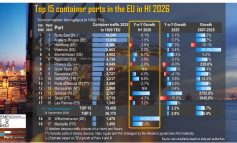
    PortGraphic: Top-15 EU container ports in Q3 2025

    PortGraphic: Top-15 EU container ports in Q3 2025

    Maritime transport in net zero

    Maritime transport in net zero

  • PortLibrary
  • PortReport
Shipping and the physical internetContainers

Shipping and the physical internet

March 28th, 2017 Containers, Viewpoints

kevingue.wordpress.com

READ ALSO

Investments and financing challenges of the EU’s port managing bodies; findings from a comprehensive survey
Port reform: World Bank publishes the third edition of its port reform toolkit
Investments and financing challenges of the EU’s port managing bodies; findings from a comprehensive survey
European Ports: Reflection on policies and strategies for the energy transition

De Langen

By Peter de Langen

The term ‘physical internet’ has emerged in recent years as a metaphor for the future of freight transport. While the metaphor possibly obscures more than it enlightens, it nevertheless makes sense to explore the implications for ocean shipping.

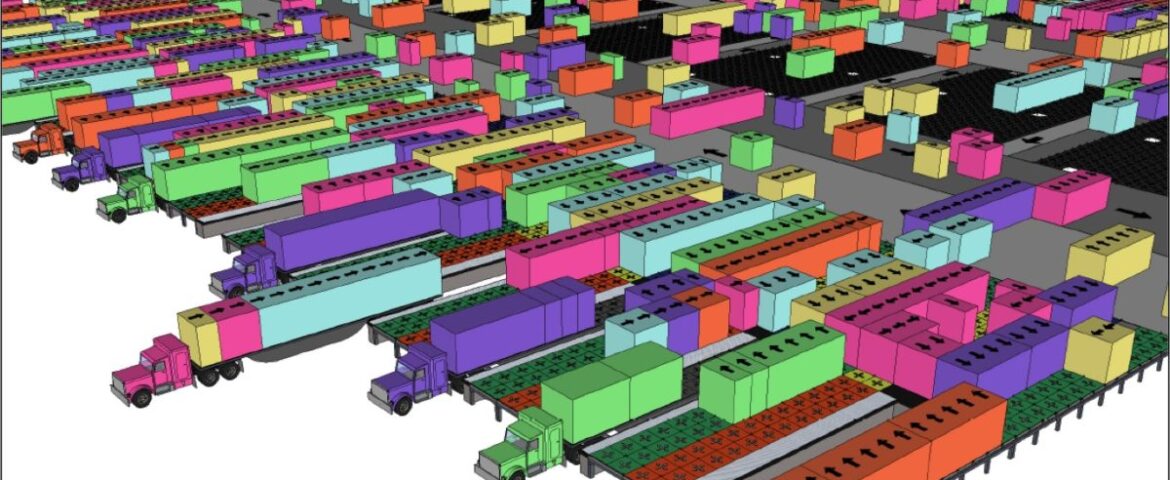
The physical internet analogy sees the transportation of physical goods organised in the same way as that of the ‘transport’ of information across the internet. When we send an email, the message is broken up in various parts, each of which is sent via a different route from sender to receiver, where they are automatically re-assembled.

The core idea is that with open networks, standard packages and automated breaking up and re-assembling, the efficiency of the flow of physical goods can be increased substantially. Given the fact that we already have standard containers and pallets (even though these standards are not fully aligned), the physical internet switch is more an ongoing evolution than a radical disruption.

However, there is a case for increased development of open networks and standardisation of transport units. The current process with different types of pallets as well as paper/wooden boxes that are often only used once could be improved with more standardisation of boxes that could be easily combined into a full maritime container.

Through alliances and exchange of slots, shipping lines are getting closer to the idea of an open shipping network. Booking portals already aspire to offer all available shipping options, regardless of who is the carrier.

Such developments may have a limited impact on the ‘full container load’ market segment, where importers and exporters have sufficient cargo to fill an entire container and can easily select the best service provider.

However, for the ‘less-than-containerload’ segment, a segment that has increased rapidly through the growth of e-commerce, such a system may be an important next step. Where containerisation enabled exports of relatively small scale producers (think of banana growers that with containerisation no longer need to combine cargoes with others to fill an entire ship), the ‘physical internet’ may further reduce the scale required for cost competitive shipments, to essentially the size of a box.

Without claiming to have a crystal ball, that move may have a significant impact on how trade is conducted. In this context, the partnership between Maersk and Alibaba should be seen as another step towards the ‘physical internet’ model of freight transport.

First published @Port Strategy

Next article Ports & digital innovation: playing to win or to lose?
Previous article Canada's port policy: a new direction or stay the course?

Peter de Langen

Dr. Peter de Langen is the owner and principal consultant of Ports & Logistics Advisory, based in Malaga, Spain and established in 2013. Peter de Langen is part-time professor at Copenhagen Business School and held a part-time position as professor Cargo Transport & Logistics, at Eindhoven University of Technology, from 2009 to 2016, From 2007 to 2013, Peter worked at Port of Rotterdam Authority (PoR), department Corporate Strategy as senior advisor. From 1997 to 2007, he worked at Erasmus University Rotterdam (EUR). Peter is co-director of the knowledge dissemination platform www.porteconomics.eu, co-organiser of conferences and training events and regular speaker at industry conferences on ports and shipping.

Related Posts

European Ports: Reflection on policies and strategies for the energy transition European Port Policy

European Ports: Reflection on policies and strategies for the energy transition

Port-city integration European Port Policy

Port-city integration

Commission unveils new EU Ports Strategy European Port Policy

Commission unveils new EU Ports Strategy

Weekly Timeline
Apr 29th 11:39 AM
Thematic Area

European Ports: Reflection on policies and strategies for the energy transition

Apr 23rd 4:58 PM
Featured

IAPH World Ports Tracker 2026 reveals state of global port sustainability

Apr 8th 1:36 PM
Featured

Risk-driven supply chain designs – a re-assessment with geopolitical and geoeconomic considerations

Mar 27th 5:31 PM
Thematic Area

Port-city integration

Mar 9th 4:35 PM
Featured

Rhine-Scheldt delta port system

Tweets by @PortEconomics
  • Containers
  • Cruise
  • EPP
  • Ports & COVID-19
  • Back to top
About PortEconomics

PortEconomics is a web-based initiative aiming to advance knowledge exchange on seaport studies. Established by maritime economists affiliated to academic institutions in Belgium, Greece and the Netherlands. It provides freely accessible research, education, information, and network-building material on critical issues of port economics, management and policies.

Additional Information
  • About
  • Login
  • Register
  • Edit Profile
  • Contact us
  • PortProfessionals
  • PortReport Series
  • Terms and Conditions
  • Cookie Policy
© PortEconomics 2025. All rights reserved.
Produced by PortEconomics
Manage Consent
To provide the best experiences, we use technologies like cookies to store and/or access device information. Consenting to these technologies will allow us to process data such as browsing behavior or unique IDs on this site. Not consenting or withdrawing consent, may adversely affect certain features and functions.
Functional Always active
The technical storage or access is strictly necessary for the legitimate purpose of enabling the use of a specific service explicitly requested by the subscriber or user, or for the sole purpose of carrying out the transmission of a communication over an electronic communications network.
Preferences
The technical storage or access is necessary for the legitimate purpose of storing preferences that are not requested by the subscriber or user.
Statistics
The technical storage or access that is used exclusively for statistical purposes. The technical storage or access that is used exclusively for anonymous statistical purposes. Without a subpoena, voluntary compliance on the part of your Internet Service Provider, or additional records from a third party, information stored or retrieved for this purpose alone cannot usually be used to identify you.
Marketing
The technical storage or access is required to create user profiles to send advertising, or to track the user on a website or across several websites for similar marketing purposes.
  • Manage options
  • Manage services
  • Manage {vendor_count} vendors
  • Read more about these purposes
View preferences
  • {title}
  • {title}
  • {title}