

• Home
  • About
    • Members
    • Associate Members
    • Former members
  • Thematic Areas
    • Containers
    • Cruise
    • European Port Policy
    • Ports & COVID-19
  • PortStudies
  • Presentations
  • Noticeboard
  • Viewpoints
  • PortLibrary
  • PortReport
PortEconomics
  • May 4th, 2026
PortEconomics
  • Home
  • About
    • Members
    • Associate Members
    • Former members
  • Thematic Areas
    • Containers
    • Cruise
    • European Port Policy
    • Ports & COVID-19
  • PortStudies
    Risk-driven supply chain designs – a re-assessment with geopolitical and geoeconomic considerations

    Risk-driven supply chain designs – a re-assessment with geopolitical and geoeconomic considerations

    Rhine-Scheldt delta port system

    Rhine-Scheldt delta port system

    A metric of global maritime supply chain disruptions: The global supply chain stress index - maritime (GSCSI-M)

    A metric of global maritime supply chain disruptions: The global supply chain stress index - maritime (GSCSI-M)

    ESG disclosure as a proxy of port corporate communication and sustainable management strategy: An LDA approach

    ESG disclosure as a proxy of port corporate communication and sustainable management strategy: An LDA approach

    From coal exports to green steel production? The role of circular economy precincts for sustainable port diversification

    From coal exports to green steel production? The role of circular economy precincts for sustainable port diversification

  • Presentations
    European Ports: Reflection on policies and strategies for the energy transition

    European Ports: Reflection on policies and strategies for the energy transition

    IAPH World Ports Tracker 2026 reveals state of global port sustainability

    IAPH World Ports Tracker 2026 reveals state of global port sustainability

    PortGraphic: Container port dynamics near Gibraltar

    PortGraphic: Container port dynamics near Gibraltar

    Top-10 PortReads in 2025

    Top-10 PortReads in 2025

    Port reform: World Bank publishes the third edition of its port reform toolkit

    Port reform: World Bank publishes the third edition of its port reform toolkit

  • Noticeboard
    Call for papers: Contemporary Maritime Economics: Transformations and Emerging Perspectives

    Call for papers: Contemporary Maritime Economics: Transformations and Emerging Perspectives

    ECONSHIP2026: Call for papers

    ECONSHIP2026: Call for papers

    Call for papers: 1st Florence Maritime Regulation Conference

    Call for papers: 1st Florence Maritime Regulation Conference

    PortEconomics co-director appointed Senior Scientific Advisor to the Florence School of Regulation

    PortEconomics co-director appointed Senior Scientific Advisor to the Florence School of Regulation

    Jean Monnet Chair in European Port Policy

    Jean Monnet Chair in European Port Policy

  • Viewpoints
    European Ports: Reflection on policies and strategies for the energy transition

    European Ports: Reflection on policies and strategies for the energy transition

    Port-city integration

    Port-city integration

    Commission unveils new EU Ports Strategy

    Commission unveils new EU Ports Strategy

    PortGraphic: Top-15 EU container ports in Q3 2025

    PortGraphic: Top-15 EU container ports in Q3 2025

    Maritime transport in net zero

    Maritime transport in net zero

  • PortLibrary
  • PortReport
Canada’s port policy: a new direction or stay the course?Featured

Canada’s port policy: a new direction or stay the course?

March 27th, 2017 Featured, PortStudies

portstrategy.com

READ ALSO

Port reform: World Bank publishes the third edition of its port reform toolkit
PortEconomics members among best-performing scholars globally
Port Governance & the Implications of Institutional fragmentation: lessons from Colombia
European Ports: Reflection on policies and strategies for the energy transition

By the spring of 1994, Canada’s dire financial situation had become apparent to the Government, and the policy decision was made to withdraw from government operation of transportation infrastructure while retaining ownership as a means of addressing Canada’s fiscal challenge. Furthermore, Transport Canada’s mission to make the transportation system affordable while ensuring it was safe, reliable and efficient was reaffirmed in section 5 of the Canada Transportation Act, 1995. The times were interesting as a wave of new public management was rippling across many developed economies, and the fruits of reform of many public sector–controlled business activities in both the U.K. and the U.S. were becoming evident; Canada’s own successes with the privatization of Air Canada and Canadian National Railway provided a new enthusiasm for devolution in its many forms.

The government paved the way for port reform through the release of the National Marine Policy document. This proposed a policy of ‘commercializing’ the ports most important to Canada’s trade. The government would withdraw from operating the transportation infrastructure but retain ownership of it and the commercialized entity would be managed and operated by a separate, non-share, non-recourse government agency, which would make lease payments to the government for the use of the infrastructure.

As the Canada Transportation Act 1995 did not apply to ports, although it did to the railways serving them, port-specific legislation was needed to charge ports with being financially self-sufficient and no longer able to access the capital capacity of the federal government. Therefore, to shift the burden of financing ports from the taxpayer to the user, the government introduced the Canada Marine Act 1998. Through this act the government retained ownership of existing port lands, deemed Canada Port Authority (CPA) ports as non-share federal agencies but specifically precluded them from being agents of the Crown in financial matters. LPC ports were required to become CPA ports, and some harbour commissions also chose to become CPAs. At this time, Transport Canada began the process of removing all but remote ports from Transport Canada’s non-CPA inventory. (The characterization of each of the three types of ports is explained in Brooks (2004) while the process of reform is presented in greater detail in Brooks (2007).)

Hence, the reform process led to deproclamation of harbours and public ports that were no longer deemed important enough to keep as Canadian assets. In many cases, Transport Canada retained ownership of the harbour bed, enabling it to continue to collect harbour dues from ships visiting the ports it no longer maintained.

It would appear that the allure of this revenue stream was too much to pass up but the irony of it did not really become obvious until the late 2000s when a number of municipalities raised concerns about not being able to collect harbour dues in support of maintenance of channels of navigation.

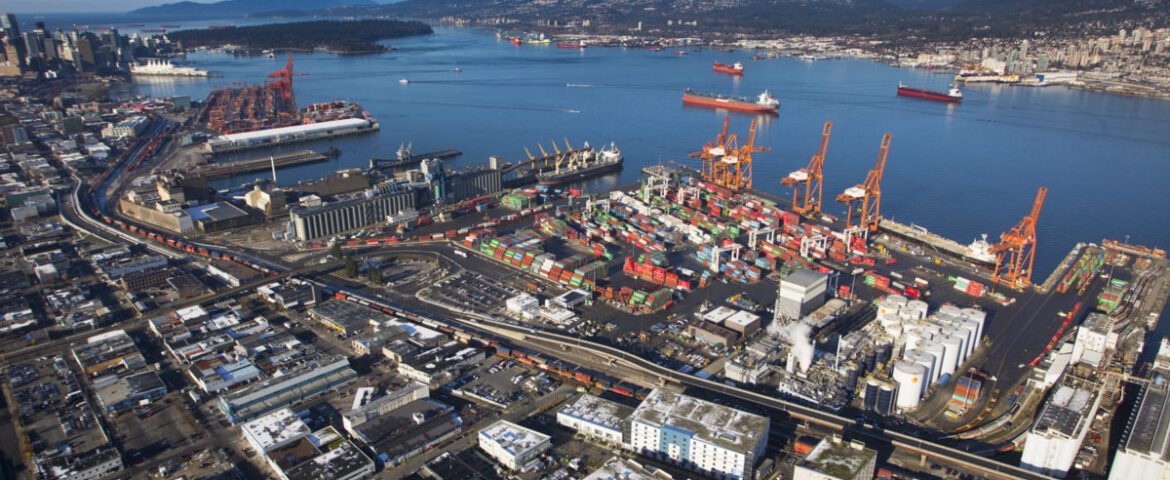
The latest port study by Mary Brooks examines the third wave of port reform in Canada. It analyses whether the third wave can be considered ‘successful’ by defining how success could be measured in the context of Canadian policy objectives. It provides context by exploring the current port situation and port policy. Using a content analysis methodology to examine port governance principles on web sites for the major ports, the study finds that not all ports live up to modern expectations of governance in a world where social media and web sites provide avenues to acquire social license.

The study reviews the port-related findings of the 2016 Canada Transportation Act Review Panel, and contemplates what might be proposed in the developing swell of future port reform. The final section examines whether a new direction is likely or whether the current course is likely to hold, and what conclusions and implications may be drawn for port reform more generally.

The study is included in a special volume of the scholarly journal Research in Transportation Business and Management (RTBM) on Port governance and reforms.

Those interested to access it, might just click the link until May 1, 2017, to reach the final version of the article on ScienceDirect for free.

Next article Shipping and the physical internet
Previous article Italian port governance: the renovation

Mary Brooks

As Professor Emerita, Dalhousie University, I have the luxury of working on challenging and even wicked problems. My research and consulting practice focus on transportation and global supply chain management. I am particularly interested in the relationships between the buyers and sellers of transportation services. A Canada–US Fulbright scholar at George Mason University in 2005, I investigated the impact of security regulations on the US’ maritime container trade. In 2010, as a Visiting Scholar at the Institute for Transport and Logistics Studies at the University of Sydney, I examined the coastal shipping market in Australia and how buyers make mode choice decisions. The research findings are particularly interesting if you think that carbon pricing is worth pursuing. It has also won the International Association of Maritime Economists best paper 2011 prize and the Korea Association of Maritime Industry Prize 2012. Read this research before you make up your mind on how we solve global challenges like climate change. With a passionate interest in how to make Canadian supply chains better, and a keen eye on the world of shipping and ports, I founded the Port Performance Research Network in 2001 to examine how to make ports more effective in adding value to their users’ supply chains through governance reform and benchmarking. I also have an active research program in the area of short sea shipping. My transportation consulting practice focuses on understanding my clients needs and helping them create value for those they serve. This may range from conducting credible research, acting as an expert witness, seeking answers to wicked questions, running a focus group or providing corporate education in the transportation management and international marketing fields. I am keen to help others find a way forward in both complex and complicated situations.

Related Posts

European Ports: Reflection on policies and strategies for the energy transition European Port Policy

European Ports: Reflection on policies and strategies for the energy transition

IAPH World Ports Tracker 2026 reveals state of global port sustainability Featured

IAPH World Ports Tracker 2026 reveals state of global port sustainability

Risk-driven supply chain designs – a re-assessment with geopolitical and geoeconomic considerations Featured

Risk-driven supply chain designs – a re-assessment with geopolitical and geoeconomic considerations

Weekly Timeline
Apr 29th 11:39 AM
Thematic Area

European Ports: Reflection on policies and strategies for the energy transition

Apr 23rd 4:58 PM
Featured

IAPH World Ports Tracker 2026 reveals state of global port sustainability

Apr 8th 1:36 PM
Featured

Risk-driven supply chain designs – a re-assessment with geopolitical and geoeconomic considerations

Mar 27th 5:31 PM
Thematic Area

Port-city integration

Mar 9th 4:35 PM
Featured

Rhine-Scheldt delta port system

Tweets by @PortEconomics
  • Containers
  • Cruise
  • EPP
  • Ports & COVID-19
  • Back to top
About PortEconomics

PortEconomics is a web-based initiative aiming to advance knowledge exchange on seaport studies. Established by maritime economists affiliated to academic institutions in Belgium, Greece and the Netherlands. It provides freely accessible research, education, information, and network-building material on critical issues of port economics, management and policies.

Additional Information
  • About
  • Login
  • Register
  • Edit Profile
  • Contact us
  • PortProfessionals
  • PortReport Series
  • Terms and Conditions
  • Cookie Policy
© PortEconomics 2025. All rights reserved.
Produced by PortEconomics
Manage Consent
To provide the best experiences, we use technologies like cookies to store and/or access device information. Consenting to these technologies will allow us to process data such as browsing behavior or unique IDs on this site. Not consenting or withdrawing consent, may adversely affect certain features and functions.
Functional Always active
The technical storage or access is strictly necessary for the legitimate purpose of enabling the use of a specific service explicitly requested by the subscriber or user, or for the sole purpose of carrying out the transmission of a communication over an electronic communications network.
Preferences
The technical storage or access is necessary for the legitimate purpose of storing preferences that are not requested by the subscriber or user.
Statistics
The technical storage or access that is used exclusively for statistical purposes. The technical storage or access that is used exclusively for anonymous statistical purposes. Without a subpoena, voluntary compliance on the part of your Internet Service Provider, or additional records from a third party, information stored or retrieved for this purpose alone cannot usually be used to identify you.
Marketing
The technical storage or access is required to create user profiles to send advertising, or to track the user on a website or across several websites for similar marketing purposes.
  • Manage options
  • Manage services
  • Manage {vendor_count} vendors
  • Read more about these purposes
View preferences
  • {title}
  • {title}
  • {title}