

• Home
  • About
    • Members
    • Associate Members
    • Former members
  • Thematic Areas
    • Containers
    • Cruise
    • European Port Policy
    • Ports & COVID-19
  • PortStudies
  • Presentations
  • Noticeboard
  • Viewpoints
  • PortLibrary
  • PortReport
PortEconomics
  • September 26th, 2026
PortEconomics
  • Home
  • About
    • Members
    • Associate Members
    • Former members
  • Thematic Areas
    • Containers
    • Cruise
    • European Port Policy
    • Ports & COVID-19
  • PortStudies
    Geopolitical leverage through the international activities of State-Owned Enterprises (SOEs) in ports and maritime logistics

    Geopolitical leverage through the international activities of State-Owned Enterprises (SOEs) in ports and maritime logistics

    Risk-driven supply chain designs – a re-assessment with geopolitical and geoeconomic considerations

    Risk-driven supply chain designs – a re-assessment with geopolitical and geoeconomic considerations

    Rhine-Scheldt delta port system

    Rhine-Scheldt delta port system

    A metric of global maritime supply chain disruptions: The global supply chain stress index - maritime (GSCSI-M)

    A metric of global maritime supply chain disruptions: The global supply chain stress index - maritime (GSCSI-M)

    ESG disclosure as a proxy of port corporate communication and sustainable management strategy: An LDA approach

    ESG disclosure as a proxy of port corporate communication and sustainable management strategy: An LDA approach

  • Presentations
    Top-15 EU container ports in H1 2026

    Top-15 EU container ports in H1 2026

    European ports: The need to avoid the great divide

    European ports: The need to avoid the great divide

    Florence maritime regulation conference: PortEconomics members shape maritime regulation

    Florence maritime regulation conference: PortEconomics members shape maritime regulation

    New edition: Developing ports as business ecosystems

    New edition: Developing ports as business ecosystems

    European Ports: Reflection on policies and strategies for the energy transition

    European Ports: Reflection on policies and strategies for the energy transition

  • Noticeboard
    Call for papers: Contemporary Maritime Economics: Transformations and Emerging Perspectives

    Call for papers: Contemporary Maritime Economics: Transformations and Emerging Perspectives

    ECONSHIP2026: Call for papers

    ECONSHIP2026: Call for papers

    Call for papers: 1st Florence Maritime Regulation Conference

    Call for papers: 1st Florence Maritime Regulation Conference

    PortEconomics co-director appointed Senior Scientific Advisor to the Florence School of Regulation

    PortEconomics co-director appointed Senior Scientific Advisor to the Florence School of Regulation

    Jean Monnet Chair in European Port Policy

    Jean Monnet Chair in European Port Policy

  • Viewpoints
    Top-15 EU container ports in H1 2026

    Top-15 EU container ports in H1 2026

    European ports: The need to avoid the great divide

    European ports: The need to avoid the great divide

    New edition: Developing ports as business ecosystems

    New edition: Developing ports as business ecosystems

    Maritime and port strategies as state policies: an introductory approach

    Maritime and port strategies as state policies: an introductory approach

    European Ports: Reflection on policies and strategies for the energy transition

    European Ports: Reflection on policies and strategies for the energy transition

  • PortLibrary
  • PortReport

READ ALSO

Academic perspectives on the feasibility of mega container ships
A crisis like no other: the adaptive capacities of ports & shipping
The emerging port: inland logistics of Amazon
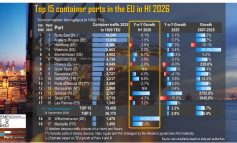
Top-15 EU container ports in H1 2026

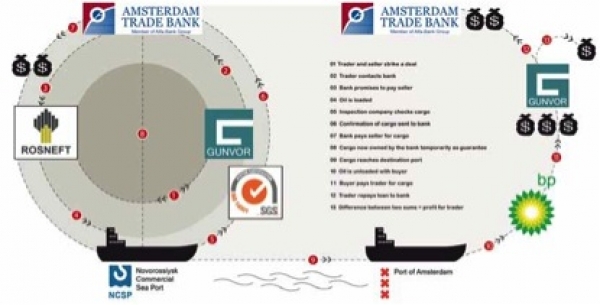
It is often argued that the competitiveness of ports depends on their ability to insert themselves in global supply chains. However, the influential role of commodity traders in managing these global supply chains is not well understood by port planners. The case for commodity trade is compelling. It is linked with the financial sector on the one hand and with production, storage and distribution on the other. And these activities do not necessarily need to be in each other’s proximity. Another compelling reason to look at commodity trade is that access to, and control over, increasingly scarce commodities and contested supply routes are becoming more and more of a geopolitical concern.

In an article, published in Port Technology International [issue 61], PortEconomics associate member Wouter Jacobs, along with Thomas van Bergen (research assistant at ITMMA-University of Antwerp) help understanding the economic geography of commodity trade.

You can freely download and read the article @ PortEconomics.

Next article Essays on the relationship between terminal scale and port competition
Previous article Foreign entry strategies of terminal operators in container ports

Wouter Jacobs

Dr. Wouter Jacobs (1979) has a background in Spatial Planning & Human Geography (MA, Radboud University Nijmegen). He received his PhD in Management (Radboud University Nijmegen) in 2007. In his PhD he developed an institutional economic framework to study the global maritime transport sector and to compare competition strategies and governance structures of seaports in Rotterdam, Los Angeles-Long Beach and Dubai. After his PhD, Wouter moved to the Erasmus School of Economics (ESE) at the Erasmus University of Rotterdam. Here he worked for 2.5 years, in close collaboration with Port of Rotterdam Authority and the City Development Cooperation of Rotterdam, on research on the commercial and geographical relationships between specialized advanced service providers (finance, insurance, consultancy) and seaport clusters. He was furthermore involved at ESE as coordinator and lecturer of the MSc-seminar Advanced Port & Transport Economics. Dr. Jacobs currently works for the Urban & Regional Research Center at Utrecht University where he is involved in research (commissioned by the Dutch Ministry of Economic Affairs) on the co-evolution between Multi-national Enterprises (MNE) and knowledge intensive business services (KIBS) in the Amsterdam metropolitan region. Wouter’s current port related research builds upon the evolutionary economic geography perspective (EEG), with particular focus on processes of co-evolution between the maritime industry, technology and institutions in a regional context. He is member of the board of the Regional Science Association Netherlands and has held guest lectures at the Institute of Transport and Maritime Management in Antwerp and at the Urban Studies Program of Simon Fraser University Vancouver.

Related Posts

Top-15 EU container ports in H1 2026 Containers

Top-15 EU container ports in H1 2026

European ports: The need to avoid the great divide European Port Policy

European ports: The need to avoid the great divide

New edition: Developing ports as business ecosystems Presentations

New edition: Developing ports as business ecosystems

Weekly Timeline
Sep 22nd 10:21 AM
Thematic Area

Top-15 EU container ports in H1 2026

Sep 17th 12:11 PM
Category

Geopolitical leverage through the international activities of State-Owned Enterprises (SOEs) in ports and maritime logistics

Jul 22nd 3:50 PM
Thematic Area

European ports: The need to avoid the great divide

Jul 21st 1:41 PM
Thematic Area

Florence maritime regulation conference: PortEconomics members shape maritime regulation

Jul 2nd 2:45 PM
Presentations

New edition: Developing ports as business ecosystems

Tweets by @PortEconomics
  • Containers
  • Cruise
  • EPP
  • Ports & COVID-19
  • Back to top
About PortEconomics

PortEconomics is a web-based initiative aiming to advance knowledge exchange on seaport studies. Established by maritime economists affiliated to academic institutions in Belgium, Greece and the Netherlands. It provides freely accessible research, education, information, and network-building material on critical issues of port economics, management and policies.

Additional Information
  • About
  • Login
  • Register
  • Edit Profile
  • Contact us
  • PortProfessionals
  • PortReport Series
  • Terms and Conditions
  • Cookie Policy
© PortEconomics 2025. All rights reserved.
Produced by PortEconomics
Manage Consent
To provide the best experiences, we use technologies like cookies to store and/or access device information. Consenting to these technologies will allow us to process data such as browsing behavior or unique IDs on this site. Not consenting or withdrawing consent, may adversely affect certain features and functions.
Functional Always active
The technical storage or access is strictly necessary for the legitimate purpose of enabling the use of a specific service explicitly requested by the subscriber or user, or for the sole purpose of carrying out the transmission of a communication over an electronic communications network.
Preferences
The technical storage or access is necessary for the legitimate purpose of storing preferences that are not requested by the subscriber or user.
Statistics
The technical storage or access that is used exclusively for statistical purposes. The technical storage or access that is used exclusively for anonymous statistical purposes. Without a subpoena, voluntary compliance on the part of your Internet Service Provider, or additional records from a third party, information stored or retrieved for this purpose alone cannot usually be used to identify you.
Marketing
The technical storage or access is required to create user profiles to send advertising, or to track the user on a website or across several websites for similar marketing purposes.
  • Manage options
  • Manage services
  • Manage {vendor_count} vendors
  • Read more about these purposes
View preferences
  • {title}
  • {title}
  • {title}