

• Home
  • About
    • Members
    • Associate Members
    • Former members
  • Thematic Areas
    • Containers
    • Cruise
    • European Port Policy
    • Ports & COVID-19
  • PortStudies
  • Presentations
  • Noticeboard
  • Viewpoints
  • PortLibrary
  • PortReport
PortEconomics
  • March 19th, 2026
PortEconomics
  • Home
  • About
    • Members
    • Associate Members
    • Former members
  • Thematic Areas
    • Containers
    • Cruise
    • European Port Policy
    • Ports & COVID-19
  • PortStudies
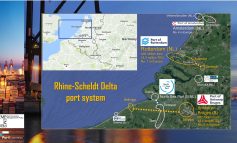
    Rhine-Scheldt delta port system

    Rhine-Scheldt delta port system

    A metric of global maritime supply chain disruptions: The global supply chain stress index - maritime (GSCSI-M)

    A metric of global maritime supply chain disruptions: The global supply chain stress index - maritime (GSCSI-M)

    ESG disclosure as a proxy of port corporate communication and sustainable management strategy: An LDA approach

    ESG disclosure as a proxy of port corporate communication and sustainable management strategy: An LDA approach

    From coal exports to green steel production? The role of circular economy precincts for sustainable port diversification

    From coal exports to green steel production? The role of circular economy precincts for sustainable port diversification

    Maritime transport in net zero

    Maritime transport in net zero

  • Presentations
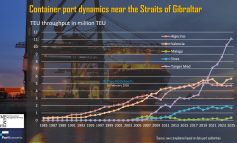
    PortGraphic: Container port dynamics near Gibraltar

    PortGraphic: Container port dynamics near Gibraltar

    Top-10 PortReads in 2025

    Top-10 PortReads in 2025

    Port reform: World Bank publishes the third edition of its port reform toolkit

    Port reform: World Bank publishes the third edition of its port reform toolkit

    When will we admit that maritime transport will not be decarbonised by 2050?

    When will we admit that maritime transport will not be decarbonised by 2050?

    Digital technologies for efficient and resilient sea-land logistics

    Digital technologies for efficient and resilient sea-land logistics

  • Noticeboard
    Call for papers: Contemporary Maritime Economics: Transformations and Emerging Perspectives

    Call for papers: Contemporary Maritime Economics: Transformations and Emerging Perspectives

    ECONSHIP2026: Call for papers

    ECONSHIP2026: Call for papers

    Call for papers: 1st Florence Maritime Regulation Conference

    Call for papers: 1st Florence Maritime Regulation Conference

    PortEconomics co-director appointed Senior Scientific Advisor to the Florence School of Regulation

    PortEconomics co-director appointed Senior Scientific Advisor to the Florence School of Regulation

    Jean Monnet Chair in European Port Policy

    Jean Monnet Chair in European Port Policy

  • Viewpoints
    Commission unveils new EU Ports Strategy

    Commission unveils new EU Ports Strategy

    PortGraphic: Top-15 EU container ports in Q3 2025

    PortGraphic: Top-15 EU container ports in Q3 2025

    Maritime transport in net zero

    Maritime transport in net zero

    Portgraphic: Top-15 EU container ports in H1 2025

    Portgraphic: Top-15 EU container ports in H1 2025

    Portgraphic: fleet capacity (owned/chartered) of container shipping lines

    Portgraphic: fleet capacity (owned/chartered) of container shipping lines

  • PortLibrary
  • PortReport
White Paper calls for collaborative and sector-driven action for increased transparency, integrity & governance in seaportsCategory

White Paper calls for collaborative and sector-driven action for increased transparency, integrity & governance in seaports

October 31st, 2022 Category, European Port Policy, Featured, PortStudies, Thematic Area, Uncategorized

READ ALSO

Call for papers: 1st Florence Maritime Regulation Conference
Jean Monnet Chair in European Port Policy
Port reform: World Bank publishes the third edition of its port reform toolkit
Rhine-Scheldt delta port system

White Paper on port integrity reveals insights into the importance of port integrity commitments for better maritime supply chains, the development of the Global Port Integrity Platform (GPIP), the challenges encountered during the research process and some findings on port integrity commitment levels. The discussion details and justifies the call for collaborative and sector-driven action for increased transparency and integrity in ports and a better overall operating environment.

The Maritime Anti-corruption Network (MACN) launched the Global Port Integrity Platform (GPIP) in 2022, which measures Port Integrity worldwide. The platform is the first of its kind and builds on MACN’s Anonymous Incident Data and on Port Integrity Commitments giving further context and depth to integrity challenges in seaports.

The Port Integrity Commitments were developed by a core team of researchers including PortEconomics members Thanos Pallis, Gordon Wilmsmeier, Paraskevi Kladaki, and Luisa Spaggiari, who started with 100 ports and have further expanded the database to reach over 200 ports. Their insights have facilitated the promotion of Port Integrity and Collective Action by identifying gaps in transparency and governance in seaports globally.

The research team has now published a Whitepaper detailing the development of GPIP, the challenges encountered during the research process and some findings on Port Integrity Commitment levels. The results aim to push for collaborative and sector-driven action for increased transparency, integrity and, thereby, governance in seaports.

You might freely download the White Paper here: Pallis T., Kladaki E. and Wilmsmeier G. (2022). Towards a Global Port Integrity Platform: A contribution to better maritime supply chains. Copenhagen: The Maritime Anti-Corruption Network (MACN), ISBN: ISBN 978-87-974224-0-3.

The White Paper

Transparency and integrity in the governance of economic activities have emerged as common expectations in response to an increased focus of businesses, regulators and legislators on ethics and the proper functioning of institutions and the economy. The two concepts are gradually and rightly seen as moral and political imperatives related to goals such as accountability, inclusivity, legitimacy, justification, good governance, and socially responsible outcomes.

Both are also linked with the improved performance of an industry, sector, or firm. Additionally, they reflect client and consumer preferences; the wider public ascribes increasing importance to environmental, social, and governance (ESG) factors when making transactions or investment decisions. Private entities and public organisations’ growing recognition that good behaviour is good for business is another contributor to business integrity prioritisation.

Shipping and port services are no exception to greater transparency and integrity expectations. Shipping companies, shippers, freight forwarders, agents, and all other stakeholders involved in maritime trade are increasingly interested in securing the conditions that would enable economic transactions governed by integrity.

The White Paper details the progress of the Maritime Anti-Corruption Network (MACN) Global Port Integrity Platform (GPIP) and how it contributes to lower corruption-related risks in maritime transport and, thus, better maritime supply chains.

The document – authored by Thanos Pallis, Evie Kladaki and Gordon Wilmsmeier and published by the Maritime Anti-Corruption Network (MACN) – elaborates on the endorsed approach in measuring the current port integrity commitments as a concerted effort to create a dialogue between stakeholders, governments, and other institutions on progressing a related agenda and corrective actions that would enhance the integrity of the entire system.

The importance of two interrelated concepts, namely transparency and integrity in transactions associated with the realisation of maritime trade, set the scene dedicated section.

Thus, the document details how the MACN GPIP was developed, how it monitors the integrity commitments of ports, and how the findings on port commitments and the reporting of corruption incidents are visualised and dis- seminated to the members of MACN. This section also discusses the experiences, the challenges realised, and the potential identified during the data collection for building the GPIP port commitment database.

The White Paper concludes with a discussion of the next steps for the MACN GPIP initiative and how its expansion would further contribute to a global approach and a better understanding of port integrity, thus, better maritime transport and trade.
Next article Integration of rail freight with dry ports: A route for seaport regionalisation
Previous article London Gateway: the steady private development of a ‘port business ecosystem’

Related Posts

Rhine-Scheldt delta port system Featured

Rhine-Scheldt delta port system

Commission unveils new EU Ports Strategy European Port Policy

Commission unveils new EU Ports Strategy

PortGraphic: Container port dynamics near Gibraltar Containers

PortGraphic: Container port dynamics near Gibraltar

Weekly Timeline
Mar 9th 4:35 PM
Featured

Rhine-Scheldt delta port system

Mar 6th 1:23 PM
Thematic Area

Commission unveils new EU Ports Strategy

Feb 18th 1:46 PM
Thematic Area

PortGraphic: Container port dynamics near Gibraltar

Feb 12th 12:25 PM
Featured

A metric of global maritime supply chain disruptions: The global supply chain stress index – maritime (GSCSI-M)

Jan 14th 12:56 PM
Noticeboard

Call for papers: Contemporary Maritime Economics: Transformations and Emerging Perspectives

Tweets by @PortEconomics
  • Containers
  • Cruise
  • EPP
  • Ports & COVID-19
  • Back to top
About PortEconomics

PortEconomics is a web-based initiative aiming to advance knowledge exchange on seaport studies. Established by maritime economists affiliated to academic institutions in Belgium, Greece and the Netherlands. It provides freely accessible research, education, information, and network-building material on critical issues of port economics, management and policies.

Additional Information
  • About
  • Login
  • Register
  • Edit Profile
  • Contact us
  • PortProfessionals
  • PortReport Series
  • Terms and Conditions
  • Cookie Policy
© PortEconomics 2025. All rights reserved.
Produced by PortEconomics
Manage Consent
To provide the best experiences, we use technologies like cookies to store and/or access device information. Consenting to these technologies will allow us to process data such as browsing behavior or unique IDs on this site. Not consenting or withdrawing consent, may adversely affect certain features and functions.
Functional Always active
The technical storage or access is strictly necessary for the legitimate purpose of enabling the use of a specific service explicitly requested by the subscriber or user, or for the sole purpose of carrying out the transmission of a communication over an electronic communications network.
Preferences
The technical storage or access is necessary for the legitimate purpose of storing preferences that are not requested by the subscriber or user.
Statistics
The technical storage or access that is used exclusively for statistical purposes. The technical storage or access that is used exclusively for anonymous statistical purposes. Without a subpoena, voluntary compliance on the part of your Internet Service Provider, or additional records from a third party, information stored or retrieved for this purpose alone cannot usually be used to identify you.
Marketing
The technical storage or access is required to create user profiles to send advertising, or to track the user on a website or across several websites for similar marketing purposes.
  • Manage options
  • Manage services
  • Manage {vendor_count} vendors
  • Read more about these purposes
View preferences
  • {title}
  • {title}
  • {title}