

• Home
  • About
    • Members
    • Associate Members
    • Former members
  • Thematic Areas
    • Containers
    • Cruise
    • European Port Policy
    • Ports & COVID-19
  • PortStudies
  • Presentations
  • Noticeboard
  • Viewpoints
  • PortLibrary
  • PortReport
PortEconomics
  • March 19th, 2026
PortEconomics
  • Home
  • About
    • Members
    • Associate Members
    • Former members
  • Thematic Areas
    • Containers
    • Cruise
    • European Port Policy
    • Ports & COVID-19
  • PortStudies
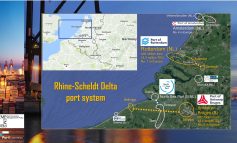
    Rhine-Scheldt delta port system

    Rhine-Scheldt delta port system

    A metric of global maritime supply chain disruptions: The global supply chain stress index - maritime (GSCSI-M)

    A metric of global maritime supply chain disruptions: The global supply chain stress index - maritime (GSCSI-M)

    ESG disclosure as a proxy of port corporate communication and sustainable management strategy: An LDA approach

    ESG disclosure as a proxy of port corporate communication and sustainable management strategy: An LDA approach

    From coal exports to green steel production? The role of circular economy precincts for sustainable port diversification

    From coal exports to green steel production? The role of circular economy precincts for sustainable port diversification

    Maritime transport in net zero

    Maritime transport in net zero

  • Presentations
    PortGraphic: Container port dynamics near Gibraltar

    PortGraphic: Container port dynamics near Gibraltar

    Top-10 PortReads in 2025

    Top-10 PortReads in 2025

    Port reform: World Bank publishes the third edition of its port reform toolkit

    Port reform: World Bank publishes the third edition of its port reform toolkit

    When will we admit that maritime transport will not be decarbonised by 2050?

    When will we admit that maritime transport will not be decarbonised by 2050?

    Digital technologies for efficient and resilient sea-land logistics

    Digital technologies for efficient and resilient sea-land logistics

  • Noticeboard
    Call for papers: Contemporary Maritime Economics: Transformations and Emerging Perspectives

    Call for papers: Contemporary Maritime Economics: Transformations and Emerging Perspectives

    ECONSHIP2026: Call for papers

    ECONSHIP2026: Call for papers

    Call for papers: 1st Florence Maritime Regulation Conference

    Call for papers: 1st Florence Maritime Regulation Conference

    PortEconomics co-director appointed Senior Scientific Advisor to the Florence School of Regulation

    PortEconomics co-director appointed Senior Scientific Advisor to the Florence School of Regulation

    Jean Monnet Chair in European Port Policy

    Jean Monnet Chair in European Port Policy

  • Viewpoints
    Commission unveils new EU Ports Strategy

    Commission unveils new EU Ports Strategy

    PortGraphic: Top-15 EU container ports in Q3 2025

    PortGraphic: Top-15 EU container ports in Q3 2025

    Maritime transport in net zero

    Maritime transport in net zero

    Portgraphic: Top-15 EU container ports in H1 2025

    Portgraphic: Top-15 EU container ports in H1 2025

    Portgraphic: fleet capacity (owned/chartered) of container shipping lines

    Portgraphic: fleet capacity (owned/chartered) of container shipping lines

  • PortLibrary
  • PortReport
Review of maritime transport 2013Noticeboard

Review of maritime transport 2013

December 16th, 2013 Noticeboard, PortStudies

READ ALSO

Regional analysis of Liner Shipping Connectivity: What does the revised LSCI reveal?
COVID-19 and maritime transport: navigating the crisis and lessons learned
COVID-19 and maritime transport: impact and responses
Rhine-Scheldt delta port system

The UNCTAD Review of Maritime Transport, produced by the Division on Technology and Logistics, is the acknowledged United Nations source of statistics and analysis on seaborne trade, the world fleet, freight rates, port traffic, and the latest trends in the legal and regulatory environment for international maritime transport.

The 2013 edition of the Review of Maritime Transport estimates global seaborne trade to have increased by 4.3 per cent, with the total reaching over 9 billion tons in 2012 for the first time ever. Driven in particular by growing domestic demand in China and increased intra-Asian and South-South trade, seaborne trade nevertheless remains subject to persistent downside risks facing the world economy and trade. Freight rates have remained low and volatile in the various market segments (container, liquid and dry bulk).

Ports

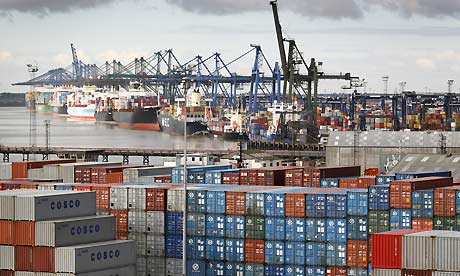
A chapter of the Review of Maritime Transport 2013 covers container port throughput, port finance, selected global port development projects and efforts aimed at assessing port performance.

World container port throughput increased by an estimated 3.8 per cent to 601.8 million TEUs in 2012. This increase was lower than the estimated 7.3 per cent increase of 2011. The share of Chinese mainland ports in total world container port throughput remains at an estimated 25 per cent. The financing of port infrastructure remains strong as investors continue to seek long-term stable returns. Recent efforts by port customers to assess port performance are leading towards an era of increased transparency in port operations that could spur greater interport competition, increased port performance and reduced transport costs.

Maritime Transport

Maritime transport is facing a new and complex environment that involves both challenges and opportunities. Of all the prevailing challenges, however, the interconnected issues of energy security and costs, climate change, and environmental sustainability are perhaps the most unsettling. Climate change in particular continues to rank high on the international policy agenda, including that of shipping and port businesses. Turning to the opportunities, these include – to name but a few – deeper regional integration and South-South cooperation; growing diversification of sources of supply; and access to new markets, facilitated by cooperation agreements and by improved transport networks (e.g. the Panama Canal expansion).

In view of recent research that suggests that containerization has been a stronger driver of globalization than trade liberalization has, the Review discusses global developments in container trade flows and containership deployment. It also presents trends over 10 years in liner shipping connectivity in developing regions, building upon UNCTAD’s Liner Shipping Connectivity Index which was published in 2013 for the tenth year.

The special chapter on “Landlocked countries and maritime transport” provides an overview of recent progress made in understanding impediments to accessing sea-shipping services, for the trade of goods between landlocked territories and overseas markets.

The Review proposes a new paradigm for transit based on a conveyor-belt concept, which aims at achieving a continuous supply of transit transport services, supported by institutional frameworks and infrastructure.

The argument proposed here is that a regular, reliable and secure transit system is the simple, straightforward goal to pursue in order to guarantee access for landlocked developing countries to global shipping networks on the basis of non-penalizing conditions. Given the review of the Almaty Programme of Action that is to take place in 2014, this proposal could be part of the actions within a new agenda for landlocked and transit developing countries.

Access the full report here.
Next article Port and maritime security: the european approach
Previous article The 'humble hero' of the global economy: containers

Thanos Pallis

Dr. Thanos Pallis is Professor of Port Economics & Policy & the scientific coordinator of the Jean Monnet Action on European Port Policy at the Department of Shipping, Trade and Transport (STT), University of the Aegean, Greece. He is currently the President of the International Association of Maritime Economists (IAME), and has served as secretary general of MedCruise, the association of cruise ports in the Med. The author of the acclaimed book "European Port Policy", he has an extensive international experience in port policy and economics. Thanos co-directs PortEconomics and is a regular contributor at the work of national governments and international organisation (UNCTAD, OECD, and ESPO, IAPH, and AVIP) shaping the port sector.

Related Posts

Rhine-Scheldt delta port system Featured

Rhine-Scheldt delta port system

A metric of global maritime supply chain disruptions: The global supply chain stress index - maritime (GSCSI-M) Featured

A metric of global maritime supply chain disruptions: The global supply chain stress index - maritime (GSCSI-M)

Noticeboard

Call for papers: Contemporary Maritime Economics: Transformations and Emerging Perspectives

Guest Editors Assoc. Prof. Kum Fai Yuen, Nanyang Technological University, SingaporeProf. Theo Notteboom,...
Weekly Timeline
Mar 9th 4:35 PM
Featured

Rhine-Scheldt delta port system

Mar 6th 1:23 PM
Thematic Area

Commission unveils new EU Ports Strategy

Feb 18th 1:46 PM
Thematic Area

PortGraphic: Container port dynamics near Gibraltar

Feb 12th 12:25 PM
Featured

A metric of global maritime supply chain disruptions: The global supply chain stress index – maritime (GSCSI-M)

Jan 14th 12:56 PM
Noticeboard

Call for papers: Contemporary Maritime Economics: Transformations and Emerging Perspectives

Tweets by @PortEconomics
  • Containers
  • Cruise
  • EPP
  • Ports & COVID-19
  • Back to top
About PortEconomics

PortEconomics is a web-based initiative aiming to advance knowledge exchange on seaport studies. Established by maritime economists affiliated to academic institutions in Belgium, Greece and the Netherlands. It provides freely accessible research, education, information, and network-building material on critical issues of port economics, management and policies.

Additional Information
  • About
  • Login
  • Register
  • Edit Profile
  • Contact us
  • PortProfessionals
  • PortReport Series
  • Terms and Conditions
  • Cookie Policy
© PortEconomics 2025. All rights reserved.
Produced by PortEconomics
Manage Consent
To provide the best experiences, we use technologies like cookies to store and/or access device information. Consenting to these technologies will allow us to process data such as browsing behavior or unique IDs on this site. Not consenting or withdrawing consent, may adversely affect certain features and functions.
Functional Always active
The technical storage or access is strictly necessary for the legitimate purpose of enabling the use of a specific service explicitly requested by the subscriber or user, or for the sole purpose of carrying out the transmission of a communication over an electronic communications network.
Preferences
The technical storage or access is necessary for the legitimate purpose of storing preferences that are not requested by the subscriber or user.
Statistics
The technical storage or access that is used exclusively for statistical purposes. The technical storage or access that is used exclusively for anonymous statistical purposes. Without a subpoena, voluntary compliance on the part of your Internet Service Provider, or additional records from a third party, information stored or retrieved for this purpose alone cannot usually be used to identify you.
Marketing
The technical storage or access is required to create user profiles to send advertising, or to track the user on a website or across several websites for similar marketing purposes.
  • Manage options
  • Manage services
  • Manage {vendor_count} vendors
  • Read more about these purposes
View preferences
  • {title}
  • {title}
  • {title}