


• Home
  • About
    • Members
    • Associate Members
    • Former members
  • Thematic Areas
    • Containers
    • Cruise
    • European Port Policy
    • Ports & COVID-19
  • PortStudies
  • Presentations
  • Noticeboard
  • Viewpoints
  • PortLibrary
  • PortReport
PortEconomics
  • March 19th, 2026
PortEconomics
  • Home
  • About
    • Members
    • Associate Members
    • Former members
  • Thematic Areas
    • Containers
    • Cruise
    • European Port Policy
    • Ports & COVID-19
  • PortStudies
    Rhine-Scheldt delta port system

    Rhine-Scheldt delta port system

    A metric of global maritime supply chain disruptions: The global supply chain stress index - maritime (GSCSI-M)

    A metric of global maritime supply chain disruptions: The global supply chain stress index - maritime (GSCSI-M)

    ESG disclosure as a proxy of port corporate communication and sustainable management strategy: An LDA approach

    ESG disclosure as a proxy of port corporate communication and sustainable management strategy: An LDA approach

    From coal exports to green steel production? The role of circular economy precincts for sustainable port diversification

    From coal exports to green steel production? The role of circular economy precincts for sustainable port diversification

    Maritime transport in net zero

    Maritime transport in net zero

  • Presentations
    PortGraphic: Container port dynamics near Gibraltar

    PortGraphic: Container port dynamics near Gibraltar

    Top-10 PortReads in 2025

    Top-10 PortReads in 2025

    Port reform: World Bank publishes the third edition of its port reform toolkit

    Port reform: World Bank publishes the third edition of its port reform toolkit

    When will we admit that maritime transport will not be decarbonised by 2050?

    When will we admit that maritime transport will not be decarbonised by 2050?

    Digital technologies for efficient and resilient sea-land logistics

    Digital technologies for efficient and resilient sea-land logistics

  • Noticeboard
    Call for papers: Contemporary Maritime Economics: Transformations and Emerging Perspectives

    Call for papers: Contemporary Maritime Economics: Transformations and Emerging Perspectives

    ECONSHIP2026: Call for papers

    ECONSHIP2026: Call for papers

    Call for papers: 1st Florence Maritime Regulation Conference

    Call for papers: 1st Florence Maritime Regulation Conference

    PortEconomics co-director appointed Senior Scientific Advisor to the Florence School of Regulation

    PortEconomics co-director appointed Senior Scientific Advisor to the Florence School of Regulation

    Jean Monnet Chair in European Port Policy

    Jean Monnet Chair in European Port Policy

  • Viewpoints
    Commission unveils new EU Ports Strategy

    Commission unveils new EU Ports Strategy

    PortGraphic: Top-15 EU container ports in Q3 2025

    PortGraphic: Top-15 EU container ports in Q3 2025

    Maritime transport in net zero

    Maritime transport in net zero

    Portgraphic: Top-15 EU container ports in H1 2025

    Portgraphic: Top-15 EU container ports in H1 2025

    Portgraphic: fleet capacity (owned/chartered) of container shipping lines

    Portgraphic: fleet capacity (owned/chartered) of container shipping lines

  • PortLibrary
  • PortReport
Tackling uncertainty in green pricing of port infrastructureFeatured

Tackling uncertainty in green pricing of port infrastructure

September 2nd, 2016 Featured, PortStudies, Uncategorized

blog.inpolis.com

READ ALSO

Port reform: World Bank publishes the third edition of its port reform toolkit
Social license to operate: determining social acceptance among local port community stakeholders
The role of seaports and the contemporary challenges they face
Rhine-Scheldt delta port system

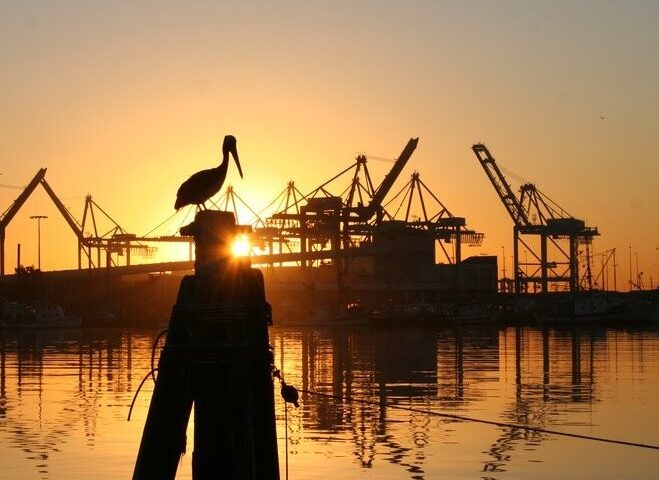
Seaports are large networked infrastructures, which have considerable spatial impacts. Such infrastructures must be prepared to accommodate future developments within a context of stakeholder pressure. Similar to other large industrial operations generating substantial externalities, transport industries are large polluters.

PE@IAMEIn 2012, it was noted that international shipping accounted for nearly 1,000 million tonnes of CO2, CH4 and N2O, an equivalent of 2,2% of global green house gas emissions. These levels are even expected to increase in the future, with estimations ranging between a 50% and 250% rise by 2050. Stakeholders with environmental claims not only consist of environmental pressure groups or local and regional governments: supply chain actors are increasingly transferring the pressure from their end customers to the various nodes of the supply chain. Ports are facing up to the environmental challenge and seek to demonstrate their environmental responsibilities as well as running a safe and successful commercial operation. The European Commission is convinced that ports are able to provide incentives to the shipping industry in its effort to improve the industry’s sustainability. An example of such an incentive is differentiated port infrastructure charging, with reference to environmental performance. Such charging schemes enable shipping lines to reduce their total port dues if the ships that call a port comply with certain conditions of environmental friendliness.

PortEconomics member Michael Dooms, along with Magali Geerts (Vrije Universities Brussel) and Mychal Langenus (Vrije Universiteit Brussel) discuss the way to tackle uncertainty when applying green perspectives at port infrastructure pricing in their latest port study presented in the IAME 2016 Conference held 23-26 August in Hamburg, Germany.

The paper and the presentation of the study is available and can be freely downloaded @PortEconomics.
Next article Three irrelevant reasons why Maersk & co should not invest in more ultra large container ships
Previous article Box dynamics: “leaders”, “followers” and transmitting mechanisms

Michael Dooms

dr. Michaël Dooms (MSc & PhD, Applied Economics: Business and Technology, Solvay Business School, University of Brussels) is associate professor at the Solvay Business School at the University of Brussels (VUB). He is program director of the MSc in Management/Bedrijfskunde, teaches courses in Management and Strategy, Organization Design & Change, and is responsible for the internship program and foreign trade mission. For the trade mission project, since 2007, he has supervised more than 150 projects on the field aimed at foreign market expansion in emerging economies such as, inter alia, India, Brazil, China, Indonesia, Kenya, Colombia. His PhD Thesis won the 2011 Palgrave MacMillan MEL PhD Competition (4th edition). It treats the spatial and dynamic aspects of stakeholder management, with an application to large-scale infrastructure projects, including port projects, master plans, and vision cases. He is a member of PortEconomics.eu and a member of the Port Performance Research Network (PPRN), where he co-animates the port authority strategy group. His other research interests are in the fields of complex project evaluation (of large scale infrastructure projects), stakeholder management and corporate strategies. He is currently a guest professor of port management and strategy at universities in the Netherlands (MEL-Erasmus University Rotterdam) and Greece (AUEB), and formerly in Belgium (Antwerp, ITMMA). He has worked as a project manager and researcher on the formulation, evaluation, management and implementation of infrastructure development projects, strategies and visions characterized by a multi-disciplinary (integration of technical, economic and environmental criteria) and multi-stakeholder (public and private sector, local communities) approach, exceeding a total value of more than 10 million euros. Among the principals in contract research and consultancy are infrastructure managers (port authorities, airports, railway infrastructure,...), private construction firms and project developers, regional development agencies, stakeholder interest groups, trade associations, and various government levels (local, regional, national, transnational). In the field of strategy and organizational change, he was a key member of the strategy office developing and implementing of a strategic plan for the Belgian rail infrastructure manager Infrabel (2006-2010). In the management of the University of Brussels, he was vice-chairman of the Board of Directors during 2005-2008. He also co-founded a university spin-off company. From 2013 onwards, he leads the PORTOPIA project (www.portopia.eu), a large EU-FP7 collaborative research project on port performance measurement.

Related Posts

Rhine-Scheldt delta port system Featured

Rhine-Scheldt delta port system

Commission unveils new EU Ports Strategy European Port Policy

Commission unveils new EU Ports Strategy

PortGraphic: Container port dynamics near Gibraltar Containers

PortGraphic: Container port dynamics near Gibraltar

Weekly Timeline
Mar 9th 4:35 PM
Featured

Rhine-Scheldt delta port system

Mar 6th 1:23 PM
Thematic Area

Commission unveils new EU Ports Strategy

Feb 18th 1:46 PM
Thematic Area

PortGraphic: Container port dynamics near Gibraltar

Feb 12th 12:25 PM
Featured

A metric of global maritime supply chain disruptions: The global supply chain stress index – maritime (GSCSI-M)

Jan 14th 12:56 PM
Noticeboard

Call for papers: Contemporary Maritime Economics: Transformations and Emerging Perspectives

Tweets by @PortEconomics
  • Containers
  • Cruise
  • EPP
  • Ports & COVID-19
  • Back to top
About PortEconomics

PortEconomics is a web-based initiative aiming to advance knowledge exchange on seaport studies. Established by maritime economists affiliated to academic institutions in Belgium, Greece and the Netherlands. It provides freely accessible research, education, information, and network-building material on critical issues of port economics, management and policies.

Additional Information
  • About
  • Login
  • Register
  • Edit Profile
  • Contact us
  • PortProfessionals
  • PortReport Series
  • Terms and Conditions
  • Cookie Policy
© PortEconomics 2025. All rights reserved.
Produced by PortEconomics
Manage Consent
To provide the best experiences, we use technologies like cookies to store and/or access device information. Consenting to these technologies will allow us to process data such as browsing behavior or unique IDs on this site. Not consenting or withdrawing consent, may adversely affect certain features and functions.
Functional Always active
The technical storage or access is strictly necessary for the legitimate purpose of enabling the use of a specific service explicitly requested by the subscriber or user, or for the sole purpose of carrying out the transmission of a communication over an electronic communications network.
Preferences
The technical storage or access is necessary for the legitimate purpose of storing preferences that are not requested by the subscriber or user.
Statistics
The technical storage or access that is used exclusively for statistical purposes. The technical storage or access that is used exclusively for anonymous statistical purposes. Without a subpoena, voluntary compliance on the part of your Internet Service Provider, or additional records from a third party, information stored or retrieved for this purpose alone cannot usually be used to identify you.
Marketing
The technical storage or access is required to create user profiles to send advertising, or to track the user on a website or across several websites for similar marketing purposes.
  • Manage options
  • Manage services
  • Manage {vendor_count} vendors
  • Read more about these purposes
View preferences
  • {title}
  • {title}
  • {title}