Featured

April 30th, 2018
Featured

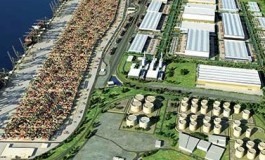
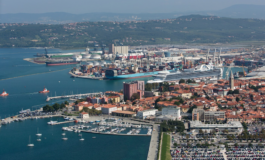
Recent trends in port development show that ports are making increasing efforts to forge mutually beneficial cooperation strategies, particularly ports sharing a common hinterland. PortEconomics co-director Peter de Langen co-authored with Kristijan Stamatović and Aleš Groznik (University of Ljubljana) an analysis of the North Adriatic ports (Koper, Rijeka, Trieste and Venice) with a focus on two related themes. First, the complementarity of the North Adriatic (NA) ports in the container market is analysed based on port vessel service...
April 27th, 2018
Featured

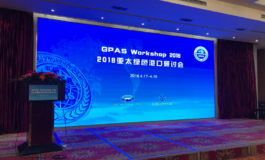
PortEconomics.eu member Michaël Dooms was invited as one of the keynote speakers and panellists at the annual international workshop on Green Port Certification at the APEC Port Services Network (APSN) held in Beijing on 17th and 18th of April 17thand 18th. APSN has been running a Green Port Award System since 2016 aiming at enhancing the green profile of ports in the Asia-Pacific region. Michaël shared his experience as one of the independent evaluators following the 2 years of existence of the GPAS system. About 100 port stakeholders from...
April 25th, 2018
Featured

Some really exciting news for the entire PorteEconomics family: PortEconomics member Mary R. Brooks is the first woman to ever receive the most distinguished international prize in the field: the Onassis Prize in Shipping. Dr. Brooks was cited by the award’s distinguished judges for her extensive work in ports and port management. She could just have easily been recognized for her work in short sea shipping, or her studies on liner regulation. “It’s a great honour,” says Dr. Brooks, Professor Emerita in the Rowe School of...
April 23rd, 2018
Featured

A sustainable method to capture expenditure structures of cargo movement activities on nearby port regions has been developed by PortEconomics member Grace Wang along with Wen-Huei Chang (US Army Corp of Engineers) and Yue Cui (Michigan State University) updated the REgional ECONomic System (RECONS) under the U.S. Army Corps of Engineers to measure economic impacts. Through the defined categories of port industry services and related revenues, direct support of the movement of goods through the ports can be quantified. The expenditure data...
April 18th, 2018
Featured

Ηow public interests in seaports can be secured in the corporatized model? This corporatized model, in which port authorities engage in port development on a commercial basis, is increasingly used. PortEconomics members Peter de Langen and Larissa van der Lugt discuss in detail an important question that so far has not received attention in the literature on port governance: how can the public shareholders use their influence as shareholders of port authorities to achieve public policy goals. In their latest port study published in the...
April 17th, 2018
Featured

By George Vaggelas and Thanos Pallis The port is Thessaloniki in Greece. The date is March 2018. A long port privatization process that lasted almost 13 (!!) years is finally concluded, with the Greek state handing 67% of the shares of the Thessaloniki Port Authority S.A. to the new owners of the port, the South Europe Gateway Thessaloniki (SEGT) Ltd. This transaction is the outcome of an international call by the Greek government, that was initiated in 2014 and the winning of the tender by SEGT; the other two binding bids for a majority...
April 10th, 2018
Featured

By Theo Notteboom The graph shows the annual container volume handled by a country’s port system per km of coastline. Belgium takes the no. 1 spot closely followed by Singapore. The list contains some other smaller nations with big container ports such as the Netherlands and Malta. The Belgian case is a bit special given that the nautical access via the river Scheldt to Antwerp (no. 2 container port in Europe) for a large part runs over Dutch territory. But even if we take Antwerp’s volume out, Belgium still makes it to the top 5...
April 5th, 2018
Featured

Maritime Supply Chain is one of the key sectors for digital transformation. With its high degree of networking and its large number of interfaces, maritime supply chain offers a broad range of applications for digital technologies. Stakeholders across the supply chain see huge potential to improve maritime and port service level and efficiency by having more collaboration and integration. This was a subject of a round table organized during the 28th year KEDGE Business School Global Supply Chain Management ISLI Forum (March 30,...
April 3rd, 2018
Featured

By Thanos Pallis The launching of the World Ports Sustainability Programme (WPSP) by the International Association of Ports and Harbours (IAPH), the American Association of Port Authorities (AAPA), the European Sea Ports Organisation (ESPO), AIVP – The Worldwide Network of Port Cities (AIVP) and the World Association for Waterborne Transport Infrastructure (PIANC) in March is a major step towards a responsible growth of the port industry. It is a most welcomed initiative by all of us serving ports and the maritime world. WPSP aims to...
April 1st, 2018
Featured

The program of the Jean Monnet Symposium on 'The future of the European Port Policy" is now available. The high-level list of speakers includes: Matthew Baldwin, Deputy Director General, DG-Move, European Commission Christos Lambrides, Secretary General of Ports, Port Policy and Maritime Investment, Ministry of Shipping and Insular Policy, Greece Greta Marini, Director - Integration of ports with society, AIVP Manolis Vournous, Mayor, Chios Municipality Aris Batsoulis, Cruise Manager Corfu Port Authority & Senior Vice...
Page 42 of 83...4041424344...