Featured

January 15th, 2018
Featured

By Peter de Langen In November, Associated British Ports (ABP), the UK’s leading port operator, launched its transformed property arm with a 960-hectare land bank, marking a further step in the gradual transition of the group from port operator to a development company of port, logistics and manufacturing complexes in 21 UK ports, writes Peter de Langen. ABP owns around 5,000 hectares of land, of which around 900 hectares is available for development. In its 2017 first half year trading update, ABP noted that it aims to build a...
January 12th, 2018
Featured

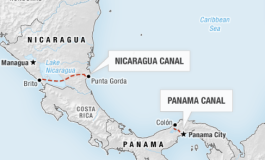
The construction of an interoceanic canal in Nicaragua is a longstanding controversy that goes back to the late 19th century when the US had plans to construct the canal but in the end decided to develop the Panama Canal instead. The plans for the construction of the Nicaragua Canal have resurfaced in recent years. In September 2012, a newly formed private Chinese enterprise, the Hong Kong Nicaragua Canal Development Group (HKND), proposed a five-year construction plan at a cost of 50 billion U.S. dollars and signed a memorandum of...
January 6th, 2018
Featured

The succession of maritime accidents in the last decades of the 20 century caused a strong political and public outcry for more stringent maritime safety regulations and measures. One of the most significant developments in this regard was the establishment of several regional agreements on Port State Control (PSC) – the first of which was the Paris MoU – with the specific objective of fighting substandard shipping through coordinated and harmonised inspection procedures. PortEconomics member Pierre Cariou along with Armando...
December 27th, 2017
Featured

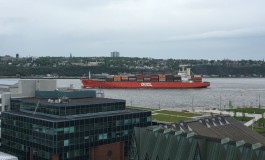
By Jean-Paul Rodrigue The St. Lawrence, as a gateway to Eastern Canada, is contemplating an emerging risk in the Post Panamax context, which is undermining its commercial viability for containerized maritime shipping. The Port of Quebec handled containers in the early stages of containerization, but by the late 1970s all this traffic shifted to Montreal because of its notable market advantage and excellent connectivity to the Ontario and Midwest hinterland. However, technical changes in containership sizes are gradually challenging...
December 11th, 2017
Featured

By Theo Notteboom The very recent merger between the port of Ghent in Belgium and Zeeland Seaports in the Netherlands has an impact of the position of the Rhine-Scheldt Delta port system in Europe. The Delta now counts no less than 4 of the 10 largest ports in Europe in terms of total port throughput in metric tons The Delta now counts no less than 4 of the 10 largest ports in Europe in terms of total port throughput in metric tons. The new North Sea Port handled 62 million tons in 2016. The Delta ports together handled 885 million tons...
December 11th, 2017
Featured

The undergoing structural changes, that put shipping and ports industry under pressure and driving the need for innovation was the key theme of PortEconomics member Indra Vonck presentation during the Baltic Ports Conference 2017. Indra divided these structural changes in three major issues: 1. Increased complexity, 2. Pressure on revenue and costs and 3. Energy transition. Detailing the three issues he concluded in suggestions that will move forward the port industry: The future of the ports is challenging but bright since...
December 7th, 2017
Featured

The impacts of a (geo)political and economic crisis on the distribution of port traffic and maritime networks was the main theme of PortEconomics member Cesar Ducruet during his presentation at the 1st International Forum of Korean Maritime Institute held on 28 November in Busan, Korea. The case of North Korea is particularly relevant as it provides a fertile ground to investigate the dynamics and mechanisms of logistics disruption. A first-hand database on vessel movements connecting North Korean ports between 1977 and 2015 is exploited...
December 4th, 2017
Featured

By Theo Notteboom A look at the changing container port volume 'skyline' in Europe. The movie shows the evolution of the TEU volumes between 1985 and 2016. You can see the sheer size of north European container ports (Rotterdam, Antwerp, Hamburg, etc.), the recent rise of new container hubs (Piraeus, Gdansk, Sines, etc.), the emergence of Mediterranean transhipment hubs in the mid-1990s (Algeciras, Gioia Tauro, Marsaxlokk, etc.) and the impact of the financial-economic crisis on port volumes in 2009. ...
November 28th, 2017
Featured

By Peter de Langen In May 2016 a lease agreement was signed between Feadship, a leading builder of mega-yachts, and Port of Amsterdam (PoA). Yet, Amsterdam’s vision document, officially launched a year earlier in June 2015 did not mention mega-yachts as a potentially relevant market segment. The lease agreement was interesting as the activity does not generate substantial cargo volumes and thus is not well aligned with PoA’s traditional business model in which revenues from ships have a central place. This example...
November 21st, 2017
Featured

PortEconomics member George Vaggelas presented the platform for measuring the port users’ perception on port performance, one of the new topics on port performance measurement that has been tackled in the PORTOPIA framework. Following a brief description of the electronic platform developed for the exploitation of port users’ perceptions, George presented the results of the pilot phase, conducted by a team also including PortEconomics member Thanos Pallis, which aimed at assessing the functionality of the electronic platform and its...
Page 44 of 83...4243444546...