Featured

July 24th, 2024
Featured

With cruise activities storming to new record levels, ports and destinations are reorganising their services and upgrading their infrastructures to sustainably host cruise calls and passengers. A critical part of this process is understanding the actual impact of cruise activities on a destination. In a recent study, PortEconomics members Thanos Pallis and George Vaggelas explored the socioeconomic impact of cruise activities in Heraklion, the major port (and city) on the island of Crete in Greece. The cruise port of Heraklion hosts...
July 18th, 2024
Featured

In the sphere of port sustainability, renewable energy options present a transformative potential for cargo terminal operations, particularly in mega ports like Singapore. In a recent study by Wei Yim Yap and PortEconomics co-director Theo Notteboom, titled "Renewable Energy Options for Seaport Cargo Terminals: Application to Mega Port Singapore," examines the feasibility and benefits of four renewable energy sources—underground thermal, solar, wind, and marine wave energy—in the context of seaport operations. The findings reveal...
July 6th, 2024
Featured

The World Bank Group released a working paper titled "A Metric of Global Maritime Supply Chain Disruptions: The Global Supply Chain Stress Index" co-authored by Jean-Francois Arvis, Cordula Rastogi, Jean-Paul Rodrigue and Daria Ulybina. This paper explores the unprecedented disruptions in global containerized trade in recent years, emphasizing major events such as the COVID-19 pandemic, the 2023 Panama Canal drought, and attacks in the Red Sea. These disruptions have caused significant delays and inefficiencies in maritime logistics,...
July 3rd, 2024
Featured

By Athanasios A. Pallis, Paraskevi Kladaki and Theo Notteboom The latest publication, "Port Economics, Management and Policy studies (2009–2020): a bibliometric analysis", authored by PortEconomics co-founders Athanasios A. Pallis and Theo Notteboom, along with member Paraskevi Kladaki, explores the evolution of port studies over the past decade. Analyzing 1227 academic journal papers from 2009 to 2020, the paper uses quantitative and qualitative bibliometric tools to explore the structures and themes within...
June 27th, 2024
Featured

The European Sea Ports Organisation (ESPO) has just unveiled the results of the much-anticipated ESPO Port Investment Study 2024 at its annual Conference in Paris. This groundbreaking study offers a deep dive into the investment landscape and challenges faced by European ports, shedding light on their evolving roles and pressing needs. Prepared by PortEconomics member Dr. Peter de Langen in collaboration with ESPO, the study presents a comprehensive analysis based on the input of 84 port managing bodies across Europe. It reveals a...
June 26th, 2024
Featured

By Ricardo J Sanchez & Alejandra Gomez Paz Co-director, Kühne Professorial Chair in Logistics, School of Management, Universidad de los Andes, Colombia Member of the Kühne Professorial Chair in Logistics, School of Management, Universidad de los Andes, Colombia Acknowledgments: special thanks to Christoph Schaar for his contributions. The difference between accessibility and connectivity is often seen as a "merely" theoretical question posed from an "academic" point of view as if...
June 20th, 2024
Featured

By Ricardo J Sanchez Eliana P. Barleta Co-chair, Kühne Professorial Chair in Logistics, School of Management, Universidad de los Andes, Colombia and Head, Caribbean Research Institute. [email protected] Ph.D. Student in Maritime Studies, University of Piraeus [email protected] *** The ports of the Caribbean, framed by the natural beauty of the region, have the dual characteristic of being vital to regional trade, but also function as strategic transhipment nodes on international trade routes connecting Europe, North America...
June 14th, 2024
Featured

Emission Control Areas (ECAs) are geographical locations designated by the International Maritime Organisation (IMO) to reduce the negative impacts of shipping on health and biodiversity. The first ECA was adopted in 2005 in the Baltic Sea and three more have followed. Since 2004, the 21 countries located around the Mediterranean Sea have discussed the introduction of an ECA, and the final adoption by the IMO occurred in 2022, 18 years later. In their latest study, PortEconomics members Pierre Cariou and Jason Monios, along with Alice...
April 29th, 2024
Featured

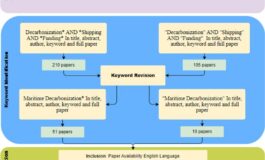
The decarbonization of the shipping industry is a critical imperative in the global fight against climate change. Non-EU countries, being significant contributors to shipping emissions, play a crucial role in shaping the industry’s sustainable future. However, securing funding for shipping decarbonization initiatives in these countries presents challenges, such as limited access to capital, lack of financial initiatives, political and regulatory uncertainties, technological risks, lack of local expertise, and the effects of global...
April 17th, 2024
Featured

By PortEconomics member and Port Strategy Analyst, Peter de Langen The energy and raw materials transition, critical for achieving a sustainable and (more) circular economy, creates a huge demand for new private investments in ports, in activities like production, assembly, storage and maintenance of offshore windmills, hydrogen plants to convert sustainable energy in hydrogen and ammonia, plants for biofuels and circular recycling and production activities. Many ports struggle with land availability, especially in advanced...
Page 7 of 83...56789...