Viewpoints

July 5th, 2019
Viewpoints

By Theo Notteboom HMM recently announced that the carrier will join THE Alliance in April 2020. This marks the end of HMM's search for alliance membership after the G6 alliance ceased to exist some 4 years ago. In 1998, HMM became an alliance member for the first time when the carrier joined the New World Alliance (NWA). In the early 2010s, the NWA teamed up with the Grand Alliance members to create G6. A wave of M&A activity in the liner shipping industry resulted in a new alliance landscape in recent years. HMM found itself...
July 3rd, 2019
Viewpoints

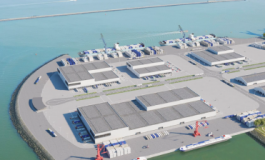
By Peter de Langen Rotterdam’s recent announcement that it is developing a 60-hectare ‘Food Hub’ at the entrance to Maasvlakte is interesting, both because of the concept and of the history of the site The industrial site will be developed to offer optimal facilities for ‘agrofood’ companies and will have multiple berths for container vessels and inland vessels, with special facilities for refrigerated cargo. The idea is that containers arriving at the Maasvlakte container terminals will move by ship to the food hub, while...
June 21st, 2019
Viewpoints

Sustainability journal: Call for contributions Today, most large port hubs include the circular economy transformation challenge, together with smart digitalization and Internet of Things (IoT), in their strategic priorities. Some port authorities even express the ambition for their port to become a maritime circular hotspot. However, many ports do not seem to have progressed beyond incremental, small-scale sustainable innovations, or the support of rather fragmented sustainability initiatives. However, what really takes ports to the next...
May 16th, 2019
Viewpoints

Reform didn't advance quickly enough, with the public sector remaining the major player at Piraeus until the arrival of COSCO in October 2009. Prior to that, Piraeus Port Authority had been the sole port operator, with the Greek State holding the 74.14% of the shares and the remaining 25.86% being traded on the Athens Stock Exchange. As such, Piraeus port was operated as a state company, which had an impact on its performance. It was handicapped by over-staffing, reduced operational efficiency and a business strategy focused mainly on...
May 14th, 2019
Viewpoints

By Peter de Langen Providing a series of training sessions for the European Transport Workers’ Federation allowed me and fellow members of the knowledge-dissemination platform www.porteconomics.eu to develop and discuss ideas on the future of labour in ports. In my case, this took shape in the context of a global discussion on the viability of a ‘post-work’ future. The main claim of the ‘post-work’ advocates is that we need to move towards a society where work takes a less central place. While people will obviously continue...
April 20th, 2019
Viewpoints

By invitation, PortEconomics member Jean-Paul Rodrigue took part in a OECD/IFT Roundtable on Future maritime trade flows, held in Paris, and included 30 members of government, industry and academia. The two days were divided in five sessions covering selected topics, including the changing demand for maritime trade, costs and trade flows, maritime business strategies, infrastructures and the North Sea Route. A large array of issues were discussed and Jean-Paul Rodrigue summarises what has retained his attention. Future Maritime Trade...
April 15th, 2019
Viewpoints

The association between ports and manufacturing has constantly evolved through technological and economic changes. Prior to containerization, there were strong linkages between ports and heavy industrial activities, and indirectly with lighter forms of manufacturing. Many ports were a combination of commercial and warehousing activities requiring a large amount of labour, while other ports focused on transshipping bulk commodities with the related heavy industrial activities. Manufacturing activities are influenced in their...
April 12th, 2019
Viewpoints

By Peter de Langen There is a clear transition towards a circular economy, where materials and components are reused or recycled at the end of their lifecycle, and this transition has important consequences for supply chains, ranging from the way products are designed to the business models of companies. Ports as transport nodes and as locations for logistics and manufacturing activities will be affected by the transition towards the circular economy. On the downside, ports handle huge volumes of non-renewable primary resources; the...
March 22nd, 2019
Viewpoints

By Theo Notteboom Interesting times in the container terminal business in Europe. PSA International together with Polish sovereign wealth fund PFR and IFM Investors have agreed a deal with Macquarie to buy DCT Gdansk, the number 15 container port in Europe. Also, MSC has plans to strengthen its ownership position in Medcenter Container Terminal (Gioia Tauro). In the past two years, there has been quite some activity in the terminal industry. For example, Cosco Shipping Ports got involved in Zeebrugge (Belgium) and Noatum Port holdings...
Page 9 of 29...7891011...