


• Home
  • About
    • Members
    • Associate Members
    • Former members
  • Thematic Areas
    • Containers
    • Cruise
    • European Port Policy
    • Ports & COVID-19
  • PortStudies
  • Presentations
  • Noticeboard
  • Viewpoints
  • PortLibrary
  • PortReport
PortEconomics
  • March 21st, 2026
PortEconomics
  • Home
  • About
    • Members
    • Associate Members
    • Former members
  • Thematic Areas
    • Containers
    • Cruise
    • European Port Policy
    • Ports & COVID-19
  • PortStudies
    Rhine-Scheldt delta port system

    Rhine-Scheldt delta port system

    A metric of global maritime supply chain disruptions: The global supply chain stress index - maritime (GSCSI-M)

    A metric of global maritime supply chain disruptions: The global supply chain stress index - maritime (GSCSI-M)

    ESG disclosure as a proxy of port corporate communication and sustainable management strategy: An LDA approach

    ESG disclosure as a proxy of port corporate communication and sustainable management strategy: An LDA approach

    From coal exports to green steel production? The role of circular economy precincts for sustainable port diversification

    From coal exports to green steel production? The role of circular economy precincts for sustainable port diversification

    Maritime transport in net zero

    Maritime transport in net zero

  • Presentations
    PortGraphic: Container port dynamics near Gibraltar

    PortGraphic: Container port dynamics near Gibraltar

    Top-10 PortReads in 2025

    Top-10 PortReads in 2025

    Port reform: World Bank publishes the third edition of its port reform toolkit

    Port reform: World Bank publishes the third edition of its port reform toolkit

    When will we admit that maritime transport will not be decarbonised by 2050?

    When will we admit that maritime transport will not be decarbonised by 2050?

    Digital technologies for efficient and resilient sea-land logistics

    Digital technologies for efficient and resilient sea-land logistics

  • Noticeboard
    Call for papers: Contemporary Maritime Economics: Transformations and Emerging Perspectives

    Call for papers: Contemporary Maritime Economics: Transformations and Emerging Perspectives

    ECONSHIP2026: Call for papers

    ECONSHIP2026: Call for papers

    Call for papers: 1st Florence Maritime Regulation Conference

    Call for papers: 1st Florence Maritime Regulation Conference

    PortEconomics co-director appointed Senior Scientific Advisor to the Florence School of Regulation

    PortEconomics co-director appointed Senior Scientific Advisor to the Florence School of Regulation

    Jean Monnet Chair in European Port Policy

    Jean Monnet Chair in European Port Policy

  • Viewpoints
    Commission unveils new EU Ports Strategy

    Commission unveils new EU Ports Strategy

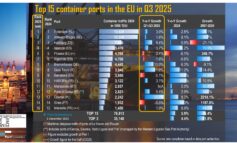
    PortGraphic: Top-15 EU container ports in Q3 2025

    PortGraphic: Top-15 EU container ports in Q3 2025

    Maritime transport in net zero

    Maritime transport in net zero

    Portgraphic: Top-15 EU container ports in H1 2025

    Portgraphic: Top-15 EU container ports in H1 2025

    Portgraphic: fleet capacity (owned/chartered) of container shipping lines

    Portgraphic: fleet capacity (owned/chartered) of container shipping lines

  • PortLibrary
  • PortReport
Viewpoints: most popular 2016Viewpoints

Viewpoints: most popular 2016

December 30th, 2016 Viewpoints

READ ALSO

PortGraphics: most popular 2016
PortReport 2016
PortReport 2016
Port Authorities: most popular 2016
Commission unveils new EU Ports Strategy

PortEconomics is celebrating the ending of 2016 recapping the articles that have captured the interest of the visitors of our web initiative so far for 2016.

Our most popular papers on Viewpoints in 2016 were:

1. The Panama canal expansion: they dug it, will they come?
Although the expansion of the Panama Canal is seen as a remarkable engineering achievement, it comes at auspicious times in global trade and shipping. Like many large infrastructure projects, it was built to service a commercial trend that may already have run its course, a most interesting viewpoint by PortEconomics members Jean-Paul Rodrigue and Theo Notteboom. [Link]

2. The top-5 strategy errors made by ports
After many years advising companies from different sectors about creating and executing their strategic plans, we have witnessed both good and bad decisions – not necessarily in equal order. PortEconomics co-director Peter de Langen and PortEconomics member Jonas Mendes Constante outline the five most common mistakes that port authorities and terminals companies make. [Link]

3. Italy reframes its port governance
After 22 years from the introduction of the landlord system (1994 Port Reform), the Italian Government approved a new reform law that is going to further reshape the organization of the whole port architecture at national level, comments PortEconomics member Francesco Parola. [Link]

4. Successful public-private partnerships in port infrastructure projects: a guide
PortEconomics members Michael Dooms, and Elvira Haezendonck, along with  Geoffrey Aaerts and Thies Grage discuss the several critical success factors taken into account when developing port infrastructure in this manner may guide port managers and private infrastructure financiers or investors towards a fruitful cooperative venture. [Link]

5. Why ports should be managed like airports
“An effective management model to bring down costs can be gleaned from the airport industry”. That is the central argument of a viewpoint article by Peter de Langen and Periklis Saragiotis. [Link]

6. European Ports: nine take aways from 2016
PortEconomics co-director Theo Notteboom waves goodbye to 2016, with its co-director Theo Notteboom, summarising the nine ‘take aways’ of the year for European Ports. [Link]

Next article Ports: an app a day
Previous article PortGraphics: most popular 2016

Related Posts

Commission unveils new EU Ports Strategy European Port Policy

Commission unveils new EU Ports Strategy

PortGraphic: Top-15 EU container ports in Q3 2025 Containers

PortGraphic: Top-15 EU container ports in Q3 2025

Maritime transport in net zero Featured

Maritime transport in net zero

Weekly Timeline
Mar 9th 4:35 PM
Featured

Rhine-Scheldt delta port system

Mar 6th 1:23 PM
Thematic Area

Commission unveils new EU Ports Strategy

Feb 18th 1:46 PM
Thematic Area

PortGraphic: Container port dynamics near Gibraltar

Feb 12th 12:25 PM
Featured

A metric of global maritime supply chain disruptions: The global supply chain stress index – maritime (GSCSI-M)

Jan 14th 12:56 PM
Noticeboard

Call for papers: Contemporary Maritime Economics: Transformations and Emerging Perspectives

Tweets by @PortEconomics
  • Containers
  • Cruise
  • EPP
  • Ports & COVID-19
  • Back to top
About PortEconomics

PortEconomics is a web-based initiative aiming to advance knowledge exchange on seaport studies. Established by maritime economists affiliated to academic institutions in Belgium, Greece and the Netherlands. It provides freely accessible research, education, information, and network-building material on critical issues of port economics, management and policies.

Additional Information
  • About
  • Login
  • Register
  • Edit Profile
  • Contact us
  • PortProfessionals
  • PortReport Series
  • Terms and Conditions
  • Cookie Policy
© PortEconomics 2025. All rights reserved.
Produced by PortEconomics
Manage Consent
To provide the best experiences, we use technologies like cookies to store and/or access device information. Consenting to these technologies will allow us to process data such as browsing behavior or unique IDs on this site. Not consenting or withdrawing consent, may adversely affect certain features and functions.
Functional Always active
The technical storage or access is strictly necessary for the legitimate purpose of enabling the use of a specific service explicitly requested by the subscriber or user, or for the sole purpose of carrying out the transmission of a communication over an electronic communications network.
Preferences
The technical storage or access is necessary for the legitimate purpose of storing preferences that are not requested by the subscriber or user.
Statistics
The technical storage or access that is used exclusively for statistical purposes. The technical storage or access that is used exclusively for anonymous statistical purposes. Without a subpoena, voluntary compliance on the part of your Internet Service Provider, or additional records from a third party, information stored or retrieved for this purpose alone cannot usually be used to identify you.
Marketing
The technical storage or access is required to create user profiles to send advertising, or to track the user on a website or across several websites for similar marketing purposes.
  • Manage options
  • Manage services
  • Manage {vendor_count} vendors
  • Read more about these purposes
View preferences
  • {title}
  • {title}
  • {title}