Viewpoints

January 23rd, 2016
Viewpoints

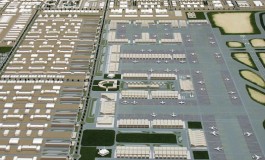
By Jean-Paul Rodrigue In last two decades, Dubai emerged as a world class logistical platform, a role which is in part attributed to its geographical location at the crossroads of major trade routes between Asia, Europe, South Asia and East Africa. This role began to take shape in the 1960s when the growing availability of capital derived from oil exports in neighboring countries led to initial infrastructure investments, such as the first modern port facilities (Port Rashid) completed in 1971. These facilities were further expanded with...
January 20th, 2016
Viewpoints

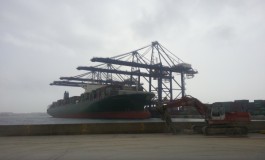
In 2011, the time span of the appearance of vessels averaging 13,000 TEU in South America was projected to be between 2016 and 2020 . The great news was that on December 18, 2015, TCBuen, the Colombian terminal belonging to the Port of Buenaventura, received the largest container vessel ever to have operated in South America: the Maersk Edinburgh. Part of the AC2 service, this vessel is intended to connect China and South Korea with the Pacific Coast of Latin America, has a capacity of 13,102 TEU and measures 367 meters long and 48.2 meters...
December 31st, 2015
Viewpoints

PortEconomics is celebrating the ending of the year recapping the articles that have captured the interest of the visitors of our web initiative so far for 2015. As measured by Google Analytics the list of the top-5 viewpoints presented at PortEconomics in 2015 are: 1. Are mega-ships such an imposition? The OECD report on the effects on mega-ships provides valuable insights for all players in the port industry. Peter de Langen focuses on an important flaw in the report: the suggestion that mega ships impose infrastructure costs on the...
December 17th, 2015
Viewpoints

Like other sectors of the global industry, ports are keen to point out their national economic impact, writes Peter de Langen at his column "The Analyst" in Port Strategy. However, there is no internationally established approach to calculating this impact. A recent report for the US ports industry is striking: it claims that the economic impact of its ports is $4.6tr. As this physical amount is hard to put in perspective this impact is expressed as a percentage of US GDP, which the report claims is a staggering 26%. In comparison, an...
November 26th, 2015
Viewpoints

By George Vaggelas Following a series of delays in the Piraeus Port Authority (PPA) privatization process that started back in 2010, it seems (?) that the long suffering privatization will come into an end on early December with the submission of the economic offers from the interested bidders. PortEconomics member George Vaggelas contributes to the latest issue of "Naftika Chronika" magazine with his viepoint on the latest developments regarding the privatization of the biggest Greek port. Despite the fast approaching deadline, the Greek...
November 24th, 2015
Viewpoints

Do we really know what smart ports, shipping and supply chains are? Thomas Vitsounis,  explained the issue at the AusIntermodal Conference, held in 19-20 November, Sydney, Australia. Thomas joined the discussions regarding the critical issues affecting containerised freight.  The themes of the discussions spanned from the planning, funding and successful delivery of major infrastructure projects, to improving supply chain efficiency and ensuring Australia has the regulatory framework for a competitive and sustainable...
November 20th, 2015
Viewpoints

"Container shipping remains at large a humble hero. It's not popular, doesn't attract much attention but works in the background to deliver (pardon the pun). Some might even say that container shipping is boring. Steel boxes are consolidated in ports, loaded into vessels, then usually after a very long journey, they reach their final destination. Doesn't sounds very exciting right? Well, I beg to differ." PortEconomics member Thomas Vitsounis is "thinking inside the box" in his article @ his bi-monthly column in My Logistics...
November 17th, 2015
Viewpoints

By Theo Notteboom Having demostrated (see inforgraphic below) how strategic alliances among container shipping companies have changed in the past 20 years, PortEconomics co-director Theo Notteboom, explains the scenarios on alliance formation in container shipping today. Four alliances are operational in the market: 2M, Ocean Three, CKYHE and G6. Alliance partnerships often evolved as a result of mergers and acquisitions (e.g. merger between P&OCL and Nedlloyd and the take-overs by P&O Nedlloyd and SeaLand by Maersk) and...
October 24th, 2015
Viewpoints

In the, often heated, discussions on the effects of mega-ships on shoreside infrastructure, let's include the question of co-operation between nearby ports. PortEconomics co-director Peter de Langen comments that the issue of co-operation is clearly relevant for the two large upstream ports in Europe that have called for such a discussion, Hamburg and Antwerp. At his latest Port Strategy viewpoint column, as The Analyst (more @PortStrategy) Peter comments: "Hamburg was initially involved in, but later stepped out of, the development...
October 23rd, 2015
Viewpoints

By Jonas Constante The business model described the rationale of how organisation creates, delivers and capture value. When developing the business model ports need to consider both the operations and the environment in which a company exists or will operate. PortEconomics associate member Jonas Mendes Constante express his opinion on port business models at the latest issue (September 2015) of Port Strategy. Read Jonas' article @ PortEconomics.eu....
Page 19 of 29...1718192021...