Featured

April 13th, 2019
Featured

For any updates please visit #CruiseDialogue2020 website The Cartagena dialogue: Preparing Ports, Cities & Destinations for the next day of cruising An international academic-industry dialogue on how best to accommodate the seemingly unstoppable growth of cruise activities Location: Cartagena, Colombia 19 -21 February 2020 First call for papers The Cartagena dialogue on Cruise, Ports and Cities 2020 is an international Conference, organized by the Universidad de los Andes, in collaboration with the University of the Aegean,...
April 12th, 2019
Featured

By Peter de Langen There is a clear transition towards a circular economy, where materials and components are reused or recycled at the end of their lifecycle, and this transition has important consequences for supply chains, ranging from the way products are designed to the business models of companies. Ports as transport nodes and as locations for logistics and manufacturing activities will be affected by the transition towards the circular economy. On the downside, ports handle huge volumes of non-renewable primary resources; the...
April 11th, 2019
Featured

With years of research and more than 200 maps and images, PortEconomics member Geraldine Knatz shapes an insightful story of the Port of Los Angeles, from its early entrepreneurs to the city’s business and political leadership, and the inevitable conflicts that arose between them. Knatz digs into the back stories of the key players in a hardcore, well-documented piece of storytelling at its best.   Port of Los Angeles matches a topic—the history of Los Angeles Harbor—with someone of unquestionable authority to tackle the subject....
April 10th, 2019
Featured

Container throughput in ports of Latin America and the Caribbean increased by 7.7% in 2018 in comparison with the previous year, according to Port Activity Report of Latin America and the Caribbean 2018 by ECLAC. This analysis is based on the performance of a sampling of 31 countries and 118 ports and port areas in the region. According to the data of the sampling compiled by ECLAC, in 2018 the East Coast of South America (ECSA) recorded a 12% increase in the activity of ports and port areas, measured in terms of volume. Meanwhile,...
April 5th, 2019
Featured

Many port (authority) managers are presently engaged in collaborative agreements with partners located in both their proximate geographic area and far beyond this area. The economic drivers of such cooperation can vary widely and include goals as diverse as an expected, stronger competitive position to attract and retain traffic flows, better access to capital, or an improved, overall control over the logistics chain. From a governance perspective, the cooperative agreements can range from top-down, government-influenced alliance formation...
March 29th, 2019
Featured

The movement of goods between locations of production and consumption rely on a complex global logistics system that is underpinned by immobile freight infrastructure and particularly transfer points such as ports, which are nevertheless constituted by an institutional mobility of governance, regulation and investment that has changed a great deal in the last few decades. Therefore, the freight system, when considered from a mobilities perspective, exhibits several of the characteristic features identified in the seminal early papers on the...
March 22nd, 2019
Featured

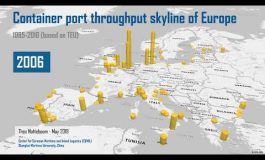
By Theo Notteboom Interesting times in the container terminal business in Europe. PSA International together with Polish sovereign wealth fund PFR and IFM Investors have agreed a deal with Macquarie to buy DCT Gdansk, the number 15 container port in Europe. Also, MSC has plans to strengthen its ownership position in Medcenter Container Terminal (Gioia Tauro). In the past two years, there has been quite some activity in the terminal industry. For example, Cosco Shipping Ports got involved in Zeebrugge (Belgium) and Noatum Port holdings...
March 19th, 2019
Featured

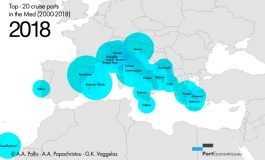
The last two decades the structure, strategies, and operational frameworks of cruise ports changed in too many respects. Infrastructure renewal and construction has been accompanied by a wave of reform in cruise ports governance. Cruise ports management has matured with sophisticated strategies involving port professionals and linked port service providers and stakeholders. Operational practices have been reformed serving the changing features of the deployed (bigger) vessels and the modern cruise product. The reorganisations have in...
March 12th, 2019
Featured

By Peter de Langen At the end of 2018, the Danish municipality of Kolding, the owner of Port of Kolding and the landlord port development company, decided to shut down the commercial port with a transition period of 25 years. That deserves a WOW. It also begs questions: is this a bold visionary move to be applauded? Is it likely to be replicated elsewhere? Does it have repercussions for the way we think about the ownership of state-owned port companies? From a public policy perspective, the core question is whether or not closing...
March 8th, 2019
Featured

By Theo Notteboom The table provides an overview of the TEU throughput in 2018 in the top 10 container ports in North America and also shows the growth figures 2017/2018 and 2007/2018. The figures lead to the following conclusions. The top 10 ports in North America handled 47 million TEU in 2018 The top 10 ports in North America handled 47 million TEU in 2018 or +4.9% compared to 2017 and +23.5% compared to 2007. In comparison, these figures were +4.7% and +94.4% respectively for the top 10 container ports in mainland China (183...
Page 34 of 82...3233343536...